At a glance
- What it is
- Korea's 24th national park (2026) and its first urban national park, centered on a granite ridge in Busan
- Size
- 66.859 sq km, across 7 districts in Busan and neighboring Yangsan
- The fortress
- Geumjeongsanseong — a historic mountain fortress with an original wall about 18.8 km long, of which roughly 4 km survives today
- Highest point
- Godangbong, 801 meters — Busan's highest peak, on the fortress ridge
- Easiest way up
- The Geumgang Park cable car, a 6-minute ride to 540 m near the fortress's South Gate
- Admission
- Free — the national park itself has no entry fee. The cable car is separate and paid
A mountain that just became a national park
Geumjeongsan is the granite ridge running through the north of Busan, and in 2026 it was formally designated Korea's 24th national park — the country's first ever national park built around a mountain that sits inside a major city rather than out in the countryside. The Korea National Park Service put the designation ceremony at BEXCO on March 20, 2026, following a process Busan residents had pushed for since roughly 2005.
The park covers 66.859 square kilometers across seven districts — Busanjin-gu, Dongnae-gu, Buk-gu, Geumjeong-gu, Yeonje-gu and Sasang-gu in Busan, plus Yangsan in neighboring South Gyeongsang Province. It's built on granite that cooled underground from magma at the end of the Cretaceous period and was later pushed up and exposed — the long weathering since then is why the mountain is full of tors, weathering pits, isolated rock outcrops and boulder streams, visible from the trails without needing to know any geology going in.
Geumjeongsanseong: the fortress that shapes the ridge
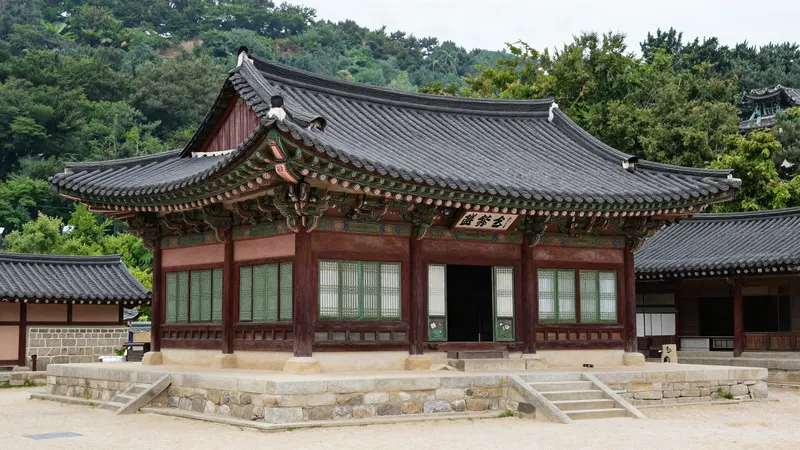
The reason Geumjeongsan looks the way it does from a map — a ridge traced by a long, deliberate line — is Geumjeongsanseong, a stone mountain fortress that Korea's Heritage Service designated a Historic Site in 1971. The fortress was built in 1703, tasked to official Park Tae-hang according to the historical record, though some evidence suggests defensive walls existed on the ridge even earlier. At full length the wall ran about 18.8 kilometers, making it Korea's largest mountain fortress by circumference.
Worth knowing before you go: only about 4 kilometers of that original wall survives today. The fortress was damaged under Japanese colonial rule, and the version standing now is largely a reconstruction — the east, west and south gates were rebuilt between 1972 and 1974, and the north gate in 1989. That doesn't make it less worth seeing, but it does mean the fortress is a series of restored gates and wall sections along the ridge rather than one continuous 18.8 km wall you can walk start to finish.
Godangbong, the summit
Godangbong, 801 meters, is Geumjeongsan's highest point and Busan's tallest peak, sitting on the fortress ridge itself near the North Gate. Beomeosa Temple, on the mountain's eastern slope, already covers the most commonly used route up — from behind the temple, along marked trails to the North Gate and on to the summit — for anyone starting from that side.
The view from the top takes in the city, the Nakdong River's mouth, the Gimhae plain and the hills of Yangsan on a clear day, which is the reason people make the climb despite it being, as the Beomeosa guide puts it, a real hike with proper elevation rather than an extension of a temple visit.
The easy way up: the Geumgang Park cable car
If a multi-hour hike isn't the plan, Geumgang Park's cable car is the standard shortcut onto the ridge. It's a double-line cable car, 1,260 meters long, that has been running since September 1966 — built originally to serve a resort complex that was planned near the fortress's South Gate and never fully materialized, and privately operated since 1972. The ride takes about 6 minutes and rises to 540 meters, putting you on the ridge a short walk from the South Gate rather than at the very summit.
It's a genuinely scenic ride in its own right, with the park and the city opening up below as you climb, and it's the route most local guides point to as the easiest way up Geumjeongsan for anyone who doesn't want to commit to a full hike.
| Season | Weekday | Weekend |
|---|---|---|
| March–October | 09:30–17:30 | 09:30–18:00 |
| November | 10:00–17:30 | 09:30–17:30 |
| December–February | 10:00–17:00 | 09:30–17:30 |
Getting there
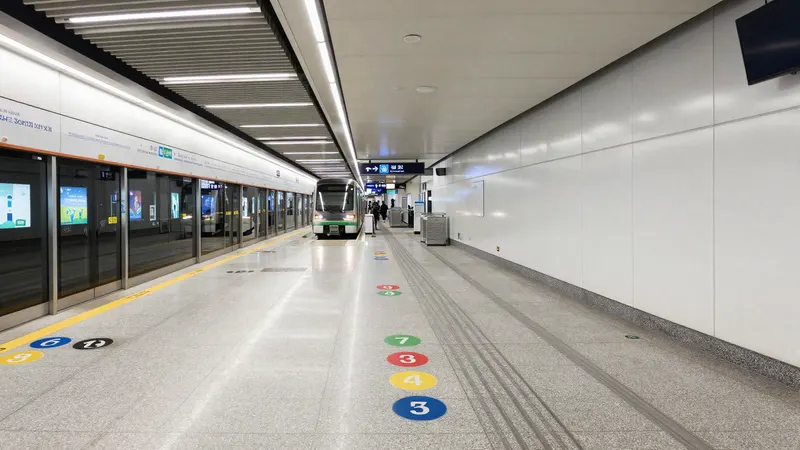
For the cable car, Geumgang Park is in Dongnae-gu at Ujangchun-ro 155 — about a 15 to 20-minute walk from Oncheonjang Station, or a short taxi ride if you'd rather skip the walk. For the Beomeosa side, follow the directions in the Beomeosa Temple guide: Beomeosa Station on Metro Line 1, then bus 90 to the temple.
There's no single main entrance to the park itself — as a mountain rather than a fenced attraction, Geumjeongsan is entered from multiple points around its base, and which one makes sense depends entirely on which side of the ridge you're heading for.
Practical notes
- The national park itself has no entrance fee — only the cable car and any food or drink you buy cost money
- This is a real mountain with real elevation change. Wear proper shoes and bring water regardless of which route you take up
- Beomeosa Temple's trailside village near Geumjeongsanseong is known for sanseong makgeolli, an unfiltered rice wine that's one of Busan's listed local specialty products — a natural stop coming down off the ridge
- Weather changes faster on the ridge than it does in the city below — check conditions before heading up, especially outside the main hiking season
- Because this only became a national park in 2026, expect visitor infrastructure — signage, English information, formal trail markers — to still be catching up with the designation
Frequently asked questions
Is Geumjeongsan a national park?
Yes, since 2026 — it's Korea's 24th national park and the first one built around a mountain inside a major city rather than in the countryside. The Korea National Park Service held the designation ceremony at BEXCO on March 20, 2026.
What is Geumjeongsanseong?
A stone mountain fortress on Geumjeongsan's ridge, designated a Historic Site in 1971. It was built in 1703 and originally ran about 18.8 kilometers, Korea's largest mountain fortress by circumference, though only about 4 kilometers of the original wall survives — the gates standing today were reconstructed in the 1970s and 1989 after damage under Japanese colonial rule.
What is the easiest way up Geumjeongsan?
The Geumgang Park cable car, a 6-minute, 1,260-meter ride that's been running since 1966. It rises to 540 meters near Geumjeongsanseong's South Gate, close to but not quite at the summit. Round-trip fare is 11,000 KRW for adults.
How tall is Geumjeongsan?
Its highest point is Godangbong, at 801 meters — Busan's tallest peak, on the fortress ridge near the North Gate. The most commonly used trail to the summit starts behind Beomeosa Temple on the mountain's eastern slope.
Is there an admission fee for Geumjeongsan National Park?
No, the national park itself is free to enter. The only cost is the Geumgang Park cable car, if you choose to take it, or anything you buy along the way — such as the sanseong makgeolli sold in the village near the fortress.