At a glance
- Location
- 86 Yonggung-gil, Gijang-eup — the coast northeast of central Busan, outside the subway network
- Hours
- 04:30–19:20 daily, last entry 18:50
- Entry
- Free
- Getting there
- Bus 181 from Haeundae Station Exit 7 (40–50 min), then a 700 m–1 km walk from the stop; or taxi from Haeundae ~25 min, roughly 15,000–20,000 KRW
- Time needed
- About an hour on the grounds, plus 1.5–2 hours of travel round trip from Haeundae
What makes this temple different
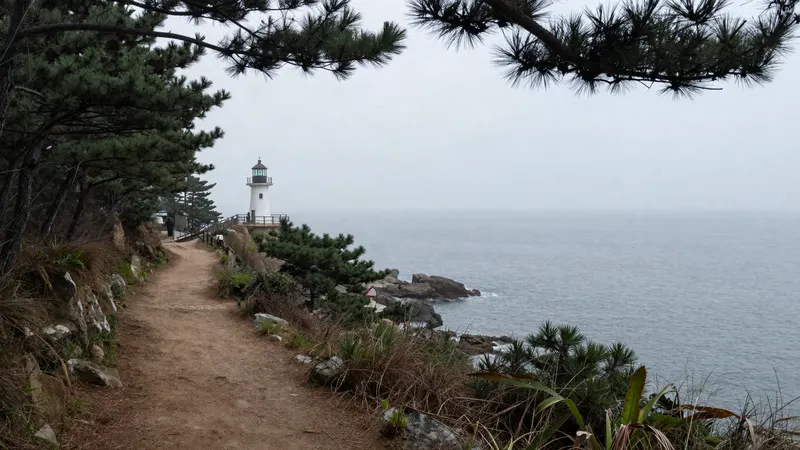
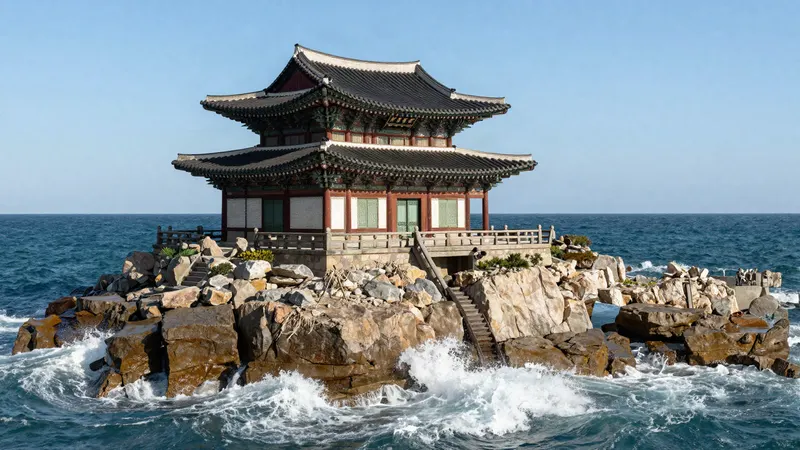
Almost every Korean temple you will read about sits in the mountains — Busan's own Beomeosa is halfway up Geumjeongsan. Haedong Yonggungsa is the exception: it is built onto coastal rock in Gijang, with the sea directly below the halls and spray reaching the lower terraces on a rough day.
That setting is the whole reason to make the trip. It is also why the temple is far busier than its size suggests, and why it is worth being clear-eyed about what you are going to: a compact, heavily visited complex on a dramatic piece of coastline, not a quiet mountain retreat.
The temple dates its founding to 1376, attributing it to the monk Naong Hyegeun, royal preceptor to King Gongmin of Goryeo. Most of what stands today is modern — the complex was rebuilt and substantially expanded through the twentieth century — so read the buildings as a living temple rather than as a preserved medieval site. It is counted among Korea's three principal Gwaneum sanctuaries, sites dedicated to the bodhisattva of compassion.
Getting there, and the part most guides skip
Haedong Yonggungsa is in Gijang, beyond the subway network, so this is a half-day commitment rather than a stop you slot between two others.
The standard route is Metro Line 2 to Haeundae Station, out Exit 7. The bus stop is about 30 meters ahead. Take bus 181 and stay on it for 40 to 50 minutes depending on traffic, getting off at the Yonggungsa stop.
Here is the part that catches people out: the bus stop is not the temple. From the stop it is a walk of roughly 700 meters to 1 kilometer along the approach road and through the market stalls before you reach the entrance gate — and the temple itself then goes downhill. Budget for it, especially in summer heat or with children.
A taxi from Haeundae takes about 25 minutes and typically runs 15,000–20,000 KRW on the meter, dropping you much closer to the entrance. Split between two or more people it is often the better call, and it removes the walk entirely.
A third option suits anyone already up the coast: take the Donghae Line — the separate coastal commuter rail, not a numbered subway line — to Osiria Station, Exit 1, then bus 139, and walk about 15 minutes from the stop, as Visit Busan describes it. This is the sensible approach from Songjeong, and awkward from Haeundae. Visit Busan also lists buses 100 and Haeundae 9 alongside 181 from Haeundae Station.
The approach: zodiac statues and the 108 steps
The walk in is part of the visit. The path from the entrance passes a line of twelve zodiac statues, one for each animal of the Korean zodiac, which is where most visitors stop to find their birth year.
Past those, the path reaches a stone gate and then the descent proper: 108 steps down toward the sea. The number is not decorative. In Buddhist teaching 108 stands for the afflictions a person carries, and the descent is meant to be walked as a shedding of them.
Going down is easy. Coming back up at the end of a hot afternoon is the part to plan for — there is no alternative route, and no lift.
What to expect on the grounds
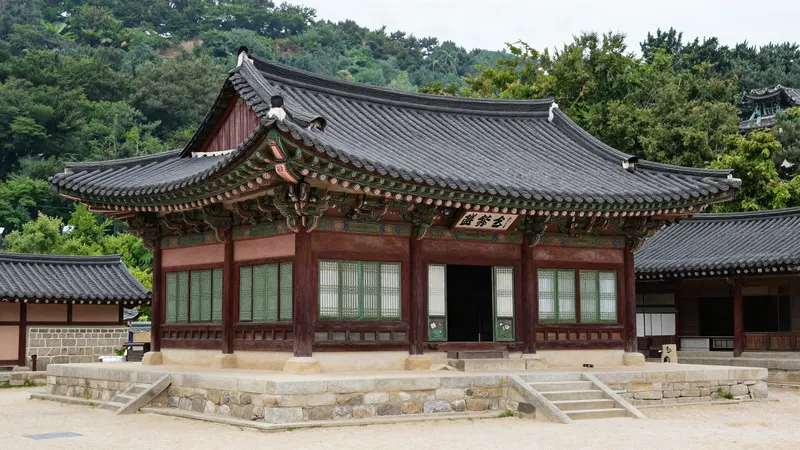
The complex is compact but vertical, stacked on terraces between the road above and the rocks below. The sea-facing main hall, the golden Buddha, and the stone bridge over the inlet are the three things almost everyone photographs.
Give yourself about an hour to walk it without hurrying. That is enough to reach the lower terraces, cross the bridge and sit for a while; it is not enough if you arrive at peak time and have to queue at every viewpoint.
This is a working temple, not a museum. Dress so that shoulders and knees are covered, keep your voice down near the halls, and check for signs before photographing interiors — some halls allow it and some do not.
- Wear shoes with grip — the lower terraces are stone, and sea spray keeps them damp
- Early morning is genuinely quieter; the temple opens at 04:30 and the first hour or two is the calmest of the day
- New Year's Day is the busiest day of the year here, as the site is a well-known first-sunrise spot — avoid it unless that is specifically why you came
- There is a market strip of food stalls and souvenir shops on the approach road, useful since there is little else nearby
Fitting it into your trip
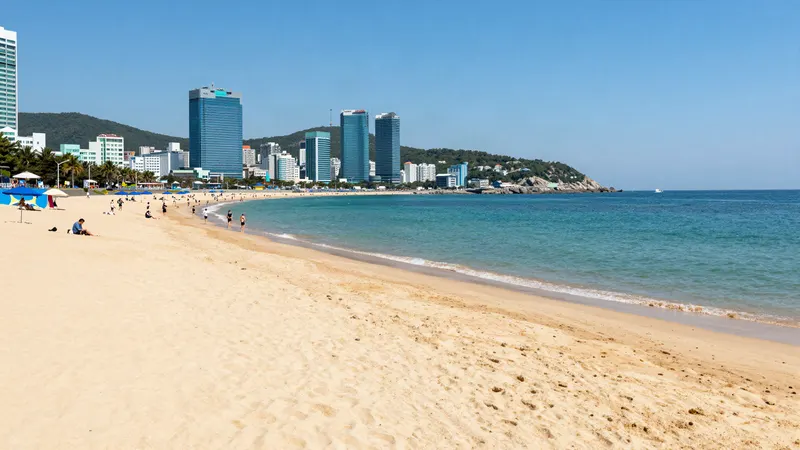
Because the bus from Haeundae passes through the northeastern beach areas anyway, the natural pairing is a coastal day: temple in the morning while it is quiet, then back toward Haeundae or Songjeong for the afternoon.
What does not work well is pairing it with Nampo-dong or Jagalchi on the same day. Those are at the opposite end of the city, and you would spend most of the day in transit.
- The mountain counterpart: Beomeosa Temple — Busan's mountain temple
- The afternoon half of the day: Haeundae Beach: a first-timer's guide
Frequently asked questions
How do I get to Haedong Yonggungsa Temple?
Metro Line 2 to Haeundae Station, Exit 7, then bus 181 from the stop about 30 meters ahead — 40 to 50 minutes depending on traffic. From the bus stop it is a further 700 meters to 1 kilometer on foot to the entrance. A taxi from Haeundae takes about 25 minutes at roughly 15,000–20,000 KRW and drops you much closer. Confirm the current bus route in Naver Map or Kakao Map before setting out.
What are the opening hours?
The temple is open daily from 04:30 to 19:20, with last entry at 18:50. Hours can change, so confirm before making the trip out to Gijang.
Is there an entrance fee?
No. Entry to Haedong Yonggungsa is free.
How long is the walk from the bus stop?
Roughly 700 meters to 1 kilometer from the Yonggungsa bus stop to the entrance gate, along the approach road and through the market stalls. The temple grounds then descend 108 steps toward the sea, which you climb back up on the way out.
Why are there 108 steps?
In Buddhist teaching 108 represents the afflictions a person carries, and the descent toward the sea is meant to be walked as a shedding of them. The steps are the main way down to the sea-facing halls, and the climb back up is the most demanding part of the visit.
When is it quietest?
Early morning. The temple opens at 04:30 and the first hour or two is the calmest part of the day. Weekends are busy, and New Year's Day is the busiest day of the year, when crowds come for the first sunrise.
What makes it different from other Korean temples?
Almost all Korean temples are built in the mountains. Haedong Yonggungsa is one of the few built directly onto the coast, with the sea below the halls. It is also counted among Korea's three principal Gwaneum sanctuaries.