At a glance
- What it is
- One of Busan's three major eastern beaches, alongside Haeundae and Gwangalli, and the city's main surfing beach
- Getting there
- Metro Line 2 to Haeundae Station, then a bus toward Songjeong (~12 min plus a short walk); or the Donghae Line to Songjeong Station (17-min walk)
- Official swim season
- July 1 to August 31 each year, though surfing continues year-round
- Size
- 1.2 km of beach, 57 m wide, opened in 1965
- Entry
- Free, open year-round
Busan's third beach, and its surf beach
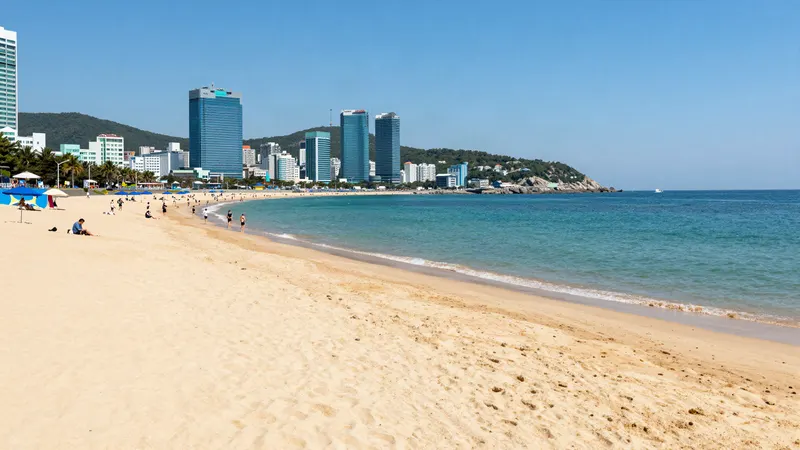
Songjeong is grouped with Haeundae and Gwangalli as one of Busan's three major beaches on the city's eastern side, but it draws a different crowd for a different reason. The water here is shallower and the slope into it more gradual, which has long made it the calmer, more family-oriented option of the three. Opened in 1965, the beach runs 1.2 kilometers along the coast and about 57 meters wide.
In recent years Songjeong has become known specifically as Busan's surfing beach. Sitting where the East Sea and South Sea currents meet, it gets a steady swell across all four seasons rather than only in summer, and the shallow water that makes it good for families also makes it forgiving for people learning to surf. Surf shops line the beach, offering lessons from complete-beginner to advanced.
Getting there
From Haeundae Station on Metro Line 2, transfer to bus 139, 182, 200, 38, 39, 40, 63, 1001, 1003 or 1011 and get off at the Songjeong Beach entrance stop, then walk about 12 minutes. Alternatively, the Donghae Line runs directly to Songjeong Station, about a 17-minute walk from there.
A wider set of buses — 100, 100-1, 139, 141, 181, 182, 185, 200, 38, 39, 40 and 63 — also stop at Songjeong 1-danji Jugong, closer to the residential side of the neighborhood than the beach entrance.
Learning to surf, or just watching
The surf shops around the beach are set up for walk-ins as much as bookings, and a first lesson typically covers the basics on the beach before heading into the shallow water just offshore. You don't need any of your own equipment — board and wetsuit rental is the normal arrangement.
If you'd rather watch than paddle out, afternoons tend to have the most consistent waves and the most surfers in the water, and the light on a clear evening turns the whole scene a different color worth sticking around for.
Jukdo Park, at the beach's edge
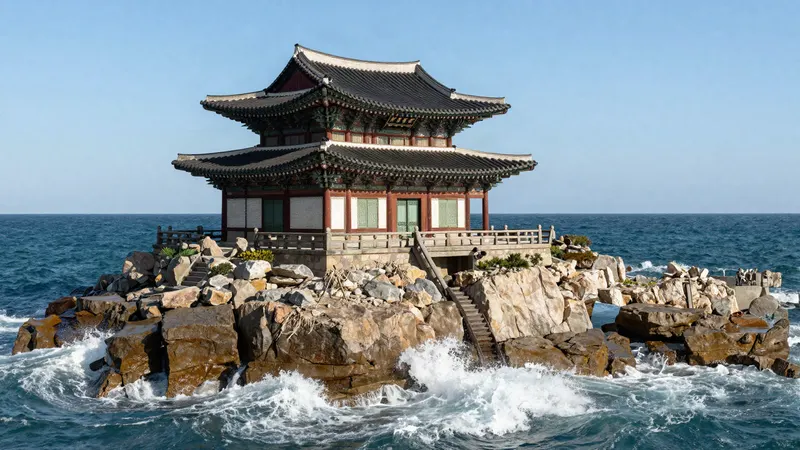
At the eastern end of the beach, a small headland called Jukdo Park (죽도공원) — named for the bamboo that grows there — has a quiet coastal walking path worth the short detour. Following it leads to Songiljeong, a pavilion built at the point closest to the sea, known as one of the better spots in the city to catch both sunrise and, depending on the season, sunset.
It's a small enough park that there's no need to plan around it specifically — walk the beach, and Jukdo is there at the end if you want to extend the visit by twenty or thirty minutes.
Pairing with the rest of the day
Songjeong sits close enough to Haedong Yonggungsa Temple and the National Fisheries Science Museum that a day covering both is a common itinerary for visitors already headed to this side of the city, rather than a special trip out just for the beach.
Because the swim season is officially only July and August, a visit outside those months means no lifeguards and no managed swimming area — fine for watching surfers or walking the sand, but treat the water itself the way you would any unsupervised beach in the off-season.
Frequently asked questions
How do I get to Songjeong Beach from Haeundae?
From Haeundae Station on Metro Line 2, transfer to bus 139, 182, 200, 38, 39, 40, 63, 1001, 1003 or 1011 and get off at the Songjeong Beach entrance stop, about a 12-minute ride plus a short walk. The Donghae Line also runs directly to Songjeong Station, about 17 minutes on foot from the beach.
Why is Songjeong known for surfing?
It sits where the East Sea and South Sea currents meet, which brings a steady swell year-round rather than only in summer, and its shallow water is forgiving for beginners. Surf shops line the beach offering board and wetsuit rental plus lessons from beginner to advanced.
How does Songjeong compare to Haeundae Beach?
Songjeong is shallower and calmer, which has traditionally made it more popular with families, while Haeundae draws the bigger crowds and events. In recent years Songjeong has become the more specifically surf-focused of the two.
What is Jukdo Park?
A small bamboo-covered headland at the eastern end of Songjeong Beach, with a coastal walking path leading to Songiljeong, a pavilion known as one of Busan's better spots to watch the sunrise and, depending on the season, sunset.
When is the official swimming season at Songjeong?
July 1 to August 31 each year, when lifeguards and a managed swimming area are in place. Surfing continues year-round regardless of the official season.