At a glance
- How long you need
- Two days covers the two main sides of the city; three days adds a temple or a coastal park without rushing
- How this list is ordered
- By area, not by rank — nothing here is numbered because it is 'better' than the entry below it
- Getting around
- Metro Lines 1 and 2 reach most of it; a few stops need a short bus or taxi, noted per entry
- What is not here
- Anything we have not been able to check. Fees and hours change, so confirm those on arrival
Read this before the list
Busan does not have one center you circle out from. It is a long coastal city, and the two halves most visitors care about — the old city around Nampo-dong and the beach districts around Haeundae — sit at opposite ends with 30 to 45 minutes of travel between them. Picking things off a list in the order they appear is the most common way to lose an afternoon to the subway.
So this list is grouped by area rather than ranked. The numbers are labels, not scores. Work through one group, then move to the next, and the travel time mostly disappears.
Every entry says how to reach it — subway line and exit, bus number where one is needed, and a rough metered taxi fare where a taxi is the sensible choice. Where an entry has its own full guide on this site, it is linked.
The coast: beaches, a bridge and a coastal train
This is the side of the city most people picture when they think of Busan, and it is the easiest group to do in one day because the stops are close to each other.
1. Haeundae Beach
Busan's best-known beach: a wide stretch of sand backed by a dense wall of hotels, cafes and restaurants, closer to a resort city beachfront than a quiet coastal town. Metro Line 2 to Haeundae Station, Exit 3 or 5, then about a 10-minute walk. A taxi from Seomyeon takes 20–25 minutes and typically runs 10,000–13,000 KRW.
It is extremely crowded in July and August, and swimming is officially supervised only during the designated summer season. Outside that window it is a walking and photo stop rather than a swimming one — still worth the trip. Full guide: Haeundae Beach
2. Gwangalli Beach
Gwangalli used to be described as the quieter alternative to Haeundae. That is no longer accurate — on a weekend evening it regularly draws the bigger crowd of the two. Its strength is the cafe and bar strip directly behind the sand, plus a packed calendar of events. Metro Line 2 to Gwangan Station, Exit 3 or 5, then an 8–9 minute walk; a taxi from Haeundae is 10–15 minutes and about 6,000–9,000 KRW.
A drone light show runs over the beach every Saturday evening. The official site posts each week's show and times, so check before planning an evening around it. Full guide: Gwangalli Beach
3. Gwangan Bridge after dark
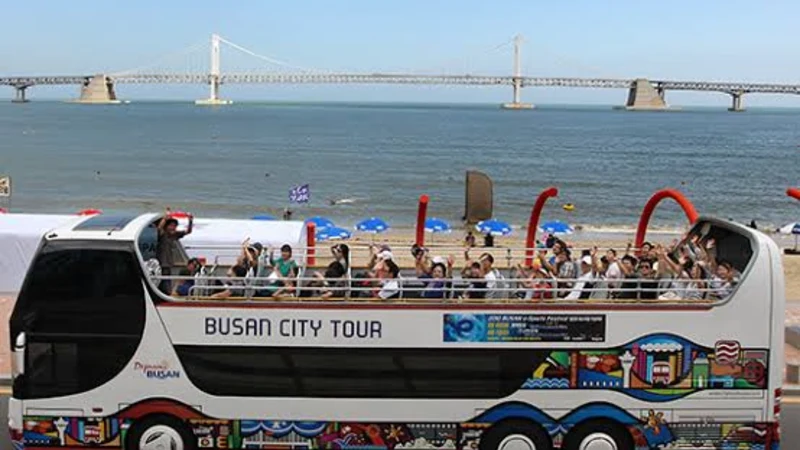
Unlike most entries here, this is a view rather than a place you walk through. After dark the bridge runs a changing LED lighting display across Gwangalli Bay, and it is the single most reliably photogenic thing in the city. Viewing it from the sand is free; only driving across the bridge carries a toll.
The beach itself is the simplest vantage point. The rooftop cafes on the street behind it give a slightly elevated angle and fill up specifically for this view, and Millak Waterside Park a short walk along the coast is the quieter alternative. Full guide: Gwangan Bridge viewpoints
4. Dongbaekseom (Dongbaek Island)
A small pine-covered headland at the eastern end of Haeundae Beach, circled by a paved path that is mostly flat with a few gentle inclines. The full loop takes 30–45 minutes at a relaxed pace. It is free, open access, and needs no separate transport if Haeundae is already on your day.
This is the least demanding walk on a typical Busan itinerary — a reasonable option even for anyone who found a longer forest trail harder than expected. Full guide: Dongbaekseom
5. The Blueline Park coastal train and sky capsule
From the Dongbaekseom end of Haeundae, a coastal train and a beachside sky capsule run further along the shore toward Songjeong, giving sea views without a long walk. It is a paid ride and a natural extension of a Haeundae morning rather than a destination of its own.
Fares and operating hours change, so check the operator's current information before timing a day around it.
6. Songjeong Beach
Further up the coast past Haeundae, reachable on the Donghae Line — the separate coastal commuter rail, not one of the numbered subway lines. It is smaller and calmer than Haeundae and pairs naturally with a trip out to Haedong Yonggungsa, since the same corridor serves both.
If you plan to use the Donghae Line, carry a loaded transit card: single-use tickets and multi-day passes typically do not work for the transfer. Full guide: the Busan metro map, including the Donghae Line
Hillside villages and clifftop views
Busan is built against mountains that run down to the water, and this group is where that geography is most visible. Comfortable shoes matter more here than anywhere else on the list.
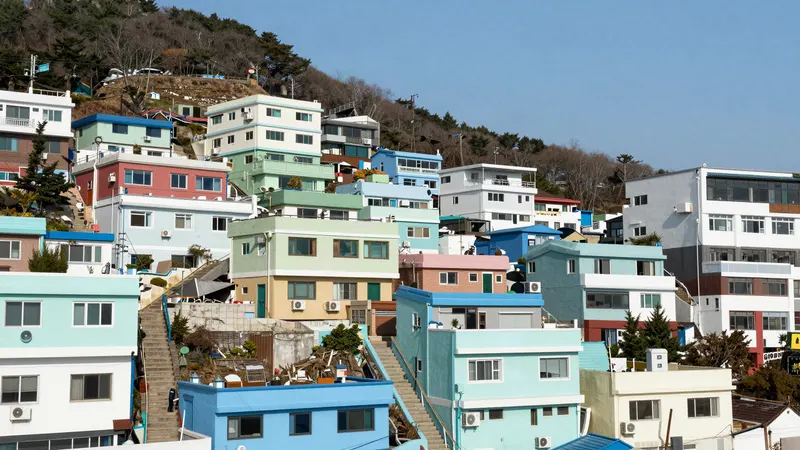
7. Gamcheon Culture Village
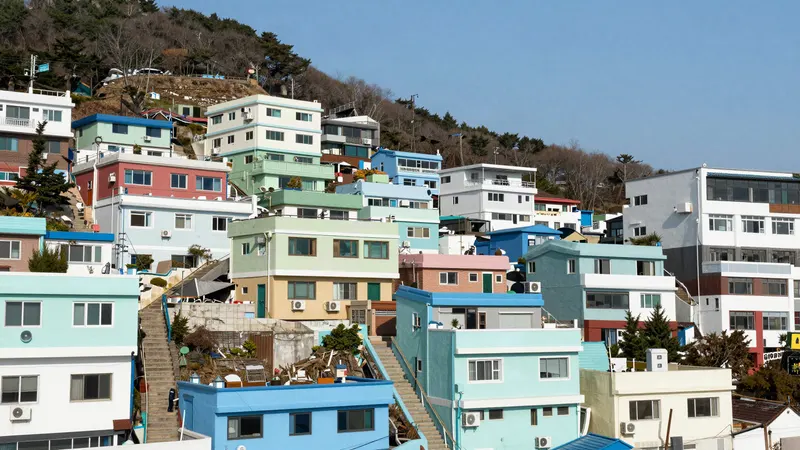
A hillside neighborhood of pastel houses stacked along steep, narrow lanes, developed into a public art district while people still live there. It is often compared to Santorini in photographs; in person it is smaller, steeper and much more of a working neighborhood than those comparisons suggest.
Metro Line 1 to Toseong Station, Exit 6, then village bus Saha1, Saha1-1, Seogu2 or Seogu2-2 (about 10 minutes); a taxi from the station is around 10 minutes and 5,000–7,000 KRW. Free to walk through. Budget at least two hours, keep noise down in the alleys, and expect constant stairs — there is no fully step-free route through the core. Full guide: Gamcheon Culture Village
8. Huinnyeoul Culture Village
A cliffside village on Yeongdo, the island connected to the old city by bridge. It gets a fraction of Gamcheon's visitors and sits close to Taejongdae, which makes the two easy to combine into one Yeongdo half-day.
It is covered as part of the original downtown area rather than in its own guide. Full guide: Busan's five areas, including Yeongdo
9. Taejongdae
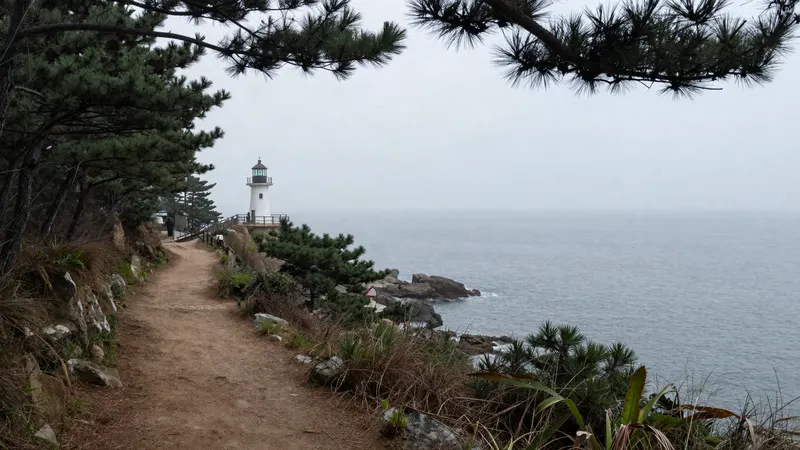
A forested cliffside park at the southern tip of Yeongdo, built around a roughly 4-kilometer loop trail that opens onto sea cliffs and a lighthouse. Walking the full loop takes 1.5–2 hours at a relaxed pace; the danubi shuttle train circles it for a modest fare with stops at the main viewpoints, which is the easier option with limited time or mobility.
There is no metro station at the park. From Nampo Station (Exit 6 or 8), take bus 8, 17, 30, 88 or 186; from Busan Station Exit 7, bus 17, 88 or 101. A taxi from Nampo-dong is about 8 km, roughly 10,000–12,000 KRW and 20–25 minutes. Full guide: Taejongdae Park
10. Oryukdo Skywalk
A glass-floored walkway built out over coastal cliffs, looking straight down at the waves and across to the Oryukdo islets offshore. Most visitors spend well under an hour, which makes it a good addition to a coastal day rather than a destination on its own.
Metro Line 2 to Kyungsung University·Pukyong National University Station, Exit 5, then bus 27, 24 or 131 (15–20 minutes); a taxi from the same station is 10–15 minutes and 8,000–10,000 KRW. Entry is typically free, though that can change. Worth knowing in advance if anyone in your group dislikes heights. Full guide: Oryukdo Skywalk
11. Songdo Cable Car
A cable car running roughly a mile over Songdo Bay, with a standard cabin and a higher-priced glass-floor option. It opened in 1964 as South Korea's first cable car line, closed, and was later rebuilt and reopened as Busan Air Cruise. The ride itself rather than a single viewpoint is the attraction.
From Jagalchi Station, Exit 2, take bus 6, 7, 30 or 96 to Amnam-dong Community Center, then walk about 10 minutes; a taxi from Jagalchi or Nampo-dong is around 10 minutes and 6,000–8,000 KRW. Cabins can sell out at weekends and around sunset, and the line is sometimes paused in high wind. Full guide: Songdo Cable Car
12. Yongdusan Park
A hilltop park in the middle of the old city, a short walk from Nampo Station, with the Busan Modern History Museum nearby. It is the easiest green break to reach on a Nampo-dong day — no bus, no taxi, just a climb from the shopping streets below.
Markets, and the food actually worth ordering
Busan's food identity is built on a port and on the Korean War, when the city absorbed a large refugee population. Both show up on the menu. This group clusters tightly in Nampo-dong, so it works as one continuous afternoon.
13. Jagalchi Market
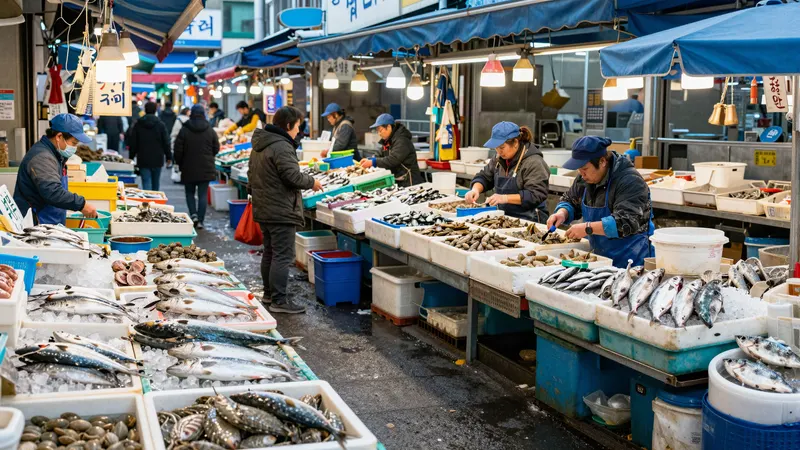
Korea's best-known seafood market, and really two markets stacked together: an outdoor street market along the waterfront, and a multi-story indoor building where the ground floor sells fresh catch and the upper floors cook it for you. Roughly 05:00–22:00 daily, closed the first and third Tuesday of each month; morning is best for both the catch and the calm.
Jagalchi Station, Exit 10, or Nampo Station, Exit 2, both a short walk. Prices are not always posted and much is sold by weight — agreeing the total before anything is cut is normal market practice, not rudeness. Full guide: Jagalchi Market, and how to order
14. Gukje Market
A sprawling, semi-covered maze of alleys that grew out of the Korean War, when refugees needed somewhere to trade. Today it sells everything from clothing and hardware to secondhand and imported goods, with food stalls throughout — closer in spirit to a flea market than to Jagalchi's seafood focus.
Jagalchi Station, Exit 7, or Nampo Station, Exit 1, both about 10 minutes on foot. Carry cash for the smaller stalls, and budget time for wandering rather than arriving with a shopping list. Full guide: Gukje Market
15. BIFF Square street food
Named after the Busan International Film Festival, which held its early editions here. Today it is a compact street food alley — ssiat hotteok, tteokbokki, fried skewers — with handprints from film figures still set into the pavement if you look down.
It is directly outside the Jagalchi Station exits, so no bus is needed, and it sits within easy walking distance of both markets above. Treat it as a grazing stop rather than a meal; most stalls are cash only. Full guide: BIFF Square
16. Dwaeji gukbap, the city's defining dish
A pork bone and meat broth served over rice, commonly traced to the war years when the city needed food that was cheap and filling. It arrives with raw garlic, spring onion and salted shrimp sauce so you season it yourself, and it is still one of the most ordinary everyday meals in Busan.
Widely available across Seomyeon, Nampo-dong and near Busan Station. If you eat one thing here that you would not eat elsewhere in Korea, make it this. Full guide: what to eat in Busan
17. Milmyeon, the summer counterpart
A chilled wheat-noodle dish associated specifically with Busan, often compared to the more widely known buckwheat naengmyeon but distinct in texture and origin. It is at its best in the heat, which is exactly when most visitors are here.
18. Ssiat hotteok from a street cart
A sweet pan-fried pancake filled with seeds, nuts and brown sugar syrup, sold hot from carts and thickest on the ground around BIFF Square. It is the most approachable thing on any Busan street food list — cheap, quick, and orderable by pointing. Full guide: Busan street food and night markets
19. A Korean BBQ table
Meat grilled at your table, wrapped in lettuce with rice, garlic and ssamjang. Samgyeopsal (thick-cut pork belly) and galbi (marinated short rib) are the two most approachable orders. Most restaurants expect a minimum of two portions per table, so it works better as a group meal than a solo one.
Unlike the cash-only street stalls, card payment is standard at BBQ restaurants, and the bill is normally settled as one total for the table. Full guide: Korean BBQ for first-timers
Temples, and the older city
These sit further out than everything above, which is exactly why they tend to land on a third day rather than a first.
20. Haedong Yonggungsa Temple
Most Korean temples sit in the mountains. This is one of the country's rare seaside temples, built directly against coastal rock in Gijang with waves visible from the grounds. Entry is free, and it is generally open early morning to early evening, roughly 04:30–19:00 — confirm before making the trip out.
Metro Line 2 to Haeundae Station, Exit 7, then a local bus toward the temple (routes 181 and 100 are commonly cited), roughly 30–45 minutes. A taxi from Haeundae is about 25 minutes and 15,000–20,000 KRW. Early morning is noticeably quieter than midday. Full guide: Haedong Yonggungsa
21. Beomeosa Temple
One of Korea's major traditional temples, set against the forested slopes of Geumjeongsan north of the center. It is a working temple rather than a photo stop, and it is the quietest thing on this list — a deliberate change of pace after two days of beaches and markets.
Metro Line 1 to Beomeosa Station, Exit 5 or 7, then bus 90 to the temple entrance (about 10 minutes); a taxi from the station is 10–15 minutes and roughly 6,000–8,000 KRW. Modest dress and quiet voices matter here more than elsewhere. Full guide: Beomeosa Temple
22. Choryang Ibagu-gil and Chinatown
Busan Station sits at the edge of the city's Chinatown Special Tourist Zone and the historic Texas Street district, both walkable from the main exit. If you arrive by KTX this is the first neighborhood you are standing in, and it is a reasonable place for a first meal while you get your bearings. Full guide: Busan Station and onward transport
City life: shopping, baseball and film
None of these are sights in the postcard sense. They are what the city does on an ordinary evening, which is its own reason to go.
23. Seomyeon after dark
Busan's commercial and transit core, sitting on both Metro Line 1 and Line 2, and its main nightlife and youth fashion district. A large underground shopping arcade connects directly to the station — useful on a hot or rainy day — with dense streets of fashion retailers, cosmetics shops and restaurants above.
It has less postcard character than Nampo-dong or Haeundae, which is also why it is the most practical base if you plan to day-trip across several neighborhoods. Full guide: where to stay in Busan
24. Centum City
Home to some of Busan's largest department stores and shopping complexes, built around a full-day indoor experience with food courts, cinemas and a wide retail range under one roof. It has less street-level local character than the older districts, and it is the obvious move on a day the weather rules out the coast. Full guide: where to shop in Busan
25. A night at Sajik Baseball Stadium
Korean baseball crowds are closer to a football terrace than to a quiet ballpark, and Sajik in the Dongnae area is where Busan does it. It sits well off the main tourist corridor, which is part of why it feels like the city rather than a visitor attraction.
Seasons, fixtures and ticketing all change year to year, so check the current schedule before building an evening around it. Full guide: Dongnae and Busan's five areas
Fitting these into one, two or three days
The groups above map onto the day plans elsewhere on this site. Day one takes the old city, day two the coast, and a third day adds whichever of the outlying stops appeals most.
- One day in Busan: the old city route
- Two days: old city plus the beach side
- Three days: the complete first-timer's itinerary
| Days | What it covers | Entries from this list |
|---|---|---|
| One day | Old city only — Jagalchi, BIFF Square, Gamcheon | 7, 13, 14, 15, 16, 18 |
| Two days | Adds the beach side — Haeundae, Dongbaekseom, Gwangalli | 1, 2, 3, 4, 5 |
| Three days | Adds a temple or a coastal park | 9, 10, 20 or 21 |
Frequently asked questions
How many days do you need in Busan?
Two to three days covers the main areas comfortably. Busan is a long coastal city without a single center, so each district has its own rhythm — trying to see all of them in one rushed day usually means enjoying none of them properly. Pick two areas for a first day and save the rest.
What is the one thing to do in Busan if you only have a few hours?
Jagalchi Market and BIFF Square, which sit next to each other and are directly outside a Metro Line 1 exit. Together they give you the port, the market culture and the street food in a couple of hours without any bus or taxi.
Which Busan attractions are free?
Haeundae Beach is free and open around the clock, Gwangalli Beach and the Gwangan Bridge view cost nothing from the sand, Dongbaekseom is open access, Haedong Yonggungsa charges no entry, and Gamcheon Culture Village is free to walk through — only the optional stamp tour map carries a small charge. Paid attractions such as the cable car are the exception rather than the rule.
Is this list ranked?
No. The numbers are labels so entries are easy to refer to, not scores. The list is grouped by area because in Busan the order you visit things in costs or saves you more time than the choice of what to visit.
Do I need a car to see these?
No. Metro Lines 1 and 2 reach most of this list directly. A handful of stops — Gamcheon, Taejongdae, Oryukdo Skywalk, Songdo Cable Car and Haedong Yonggungsa — need a short bus or taxi from the nearest station, and the bus number and rough fare for each is given in its entry above.