At a glance
- What it is
- A national scenic site and geopark of pine forest and sea cliffs at the southern tip of Yeongdo
- Getting there
- Metro Line 1, Nampo Station Exit 6 or 8, then bus 8, 17, 30, 88 or 186; or Busan Station Exit 7, bus 17, 88 or 101
- Danubi train
- Adult 4,000 KRW for the loop, 2,000 KRW one way. 09:20–17:30 (to 18:30 in summer). No trains on Mondays or in rain
- Loop road
- 4.3 km — walk it in about 1.5 hours plus stops, or ride the train and hop off
- Currently closed
- Sinseon Rock and Mangbuseok, because of rockfall risk on the path down
- Taxi
- From Nampo-dong about 8 km, roughly 10,000–12,000 KRW and 20–25 minutes
What Taejongdae is
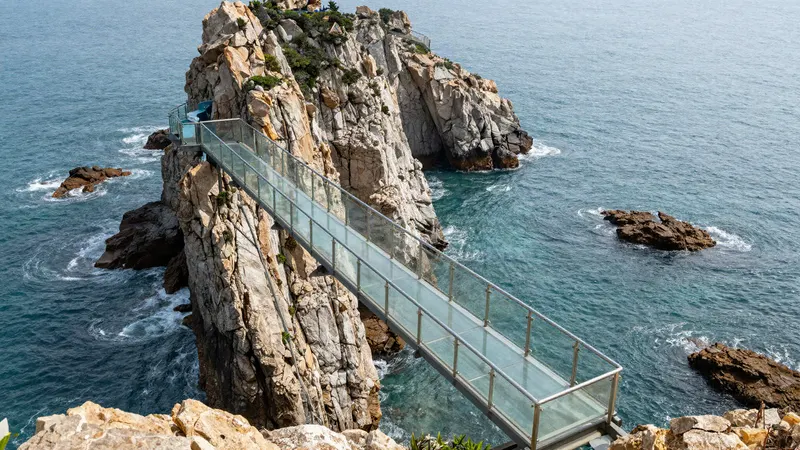
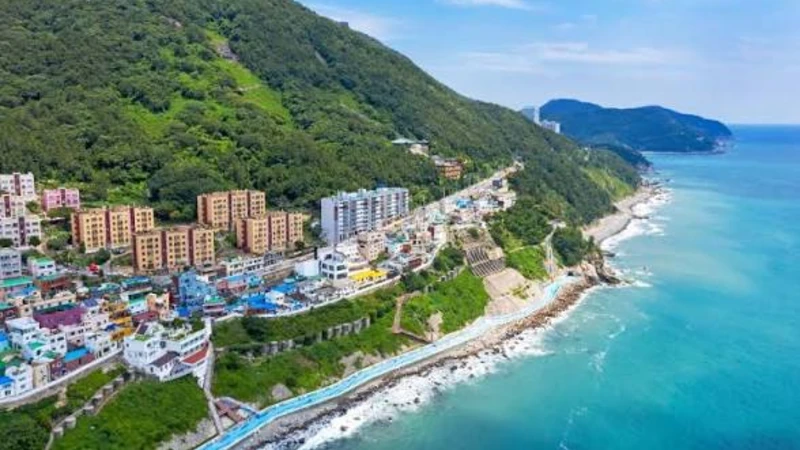
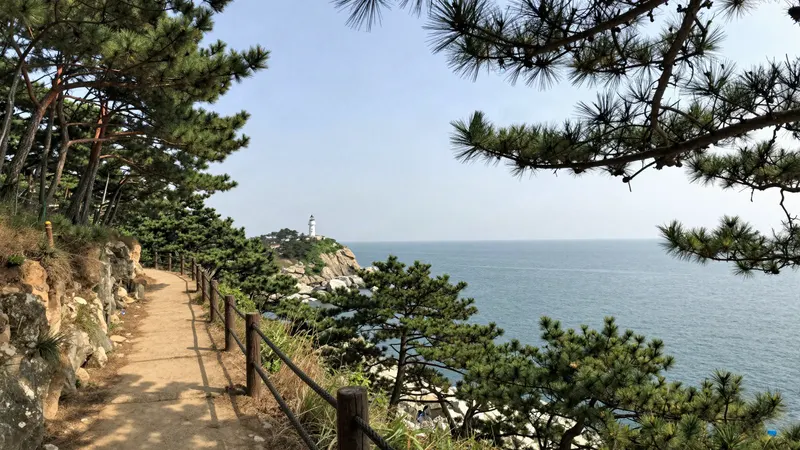
Taejongdae is a 1.6 km² headland at the southern tip of Yeongdo, the island across the bridge from Nampo-dong. According to the park's operator, the Busan Infrastructure Corporation, its highest point is 250 meters, more than 120 species of trees grow on it, led by black pine, and the coast drops away in cliffs and strangely shaped rocks facing the Korea Strait. On a clear day you can see Tsushima, about 56 km away in Japan.
It was a military fortress from the Japanese colonial period onward and closed to the public for decades. It became a resort park in 1967 and a tourist site in 1969, was designated a national scenic site (Myeongseung No. 17) in 2005, and was recognized as a national geopark in 2013. The cliffs are lake sediments from the end of the Cretaceous, cut by waves into wave-cut platforms, sea cliffs and caves. The name is linked by legend to King Taejong Muyeol of Silla, who is said to have practiced archery and trained troops here.
Getting there
There's no metro station on Yeongdo. Visit Busan's route is Metro Line 1 to Nampo Station, then bus 8, 17, 30, 88 or 186, getting off at the Taejongdae / Taejongdae Hot Springs stop by the main gate; its pages give Exit 6 in one place and Exit 8 in another, and the same buses run from both. From Busan Station, leave by Exit 7 and take bus 17, 88 or 101 to the same stop. These are ordinary city buses with plenty of stops, so allow more time than the distance suggests.
A taxi from Nampo-dong covers about 8 km, which on the meter works out to roughly 10,000–12,000 KRW and 20–25 minutes. From Busan Station it's about 11 km — roughly 12,000–14,000 KRW and 25–35 minutes, depending on traffic. These are estimates from the distance, not fixed fares.
The Danubi train, or walking the loop
A 4.3 km loop road runs around the park, and you either walk it or ride the Danubi train, a road train that circles it. The ticket booth and platform are about 200 meters up from the main gate's tourist information center, and you can get off at the stops around the loop and catch a later train on.
Tickets are 4,000 KRW for an adult loop and 2,000 KRW one way; youth (middle and high school) pay 2,000 KRW and children from age 2 through elementary school 1,500 KRW. The train runs 09:20–17:30, extended to 18:30 in the peak season, which Visit Busan gives as June to September. It doesn't run on Mondays, or the day after when Monday is a public holiday, and it stops in rain or bad weather.
Walking the whole loop takes around an hour and a half at an easy pace, plus time at the viewpoints. The road is paved but hilly, and you can ride one way and walk the other.
| Danubi ticket | Fare |
|---|---|
| Adult, full loop | 4,000 KRW |
| Adult, one way | 2,000 KRW |
| Youth (middle and high school) | 2,000 KRW |
| Child (age 2 to elementary school) | 1,500 KRW |
What's on the loop
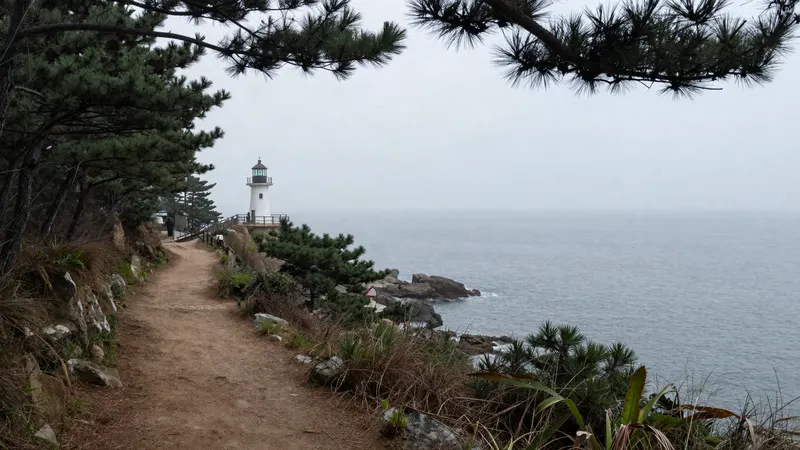
Yeongdo Lighthouse is the main stop. It was first lit in December 1906 as Mokdo Lighthouse — Mokdo and Jeolyeongdo are both old names for Yeongdo — and took its present name in 1974. Its light, on an 11-meter concrete tower, flashes three times every 18 seconds and reaches about 44 km out to sea. A 2004 remodeling turned the site into a maritime culture space with a small natural history museum, a gallery and a viewing deck. It's open 10:00–17:00, closed on Mondays, New Year's Day, Seollal and Chuseok.
The observatory near the cliffs has a marble statue of a mother and child, put up in 1976 at what was once called 'Suicide Rock', as a reminder of a mother's love for anyone who came there in despair. Along the way are war memorials and a viewpoint over Busan's south harbor.
Driving in
If you've rented a car, the loop road is open to private cars and minibuses only at night, all year, for 2,000 KRW per vehicle. In the daytime it's reserved for the Danubi train, except for vehicles carrying people with limited mobility, which may enter for the same fee. Visit Busan lists four parking lots with 683 spaces in all, card payment only.
Practical tips
- Avoid Mondays if you want the train — it's the weekly day off, and the lighthouse's culture space is closed too
- Wear proper shoes: the loop is paved, but it climbs and drops the whole way
- Bring water in summer — the loop takes longer than it looks on a map
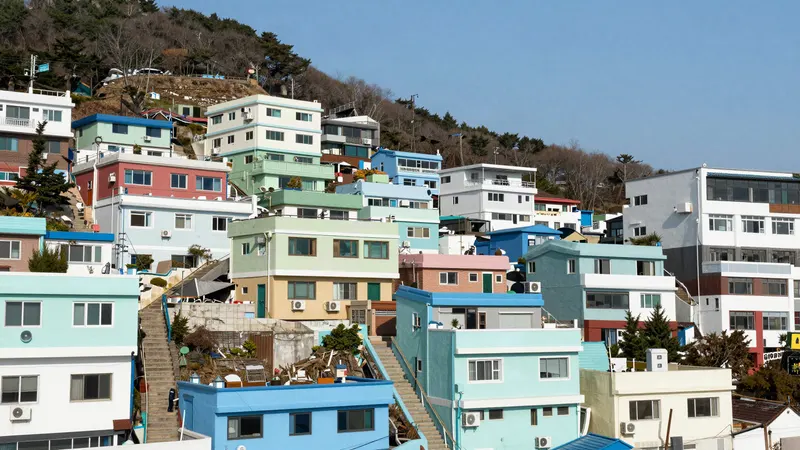
- Combine Taejongdae with Huinnyeoul Culture Village or ARTE Museum, both on Yeongdo
- Coming back, Nampo-dong and Jagalchi Market are a short ride across the bridge for dinner
Frequently asked questions
How do I get to Taejongdae Park?
Take Metro Line 1 to Nampo Station (Exit 6 or 8) and bus 8, 17, 30, 88 or 186, or from Busan Station Exit 7, bus 17, 88 or 101, to the Taejongdae / Taejongdae Hot Springs stop. A taxi from Nampo-dong is about 8 km, roughly 10,000–12,000 KRW.
How much is the Danubi train at Taejongdae?
4,000 KRW for an adult loop or 2,000 KRW one way; 2,000 KRW for middle and high school students and 1,500 KRW for children from age 2 through elementary school. It runs 09:20–17:30, to 18:30 from June to September, and not on Mondays or in rain.
Can I walk around Taejongdae instead of taking the train?
Yes. The loop road is 4.3 km and takes about an hour and a half at an easy pace, plus stops. It's paved but hilly, and you can ride the train one way and walk the other.
Is Sinseon Rock at Taejongdae open?
Not at the moment. The park operator has closed the path down to Sinseon Rock and the Mangbuseok stone because of rockfall and collapse risk on the slope.
What are Yeongdo Lighthouse's opening hours?
The lighthouse's maritime culture space is open 10:00–17:00 and closed on Mondays, New Year's Day, Seollal and Chuseok.
How much time should I set aside for Taejongdae?
Half a day, including the trip from Nampo-dong. It pairs well with Huinnyeoul Culture Village or ARTE Museum on Yeongdo, or with dinner at Jagalchi Market afterward.