At a glance
- Entry
- Free, open daily — it is a public street with people living on it
- Getting there
- Line 1 to Nampo Station, Exit 6, then bus 7, 71 or 508 to the Baengnyeonsa stop
- Information center
- 10:00–18:00. Closed January 1 and on Seollal and Chuseok day
- Layout
- Fourteen alleys along the cliff, with the Jeoryeong coastal walk directly below
- Address
- 194 Jeoryeong-ro, Yeongdo-gu — 051-419-4067
- Note
- Residents live here. Keep noise down and avoid late-evening visits
What the name means, and what the place is
Huinnyeoul takes its name from the water that used to run down the slopes of Bongnaesan and looked, from below, like white snow. The village sits on the cliff above that line, on Yeongdo, the island immediately south of Busan's old city.
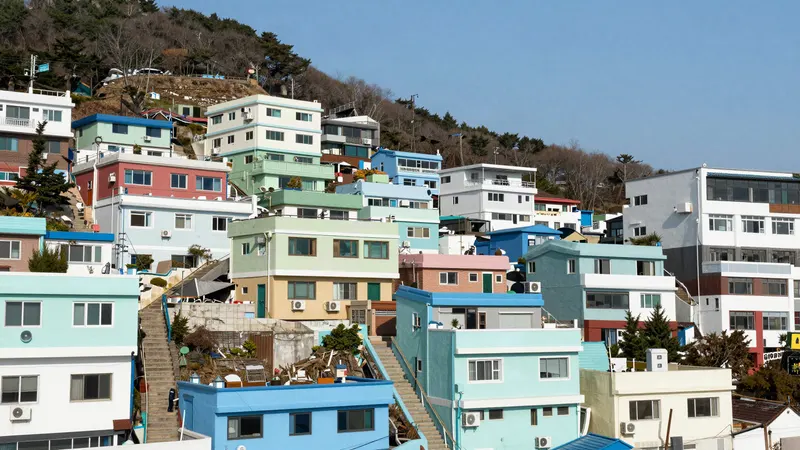
Like much of this part of Busan it began as refugee housing — people who arrived during the Korean War and built where there was space, which was the edge of a cliff. It stayed that way for sixty years. In December 2011 the old houses started being renovated into a culture and arts village, which is the version visitors see now: fourteen alleys of small houses with cafés, workshops and independent bookshops threaded between them.
It is two places stacked on top of each other
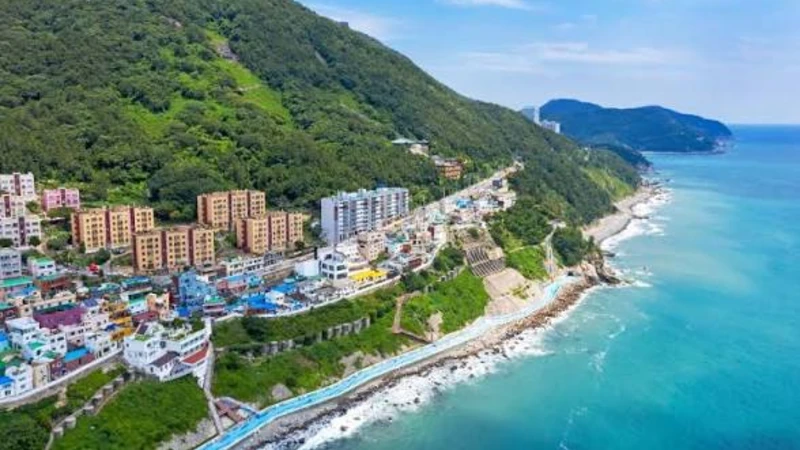
This is the thing photographs do not make clear. The village runs along the top of a steep sea wall; the Jeoryeong Coastal Walk runs along the bottom of it, at the waterline. They are the same destination on two levels, and the far end of the village path drops back down to the walk.
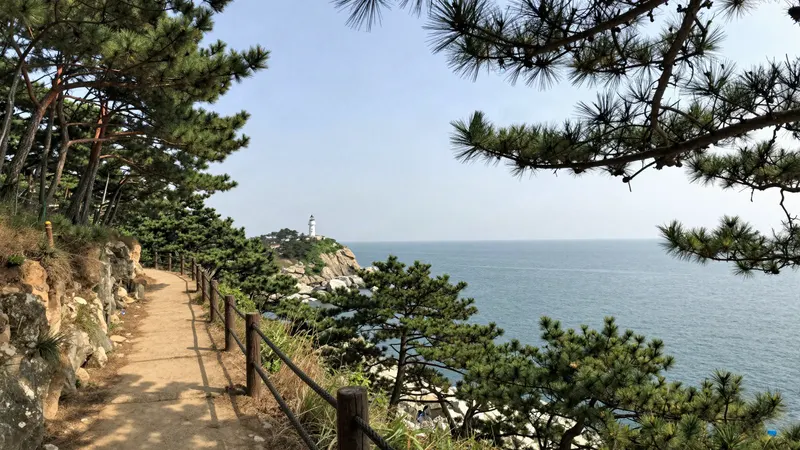
The coastal walk is the blue-painted path most people have seen in pictures, with the sea on one side and the cliff on the other. The village above is where the houses, the views between them and the cafés are. Doing only one of the two is the common mistake — the whole point is that you can walk out along one level and back along the other.
The village lanes are narrow and the drops are real. It is less punishing than Gamcheon because you are walking along a contour rather than up a hill, but it is not flat and it is not step-free.
Getting there
Yeongdo has no metro station, so every route ends with a bus or a taxi. From Metro Line 1 take Nampo Station and leave by Exit 6, then catch bus 7, 71 or 508 and get off at the Baengnyeonsa stop. The ride is short — Yeongdo is directly across the bridge from Nampo-dong.
That proximity is the useful part. The village is about fifteen minutes from Jagalchi and BIFF Square, which makes it easy to add to an old-city day rather than treating it as its own expedition.
The City Tour Green line also stops at the village on its way from Busan Station to Taejongdae, which removes the bus transfer if you have a day ticket. Note it does not run on Mondays or Tuesdays.
Hours, cost, and the information center
The village itself is free and open all the time, because it is a public street. What keeps hours is the information center, which doubles as a small film archive: 10:00 to 18:00, closed on January 1 and on the days of Seollal and Chuseok.
The film connection is not decoration. Several Korean films have shot here, and a wall in the village carries a line of dialogue from The Attorney, which is why you will find people queuing to photograph what looks like an ordinary house.
The rules, because people live here
The official guidance is blunt about this: residents live in these houses, so keep basic etiquette. Yeongdo-gu specifically asks visitors not to come late in the evening, which is the difference between a village that stays open to visitors and one that closes itself off.
- Front doors open onto the lanes. Photograph the sea and the alleys, not into windows
- Keep your voice down — the alleys are narrow and sound carries between houses
- Do not visit late at night, which the district explicitly asks
- Take your rubbish with you; there are few bins and they are for residents
- Cafés and shops here are small and often one-person operations, so expect them to close on their own schedule
What to pair it with
Yeongdo works as one loop. Taejongdae sits at the southern tip of the same island and is the obvious other half of the day, reachable by bus from the village or on the same City Tour line.
If you have already done Gamcheon and are wondering whether this is more of the same, it is not quite. Both are hillside villages turned into art districts, but Gamcheon faces inland across a bowl of houses and Huinnyeoul faces open sea, with cargo ships on the horizon. Huinnyeoul is smaller, quieter and takes about half the time.
Frequently asked questions
How do I get to Huinnyeoul Culture Village?
Yeongdo has no metro station. Take Metro Line 1 to Nampo Station, leave by Exit 6 and catch bus 7, 71 or 508, getting off at the Baengnyeonsa stop. The Busan City Tour Green line also stops at the village, though it does not run on Mondays or Tuesdays.
Is Huinnyeoul Culture Village free?
Yes. The village is a public street, free and open at any hour. The information center, which also holds a small film archive, runs 10:00 to 18:00 and closes on January 1 and on the days of Seollal and Chuseok.
What is the difference between the village and the coastal walk?
They are the same place on two levels. The village runs along the top of the sea wall; the Jeoryeong Coastal Walk — the blue-painted path in most photographs — runs along the waterline below it, and the far end of the village path comes back down to it. Walking out on one level and back on the other is the point.
How does it compare to Gamcheon Culture Village?
Both are hillside villages that began as refugee housing and became art districts, but Gamcheon looks inland across a bowl of stacked houses while Huinnyeoul faces open sea with cargo ships on the horizon. Huinnyeoul is smaller and quieter, takes about half the time, and involves walking along a contour rather than up a hill.
How long does Huinnyeoul Culture Village take?
An hour to walk the village alone, or two to three hours if you also do the coastal walk below and stop for coffee. It combines easily with Taejongdae at the southern end of the same island for a full day on Yeongdo.
Are there rules for visiting?
Yes, because people live in these houses. Keep noise down in the alleys, photograph the sea and lanes rather than into windows, take your rubbish with you, and do not visit late in the evening — Yeongdo-gu asks this specifically.
Why is it called Huinnyeoul?
The name comes from the water that used to run down the slopes of Bongnaesan above the village, which looked like white snow from below. The village grew as refugee housing during the Korean War and was renovated into a culture and arts village from December 2011.