At a glance
- Hours
- Roughly 05:00–22:00 daily; closed the 1st and 3rd Tuesday of each month
- Rooftop observatory
- Open approximately 09:00–21:00, free
- Nearest subway
- Jagalchi Station Exit 10, or Nampo Station Exit 2 (Line 1) — both a 3–5 minute walk
- By bus or taxi
- Buses 5-1, 27, 41, 61 and 86 serve the Jagalchi and Nampo-dong stops. A taxi from Busan Station takes under 10 minutes, roughly 5,000–7,000 KRW
- Best time
- Morning, for the freshest catch and a calmer floor
How the market is laid out
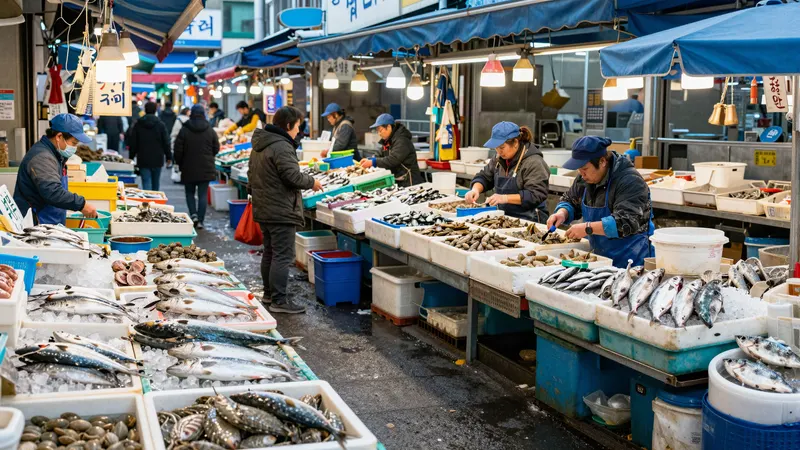
Jagalchi is two markets stacked together. Along the waterfront is an open-air street market where vendors sell live and dried seafood from tanks and trays. Behind it stands the multi-story Jagalchi Fish Market building: fresh catch on the ground floor, restaurants above.
Neither part needs a plan. Walking the outdoor stalls and watching the sorting, weighing and bargaining is worth the trip even if you buy nothing at all.
The name itself is disputed in a way locals enjoy arguing about. The most-repeated explanation is that the shore here was pebbled — jagal means gravel — and that the Gyeongsang pronunciation of the word for "place" turned the compound into Jagalchi. Another traces it to a fish of the same name.
Getting there
The subway is the simplest approach. Line 1 to Jagalchi Station and out Exit 10 puts you at the market in three to five minutes on foot; Nampo Station Exit 2 works equally well and drops you closer to the shopping streets if you want those first.
By bus, routes 5-1, 27, 41, 61 and 86 all serve the Jagalchi and Nampo-dong stops, which is useful coming from the Busan Station side of the city.
A taxi from Busan Station takes under ten minutes and runs roughly 5,000–7,000 KRW — cheap enough that it is often the right call with luggage or a group. From Haeundae it is a much longer ride, and the subway is the better choice.
How buying and eating actually works
This is the part that confuses first-timers, and it is worth understanding before you are standing in front of a tank.
You buy the seafood downstairs, then carry it upstairs to be cooked. The ground floor is the fishmongers; you pick what you want, agree a price and weight, and they prepare it. You then take it to one of the second-floor restaurants — known as chojang-jip — which prepares and serves it.
The upstairs restaurant charges separately. That fee covers the table, the cooking, and the spread of side dishes and sauces that comes with it — it is not a tip or a surcharge, it is how the arrangement is priced. Ask what it will be before you sit down, per person, so the bill holds no surprises.
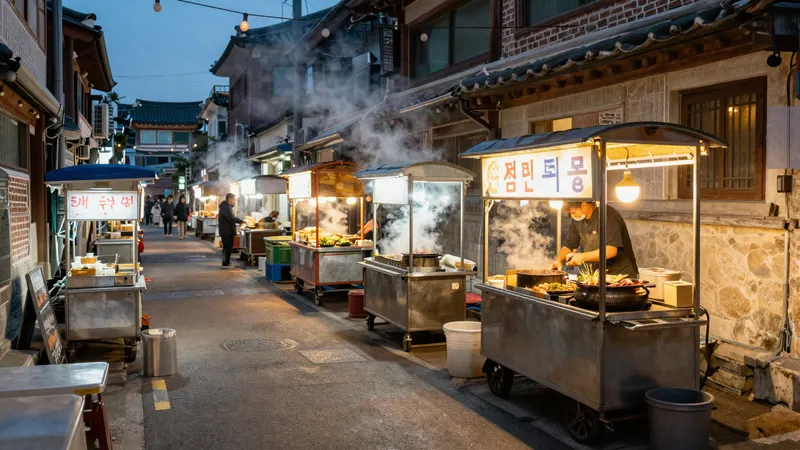
You can skip the whole system if you prefer: the upstairs restaurants also serve their own menus directly, and the street grills outside sell cooked food you eat standing up.
What to order
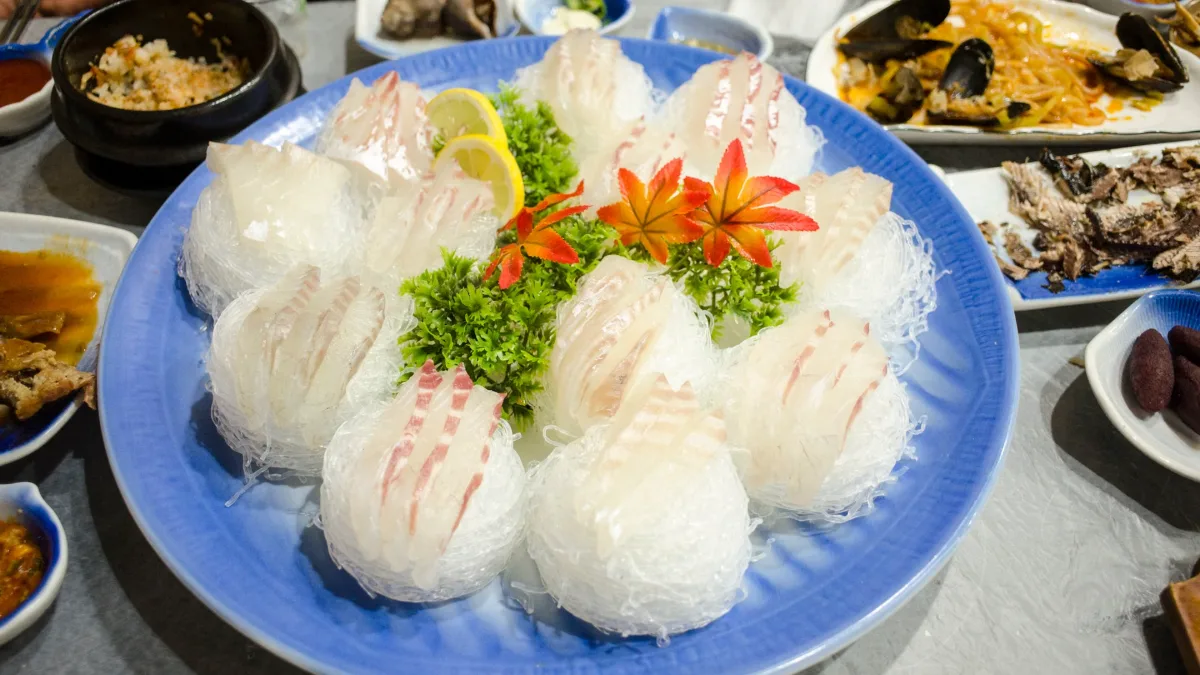
Hoe — raw sliced fish, close to sashimi — is the signature. Flounder and rockfish are the everyday choices and the ones vendors will steer you toward.
If raw fish is not for you, the outdoor grills are the better move: salt-grilled shrimp and butter-grilled scallops are sold ready to eat and need no negotiation at all.
- Hoe (raw sliced fish) — the market's specialty, sold by weight
- Grilled shrimp and scallops — the easiest thing to eat while walking
- Grilled or steamed crab — heavier and pricier, also by weight
- Dried seafood — the cheap, portable option, and the usual souvenir
King crab, and how the pricing actually works
King crab is one of the market's biggest specific draws for visitors, and most of what's on display is imported live from Russian waters rather than caught locally — Jagalchi is simply one of the places it reaches shoppers directly rather than through a restaurant markup. For travelers from Taiwan in particular it's a known bargain: the same crab typically costs noticeably less by weight here than at home, which is a large part of why it shows up so often in trip reports and videos about a Busan visit.
Crab is priced by live weight at the day's market rate, which moves with supply the way any live-seafood price does — a kilogram can cost meaningfully more or less from one week to the next, so there's no fixed number worth memorizing or expecting to match what you read online. What's worth doing instead is asking two or three stalls before committing, since prices for the same size and grade are usually close but not identical, and watching the scale itself: ask directly whether the weight shown includes the basket or container, since that's the most common source of confusion, not outright fraud.
Ordering without Korean
Pointing works, and vendors are entirely used to it. Prices get communicated with fingers, a written number, or a phone calculator held up — the calculator is the most reliable, and it is normal to open yours and hand it over.
Ask the price before agreeing to anything sold by weight, and confirm the upstairs charge before you sit. Neither is rude here; it is ordinary market practice, and vendors expect it.
The market women who run these stalls are known as Jagalchi ajimae, and they are a Busan institution in their own right — brisk rather than unfriendly, and the reason the place has the atmosphere it does.
Around the market
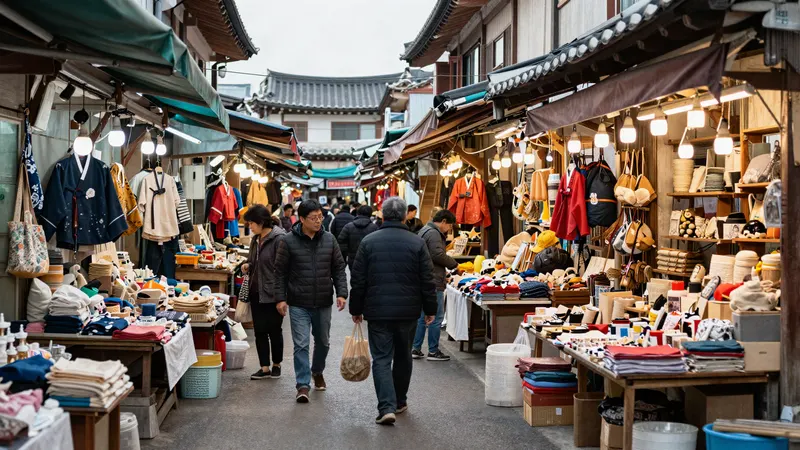
Jagalchi runs straight into Nampo-dong and BIFF Square, so the natural shape of a visit is market first, street food and shopping after, all on foot.
The main building has a free rooftop observation deck with a view over the harbor. It takes ten minutes and most visitors miss it entirely, which is reason enough to go up.
- Next door: BIFF Square — the street food alley
- Also within walking distance: Gukje Market
Frequently asked questions
What are Jagalchi Market's opening hours?
Roughly 05:00 to 22:00 daily, though individual stalls vary. The market closes on the first and third Tuesday of each month. The rooftop observation deck is open approximately 09:00–21:00 and is free.
How do I get to Jagalchi Market?
Metro Line 1 to Jagalchi Station, Exit 10 — three to five minutes on foot. Nampo Station Exit 2 works too. Buses 5-1, 27, 41, 61 and 86 serve the area, and a taxi from Busan Station takes under ten minutes at roughly 5,000–7,000 KRW.
How does buying and eating at Jagalchi work?
You buy seafood from a fishmonger on the ground floor, agreeing a price and weight, then carry it upstairs to a second-floor restaurant — a chojang-jip — which cooks and serves it. The restaurant charges a separate per-person fee covering the table, preparation and side dishes. Ask what that fee is before you sit down.
What is the extra charge upstairs for?
It covers the table, the cooking and the spread of side dishes and sauces served with your seafood. It is not a tip or a hidden surcharge — it is simply how the buy-downstairs-cook-upstairs arrangement is priced. Confirm the amount per person before sitting.
What should I eat at Jagalchi Market?
Hoe, raw sliced fish, is the specialty — flounder and rockfish are the usual choices. If raw fish is not for you, the outdoor grills sell salt-grilled shrimp and butter-grilled scallops ready to eat, with no negotiation involved. Dried seafood is the cheap, portable option.
Can I order without speaking Korean?
Yes. Pointing works and vendors are used to foreign visitors. Prices are communicated with fingers, a written number, or a phone calculator — opening your own calculator and handing it over is normal and avoids most misunderstandings. Always ask the price before agreeing to anything sold by weight.
What is the best time to visit?
Morning, for the freshest catch and a calmer floor. The market opens around 05:00, and the early hours are both the most active for trading and the least crowded with visitors.
How much does king crab cost at Jagalchi Market?
There is no fixed price — crab is sold by live weight at the day's market rate, which moves with supply and can shift meaningfully from one week to the next. It is a well-known bargain for visitors from Taiwan, where the same crab typically costs more by weight. Ask two or three stalls before committing and confirm whether the shown weight includes the basket.