At a glance
- What it is
- Usually gomjangeo — hagfish, a jawless sea creature sold as 'eel' — grilled over coal briquettes or straw
- Two ways to order
- Sogeum-gui (salt-grilled) or yangnyeom-gui (in a spicy sauce), then fried rice in what's left of the sauce
- Easiest in the city
- Jagalchi Market (Jagalchi Station Exit 10) and Haeundae Market (Haeundae Station Exit 3, a 5-minute walk)
- Straw-fire style
- Gongsu Village in Gijang — bus 181 from Haeundae Station Exit 7 to the Gongsu Village stop
- Conger eel
- Chilam port in Gijang, home of the county's conger eel festival
- Price
- Varies by shop, by plate or by weight — ask before you order, especially at market stalls
'Eel' in Busan usually means hagfish
The dish Busan is known for is gomjangeo, also spelled and pronounced kkomjangeo. Its standard Korean name is meokjangeo, and in English it's hagfish — which is not a true eel at all. It has no jaw, its eyes have degenerated, and it feeds by sucking rather than biting. The nickname is said to come from the way it lies still and then wriggles the moment you pick it up.
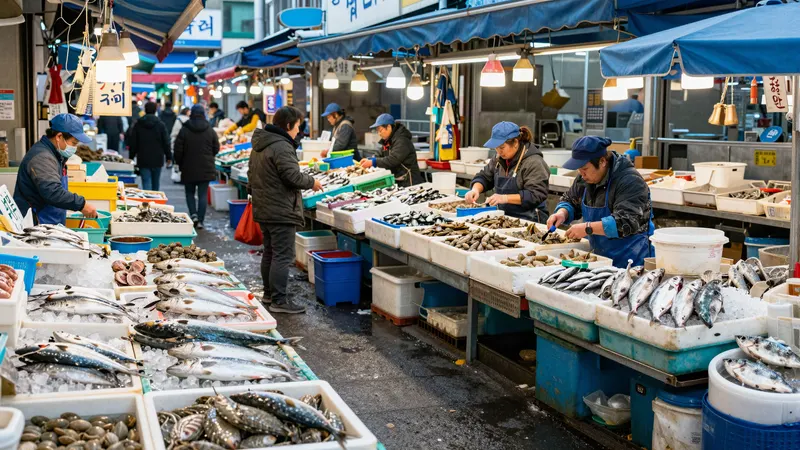
For a long time nobody wanted to eat it. Visit Busan notes that hagfish, plentiful off the Busan coast, was originally caught for its skin, which was used for leather, and the rest thrown away. It became food after the Korean War, when refugees settled in Busan in large numbers and stalls grilling hagfish over coal briquettes lined up at Jagalchi Market — which is where the city's version of the dish comes from.
Two other 'eels' turn up on Busan menus, and they are different animals with different prices. If a menu or a sign says one of the words below, this is what you're getting.
- 곰장어 / 꼼장어 (gomjangeo) — hagfish. Jawless, firm and chewy: the Busan classic, at Jagalchi, Haeundae Market and Gijang
- 붕장어 / 아나고 (bungjangeo, anago) — conger eel, a true sea eel. Gijang's other specialty, especially at Chilam port
- 장어 / 민물장어 (jangeo) — freshwater eel, the one sold as unagi in Japan. Found at eel restaurants all over Korea; not a Busan specialty
How it's cooked and how to order
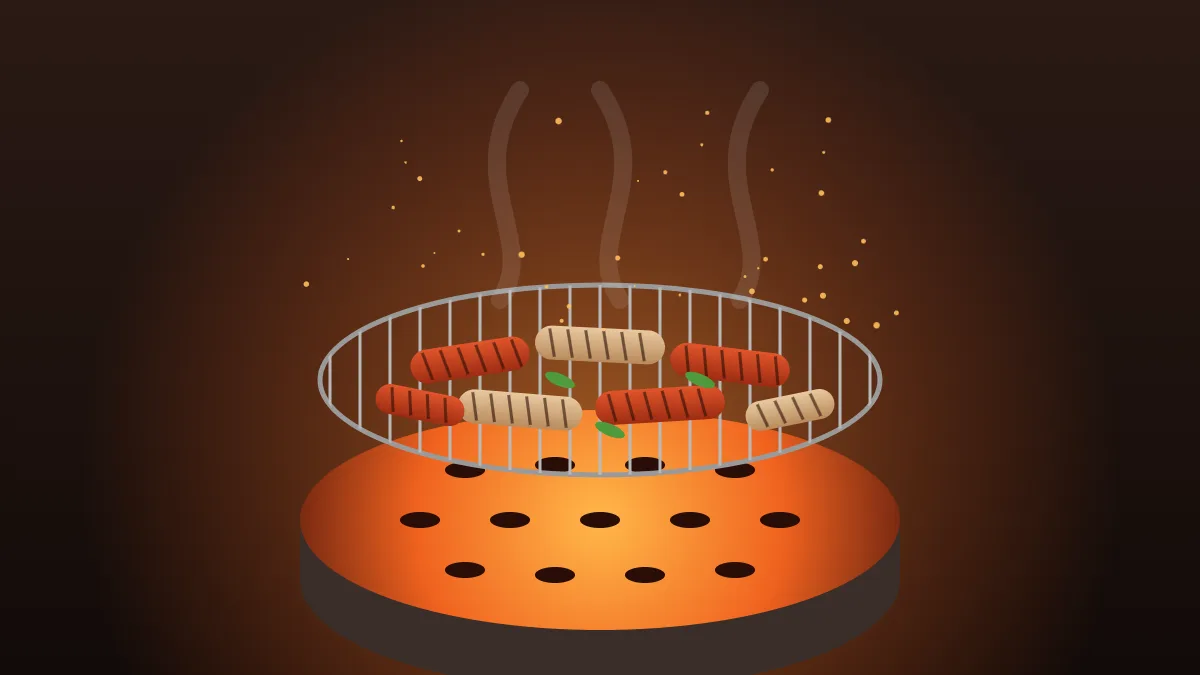
Hagfish can be cooked on a hot stone plate, but Visit Busan's advice is that the real Busan version is grilled over yeontan, the cylindrical coal briquettes. The cook first sears the pieces in a hinged wire grill, pressing it down hard — hagfish stays alive for a long time, and it will still be moving when it goes on the fire. If that's going to bother you, it's better to know before you sit down.
From there you choose. Sogeum-gui is salt-grilled: seasoned with salt and cooked further, so you taste the fish itself. Yangnyeom-gui is the spicy version: the pieces are tossed with vegetables in a chili-based sauce and grilled again. Salt-grilled is the one to pick if you want to know what hagfish actually tastes like; the spicy sauce hides the texture for anyone unsure about it.
Eat it the way you'd eat Korean barbecue: a lettuce leaf, a perilla leaf on top, a piece of hagfish, garlic and chili, folded into one bite. Then order bokkeumbap, fried rice made in the leftover sauce with seaweed flakes and pressed flat so the bottom crisps. It's part of the meal, not an extra.
Where to eat it in the city
Jagalchi is the obvious first stop, since it's where the dish took shape. The hagfish grills are in the lanes around the market, so it fits into any visit to the seafood market: Metro Line 1 to Jagalchi Station, Exit 10, and a 3 to 5-minute walk. The Jagalchi guide covers the rest of the market, including how ordering works.
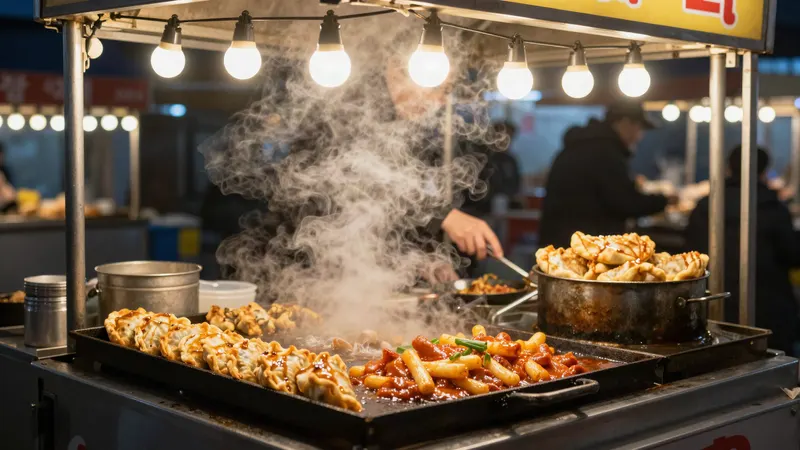
On the Haeundae side, Haeundae Market — the market street a few minutes back from the beach — lists grilled hagfish among its regulars, alongside tteokbokki, fried snacks and dwaeji gukbap. Take Metro Line 2 to Haeundae Station, Exit 3, and walk about 5 minutes, or take bus 100, 115-1, 141, 200, 307 or 39 to the Haeundae Market stop. The market runs 09:00–22:00 every day, though each shop keeps its own hours.
Visit Busan also names Oncheonjang, the old hot-spring district in Dongnae, as one of the city's long-running hagfish alleys.
Gijang: straw-fire hagfish
Gijang, the county on Busan's northeast coast, does hagfish its own way. Gijang County describes its hagfish as caught right off the coast and grilled on the spot over straw, fresh pine needles or charcoal, then dipped in coarse salt. The best-known version is jipbul-gui, straw-fire grilling: the whole hagfish is burned over a straw fire, the charred skin is peeled away, the guts are removed, and the meat is cut into pieces and served.
The restaurants cluster in Gongsu Village, a small fishing village on the coast road. Menus usually add the salt-grilled and spicy versions, along with hagfish in soybean-paste soup and in spicy stew. Gijang's hagfish was named one of Busan's 13 local foods in 2009.
Gongsu Village is on the same bus line as Haedong Yonggungsa, which makes the two an easy pair. Take Metro Line 2 to Haeundae Station, Exit 7, then bus 181 to the Gongsu Village stop. A taxi from Haeundae Station is about 6 km, which on the meter works out to somewhere around 8,000–11,000 KRW and 15 minutes, depending on traffic.
Gijang's conger eel: Chilam
Conger eel, bungjangeo, is the other eel Gijang is known for. Gijang County lists it as one of its signature products: a wild catch, available year-round. Chilam, a small port further up the coast, is the county's conger eel village.
Gijang also holds a conger eel festival that alternates between Chilam and Sinam ports. The 2025 edition ran October 24–26, 2025 at Chilam, with bare-hand eel catching, free tastings, traditional performances and fireworks. Dates and venue change each time, so check Gijang County's site before planning around it.
Getting to Chilam takes some effort. Take Metro Line 2 to Jangsan Station and then bus 180 to the Chilam stop, which is a 3-minute walk from the eel village. Alternatively, take the Donghae Line to Jwacheon Station and then bus 188, Gijang 3 or Gijang 8-1 to Chilam. The last buses leave around 22:40–22:50, so don't stay too late. A taxi from Haeundae Station is about 24 km — roughly 22,000–28,000 KRW and 30 minutes on the meter.
Practical notes
- Ask the price before you sit down. Hagfish is sold by the plate or by weight, and it varies from shop to shop
- Salt-grilled is the mild choice; the spicy sauce is genuinely spicy
- The hagfish is alive until it's grilled, and it moves on the grill. That is normal, not a sign that something is wrong
- Save room for the fried rice at the end — ask for bokkeumbap (볶음밥)
- Gijang is a half-day trip from the city. Pair Gongsu Village with Haedong Yonggungsa on bus 181 rather than coming out just to eat
Frequently asked questions
Is Busan's grilled eel actually eel?
Usually not. The dish Busan is known for, gomjangeo or kkomjangeo, is hagfish — a jawless sea creature that looks like an eel. Conger eel (bungjangeo, also called anago) and freshwater eel (jangeo) are sold too, and they are different animals at different prices.
What's the difference between salt-grilled and spicy hagfish?
Sogeum-gui is salt-grilled, so you taste the fish itself. Yangnyeom-gui is tossed with vegetables in a spicy chili-based sauce and grilled again. Either way, finish by ordering fried rice made in the leftover sauce.
Where is the easiest place to try grilled hagfish in Busan?
Jagalchi Market, where the dish took shape — Metro Line 1 to Jagalchi Station, Exit 10. On the Haeundae side, Haeundae Market has it too, a 5-minute walk from Haeundae Station Exit 3.
What is straw-fire hagfish?
Jipbul-gui, a Gijang specialty: the whole hagfish is burned over a straw fire, then the charred skin is peeled off and the meat is cut up and eaten dipped in salt. The restaurants are in Gongsu Village, on bus 181 from Haeundae Station Exit 7 — the same bus that goes to Haedong Yonggungsa.
Where can I eat conger eel in Busan?
Chilam port in Gijang is the county's conger eel village, reached by bus 180 from Jangsan Station or by bus from Jwacheon Station on the Donghae Line. Gijang also holds a conger eel festival that alternates between Chilam and Sinam ports; check the county's site for the next dates.