At a glance
- Daytime
- BIFF Square and the Gukje Market alleys, Nampo-dong — Jagalchi Station, Line 1
- After dark
- Bupyeong Kkangtong Night Market, 19:30 to midnight, daily except major holidays
- Opened
- October 2013 — Korea's first permanent night market
- Payment
- Cash. Card acceptance is improving but is not something to rely on
- Typical price
- A few thousand won per item; you graze across several stalls
- Language
- Pointing works everywhere. No Korean needed
Three different things, all called street food
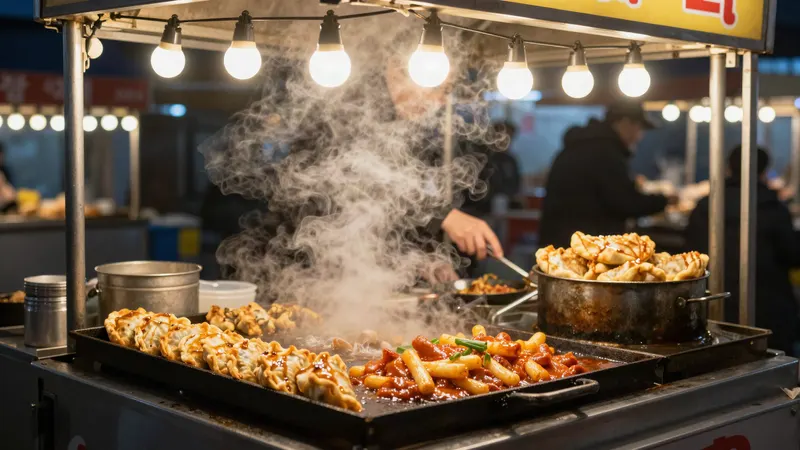
It helps to know which one you are looking for, because they run at different hours and in different places. The daytime version lives in the market alleys of Nampo-dong and runs from late morning until evening — this is where hotteok and tteokbokki are. The night market version is a specific place, Bupyeong Kkangtong, where carts are wheeled into the lane at 19:30 and the food turns international. And the pojangmacha version is the orange-tented carts that appear near the beaches and the nightlife districts after dark, which are as much about drinking as eating.
For a first visit, the first two are a single evening: start in the BIFF Square lanes in the late afternoon, drift north through the markets, and be at the night market when it opens. The whole thing is one continuous walk of about fifteen minutes end to end, which is why Nampo-dong is where every street food itinerary in this city begins.
What you are eating is covered in more depth in the signature dishes guide. This page is about where the stalls are and how the transaction works.
BIFF Square, in the afternoon and early evening
BIFF Square is the pedestrian street in Nampo-dong's old cinema district, and it is the highest concentration of food stalls in the city. Come out of Jagalchi Station on Line 1 and it is right there — no bus, no walk to speak of.
The thing to eat is ssiat hotteok: a sugar-syrup pancake fried in oil, split along one side, and packed with sunflower seeds, pumpkin seeds and nuts. Busan's tourism office calls it a Nampo-dong specialty, and this street is where the split-and-stuff version was invented. Take it in the paper cup they hand you and wait thirty seconds; the syrup comes out far hotter than the outside suggests.
Around it: tteokbokki, dumplings, fried skewers of every description, and bibim dangmyeon — cold sweet potato noodles tossed in sauce, a Busan thing that most visitors walk straight past. Budget an hour and treat it as a meal assembled from four stalls rather than one sitting.
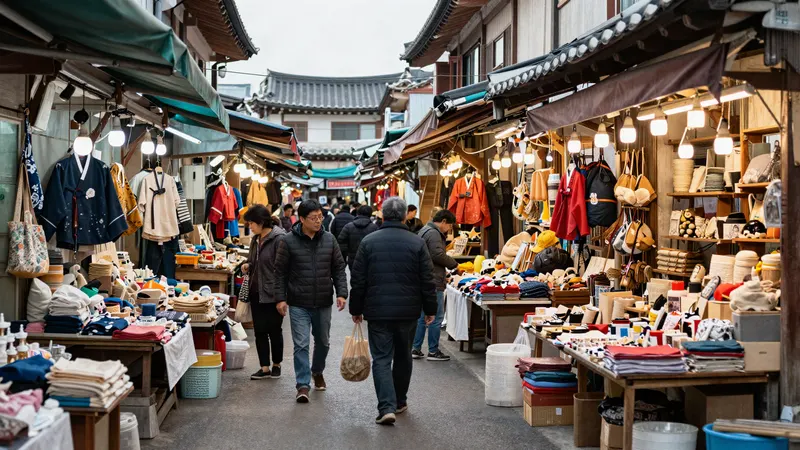
The neighboring Gukje Market and Bupyeong Kkangtong Market have their own food alleys, open in the daytime, and they are where you find the sit-down versions — chungmu gimbap, fish cake, soup stalls with four plastic stools. These are older and quieter than BIFF Square, and generally better value.
Bupyeong Kkangtong Night Market
This is the one worth planning around. Bupyeong Kkangtong opened in October 2013 as Korea's first permanent night market, and it has become the model that other cities copied. It runs every evening from 19:30 to midnight, year-round, closing only for the major holidays.
The mechanics are specific: the market's daytime shops are already there, and at opening time wheeled carts are rolled into the alley between them, so the same ground turns into a different market twice a day. The motto the market uses for itself is 'a world tour in one night', and the food follows it — grilled pork belly next to okonomiyaki next to kebabs next to Vietnamese banh xeo. It is not a traditional-Korean-food night market, and if that is what you came for, the daytime alleys are the better bet.
It gets busy. The city reports more than 7,000 visitors a day at weekends and on public holidays, in a lane narrow enough that keeping to the right is a posted rule rather than a suggestion. Arriving at opening rather than at 21:00 is the difference between browsing and shuffling.
The harbor: seafood, and the one you should try
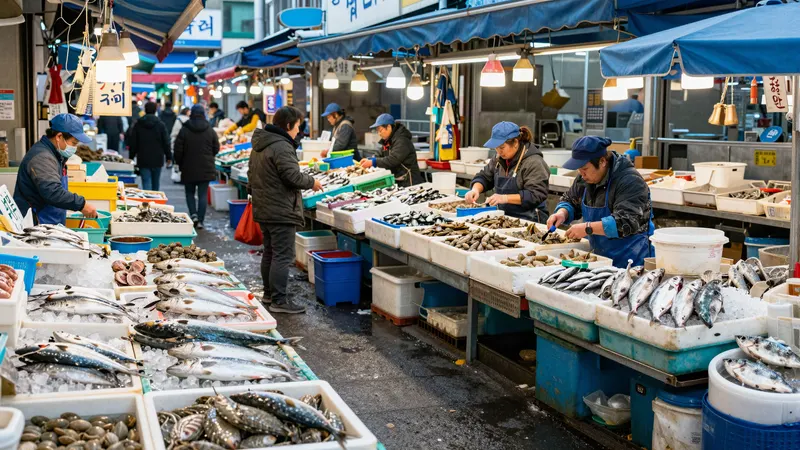
Jagalchi Market is not street food in the stall sense, but it is the most Busan meal available and it works on a system worth explaining. You buy live seafood from a stall on the ground floor, agree a price, and a restaurant upstairs cooks or serves it for a separate fee per person. You are paying twice on purpose, and both numbers should be agreed before anything is cut.
The street-food-adjacent thing here is gomjangeo, hagfish grilled at the table, which is a Jagalchi institution and the item most likely to be photographed and least likely to be ordered by a first-time visitor. It is worth ordering.
Around the market's edges are simpler stalls doing grilled fish and seafood pancakes at a fraction of the price, which is the version to pick if you want the flavor without the ninety-minute commitment.
Pojangmacha, after dark
The orange-tented carts with plastic chairs inside are pojangmacha, and they are a different proposition again: a place to sit, drink soju or beer, and eat while you do it. They appear in the evening behind Gwangalli and Haeundae beaches, around Seomyeon, and in the older commercial streets, and they pack up before morning.
The food is chicken feet, stir-fried intestine, egg rolls, grilled fish, and whatever the owner does well. Nothing is written down in English and there is often no menu at all. Pointing at what the next table has is a completely normal way to order and nobody will find it strange.
Two practicalities. These are cash businesses almost without exception. And they are drinking establishments as much as eating ones, so a solo visitor ordering only food may get a slightly puzzled look — not unwelcome, just unusual.
How the transaction actually works
- Prices are displayed on the stall, usually on a board. What is written is what you pay, and nobody haggles over street food
- Point at what you want and hold up fingers for how many. This is the normal way locals order too when the stall is busy
- Carry small notes. Stalls dislike breaking 50,000 KRW bills, and many have a card minimum higher than what you are buying
- The broth the fish cake skewers sit in is free. A paper cup of it is expected, not cheeky
- You eat standing at the stall or walking. There are usually no tables, and taking food away to eat elsewhere is fine
- Put trash in the stall's bin, not a street bin — the stall is responsible for it and public bins are scarce
- Allergies are hard to communicate. If a reaction would be serious, stick to items you can see being made
Timing and practical notes
- Late afternoon into early evening is the sweet spot at BIFF Square; the night market only starts at 19:30
- Rain thins the stalls out significantly, especially the wheeled ones at the night market
- Summer evenings are busier than summer afternoons, because nobody in Busan eats outdoors at 14:00 in August
- A full street food evening runs 15,000 to 25,000 KRW per person, which is less than a sit-down meal for two
- Nampo-dong's metro service runs late enough that the night market's midnight close is not a problem — check the last train for your line
- If you want traditional Korean food specifically, the daytime market alleys serve it and the night market largely does not
Frequently asked questions
Where should I start with street food in Busan?
BIFF Square in Nampo-dong, right outside Jagalchi Station on Line 1. It has the highest concentration of stalls in the city, it is where ssiat hotteok was invented, and it is a fifteen-minute walk from there through the Gukje and Bupyeong markets to the night market. One continuous evening covers all of it.
Does Busan have night markets?
Yes — Bupyeong Kkangtong Night Market, which opened in October 2013 as Korea's first permanent night market. It runs 19:30 to midnight every evening year-round, closing only for major holidays. Wheeled carts are rolled into the alley at opening, so the same market is a different place by day and by night.
What kind of food does the night market sell?
International rather than traditional Korean. The market's own motto is 'a world tour in one night', and the stalls run to grilled pork belly, okonomiyaki, kebabs and Vietnamese banh xeo. If you specifically want Korean street food, the daytime alleys at BIFF Square and Gukje Market are the better choice.
Do I need cash for Busan street food?
Yes. Card acceptance is improving but is not something to rely on at a stall, and many stalls set a card minimum above what a single item costs. Carry small notes — 1,000s and 10,000s — because 50,000 KRW bills are awkward to break.
How do I order without speaking Korean?
Point at what you want and hold up fingers for the quantity. Prices are displayed on the stall and are fixed, so there is nothing to negotiate. Pointing at what the next customer is eating is also completely normal and nobody will find it odd.
How much does a street food evening cost?
Roughly 15,000 to 25,000 KRW per person if you graze across several stalls, with individual items a few thousand won each. That is less than a sit-down meal for two, which is part of why this is the standard first evening in Busan.