At a glance
- Dwaeji gukbap
- Pork broth over rice. Named a Busan Future Heritage in July 2025
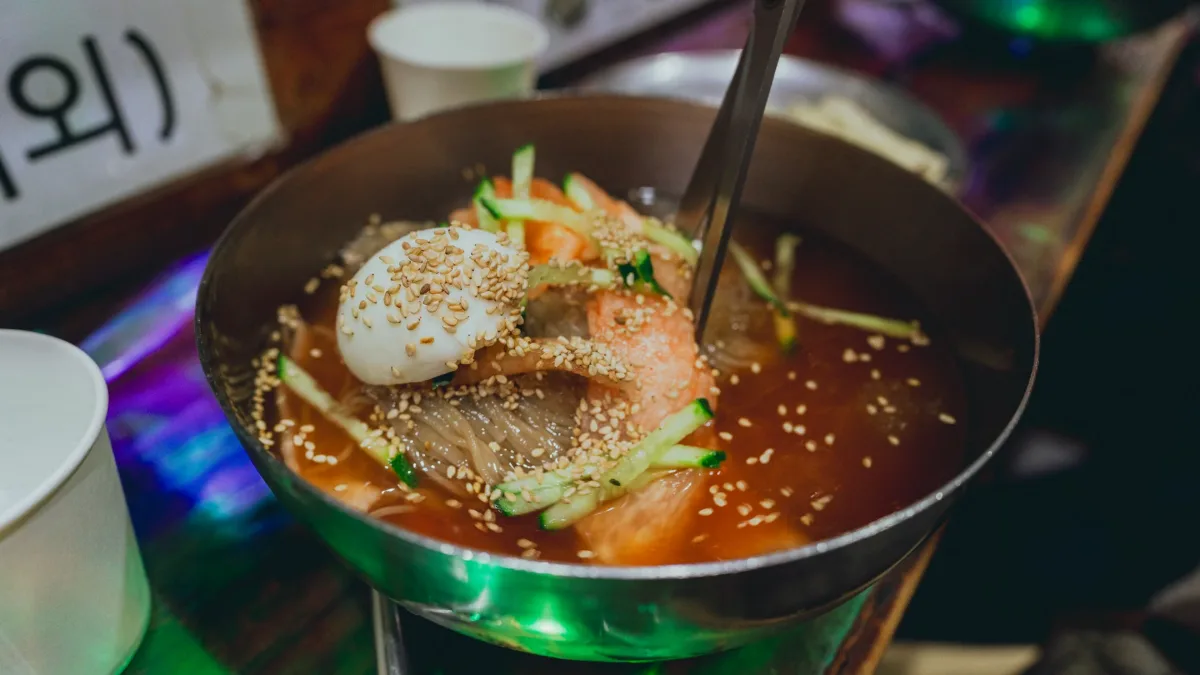
- Milmyeon
- Chilled wheat noodles. Designated a Busan local specialty food in 2006
- Dongnae pajeon
- Scallion pancake with oysters, mussels and a rice-flour batter
- Busan eomuk
- Fish cake with a high fish content — a local industry, not a snack
- Ssiat hotteok
- Sweet pancake split and packed with seeds. A Nampo-dong invention
- Typical cost
- Most of these are single-dish meals at neighborhood prices, not special-occasion food
Why Busan's food is not Seoul's food
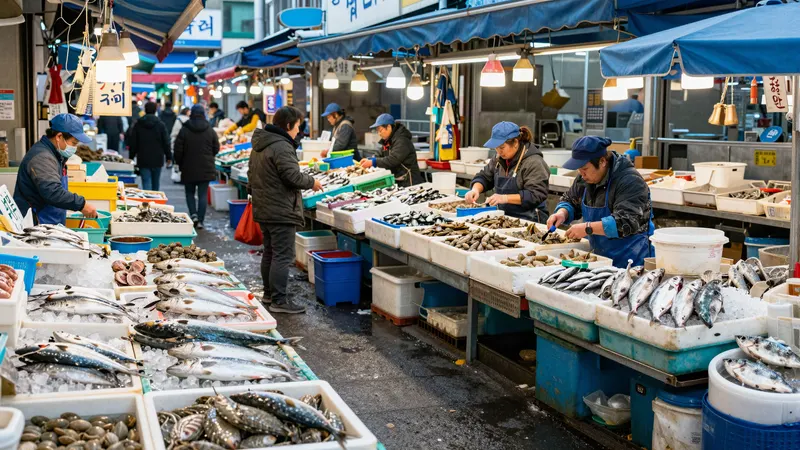
Three forces made the food here, and you can taste all three in a single day. The first is the sea: Busan has the country's largest fish market and a processing industry that goes back to the opening of the port in 1876. The second is the Korean War, when the city took in enormous numbers of refugees and had to feed them cheaply — that pressure invented at least two of the dishes below. The third is ordinary local agriculture, which is why a pancake from the Dongnae district contains water dropwort and shellfish rather than just scallions.
What this adds up to, for a visitor, is that Busan's signature dishes are cheap, filling, and eaten by everyone. None of them are special-occasion food. You will find dwaeji gukbap shops open at 07:00 for people going to work, and you should treat them that way rather than as an attraction.
Dwaeji gukbap: the dish the city is built on
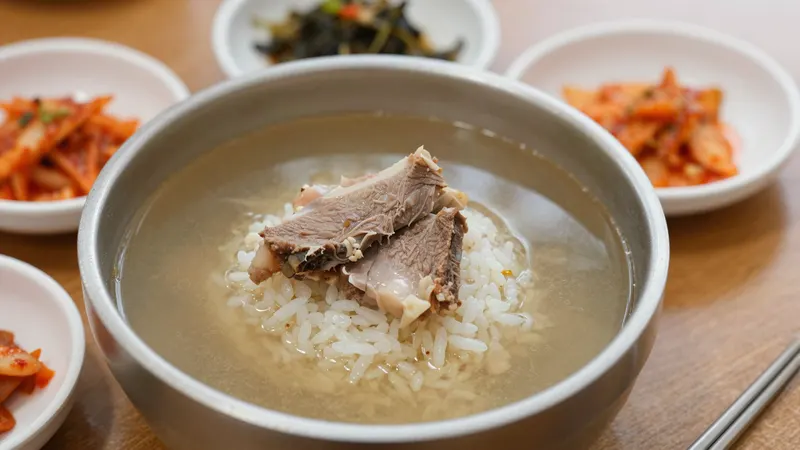
Dwaeji gukbap is pork broth poured over rice, either in the same bowl or with the rice served separately. Its exact origin is not settled — the city's own heritage page puts it around the Korean War, with one account tracing it to market food from Miryang that spread through Busan and South Gyeongsang during the war. In July 2025, Busan formally named it a Busan Future Heritage.
The distinction worth knowing is against sundae gukbap, which uses offal and blood sausage; dwaeji gukbap uses pork meat. Beyond that, no two shops agree. Some boil bones for hours to get a milky broth, others build the stock from meat alone and serve something clear and much lighter. Neither is the 'correct' one, and a shop you dislike does not mean you dislike the dish.
It arrives unseasoned on purpose, with a tray of things to add. Dadaegi, a red chili paste, goes in a spoonful at a time for heat. Saeujeot, salted fermented shrimp, is the salt — add it gradually and taste, because it is stronger than it looks. Jeongguji muchim, seasoned garlic chives, is dumped on top and stirred through; in Busan the chives are called jeongguji rather than the standard buchu, which tells you how local this dish is.
Where: Seomyeon has a well-known cluster of shops, there are long-running places near Busan Station, and almost every residential neighborhood has one. This is the single dish most worth eating away from the tourist areas. For the full history, seasoning breakdown and why it topped a 2025 survey of Taiwanese visitors, see the dedicated dwaeji gukbap guide.
Milmyeon: the wartime noodle that became a summer habit
Milmyeon exists because of a shortage. Refugees from the north wanted naengmyeon, the cold buckwheat noodle dish of their home provinces, and neither buckwheat nor potato starch was available. What was available was American aid flour, so the noodles were made from wheat cut with starch and served the same way. Busan's tourism office dates its wider popularity to the 1970s and its arrival as a signature city dish to the late 1990s; the city designated it a local specialty food in 2006.
The broth is the thing people argue about. It is built on pork or beef bone and commonly carries medicinal ingredients — licorice root, angelica, cinnamon — which give it a faintly sweet, herbal edge that distinguishes it from naengmyeon. The noodles are rinsed in iced water before serving to keep them springy, and they are noticeably chewier than buckwheat.
Two versions exist and you will be asked which one you want. Mul-milmyeon comes in cold broth. Bibim-milmyeon comes without broth, dressed in a red sauce, and is the spicier of the two. If you order bibim and find it too hot, asking for a small bowl of the broth is normal and nobody will mind.
Where: milmyeon shops are everywhere from May onward, and the best-known ones have queues in July and August. It is one of the few Busan dishes that is genuinely seasonal in practice, though the larger shops serve it year-round.
Dongnae pajeon: the one with a pedigree
A standard pajeon is scallions in a wheat batter. The Dongnae version, according to Busan Metropolitan City's own description, changes almost every part of that: water dropwort grown in Dongnae goes in alongside the scallions, oysters and mussels come from the nearby coast, beef and pine mushroom appear in the mix, and the batter is made partly from ground rice, which is what gives it its chewy, sticky texture. It is also cooked wetter than an ordinary pancake, with egg poured over the top near the end.
The city traces it to the Dongnae market, where it was griddled at stalls and eaten as a midday meal on market days around the third day of the third lunar month. Before Liberation, the city writes, people from surrounding towns said they went to the Dongnae market for the pancake. After the Korean War it moved into the restaurants run by former Dongnae entertainers, which is how it acquired its reputation as something more formal than street food.
Where: the Dongnae district, reachable on Metro Line 1 or Line 4. It is the one dish on this list worth a deliberate trip, and it is normally shared — a full pajeon is not a one-person order.
Busan eomuk: fish cake as an industry
Elsewhere in Korea, eomuk is a cheap snack on a stick. In Busan it is a manufacturing sector with a history the city dates to 1876, when Japanese settlers arrived and brought the processing technique with them; Jagalchi fish market opened in 1889, and the fish landed here were supplied to Bupyeong market and processed nearby. That supply chain is still the point. What Busan claims for its version is a high proportion of actual fish in the paste, which is what separates it from the rubbery version sold elsewhere.
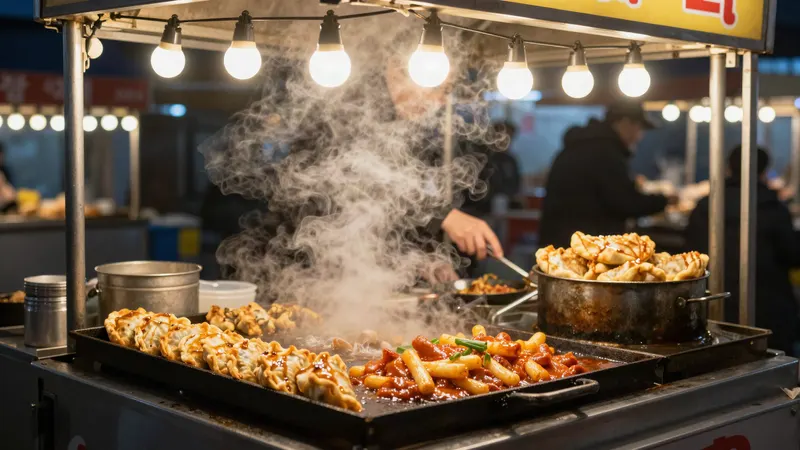
You will meet it in three forms: steamed, grilled, and fried. The fried bars sold hot from a counter come in dozens of variants — burdock, perilla leaf, mushroom, vegetable, squid, shrimp — and are eaten standing up. The broth the skewers sit in is free, and asking for a paper cup of it is expected rather than cheeky.
Where: department store basements, the shops around Bupyeong Kkangtong Market next to Gukje Market, and the branded counters inside Busan Station and Gimhae Airport, which is where most people buy the vacuum-packed boxes to take home.
Ssiat hotteok, and the Nampo-dong snack row
Hotteok is a pan-fried dough pocket filled with brown sugar syrup, eaten across Korea in winter. The Busan version is fried in more oil, then split open along one side and packed with sunflower seeds, pumpkin seeds and nuts, so the sugar and the seeds come out together. Busan's tourism office calls it a Nampo-dong specialty, which is accurate — this is a local variation of a national dish, invented on this street.
The place to eat it is BIFF Square, where the same lane also sells tteokbokki, dumplings, skewers, and bibim dangmyeon — cold sweet potato noodles dressed in sauce, another Busan-specific thing that most visitors walk past. Take the hotteok in the paper cup they hand you and let it cool for thirty seconds; the syrup comes out at an unreasonable temperature.
Fuller coverage of the stalls, the hours and what to avoid is in the street food and night markets guide.
What else the city puts on its own list
Busan Metropolitan City's local-food pages name a few things beyond the dishes above, and they are a good shortlist if you have more than a couple of days.
| Dish or product | What it is | Where |
|---|---|---|
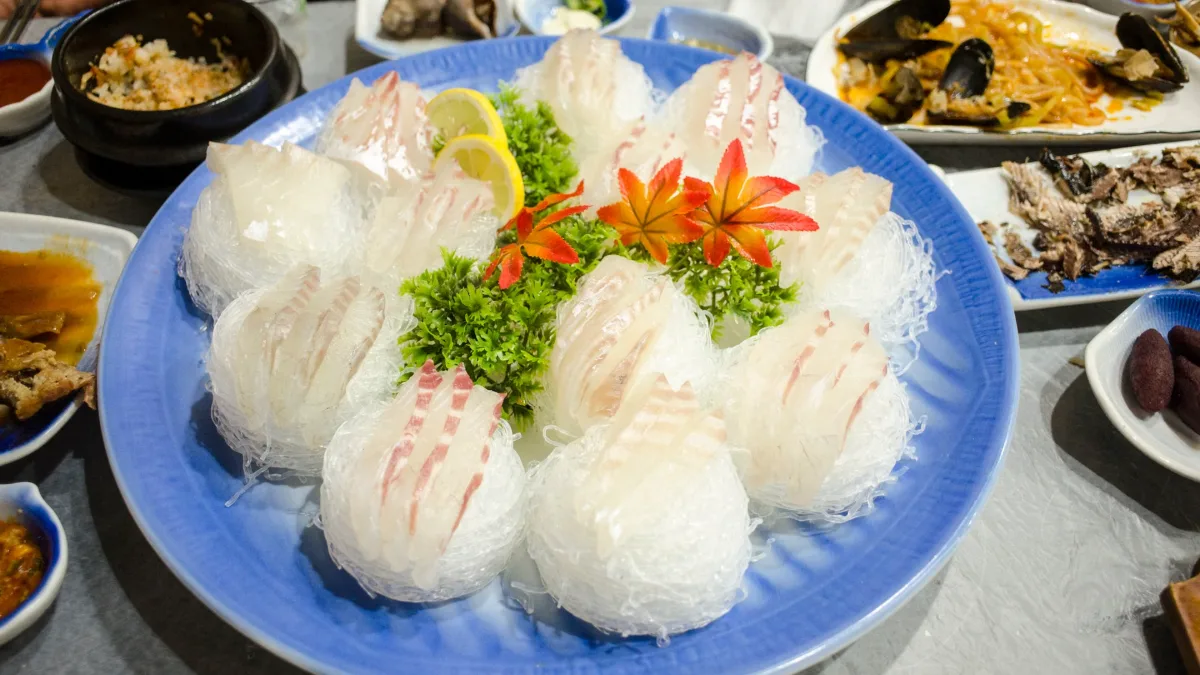
| Hoe (raw fish) | Sliced raw fish, eaten with ssamjang and perilla leaves rather than soy sauce and wasabi | Jagalchi Market, Millak raw fish town |
| Bokguk | Pufferfish soup, clear and restorative, eaten as a hangover cure | Specialist restaurants; it is never a casual order |
| Grilled hagfish | Gomjangeo, grilled at the table, a Jagalchi institution | Jagalchi and the Gijang coast |
| Gijang conger eel and anchovies | Local coastal catches the city markets under the Gijang name | Gijang county, northeast of the city |
| Geumjeongsanseong makgeolli | Unfiltered rice beer brewed by the mountain fortress, sour and cloudy | Geumjeongsanseong village, above Oncheonjang |
| Nakdong gim and jaecheop | Seaweed sheets and tiny freshwater clams from the Nakdong estuary | Markets and gift counters citywide |
What actually happens at the table
- Banchan — the small side dishes — are included and refillable at no charge. Ask by pointing at the empty dish; nobody expects you to speak
- You usually pay at the counter on the way out, not at the table, and one person pays for the table
- Solo diners are fine for gukbap, milmyeon and noodle dishes. Pajeon, barbecue and raw fish are portioned for two or more
- If a dish's spice level is not obvious, ask. Dadaegi and bibim sauces are the two things most likely to catch a visitor out
- Established restaurants in tourist areas usually have picture or English menus. Neighborhood gukbap shops often do not — the counter staff will still sort you out
- Water and cups are self-service from a dispenser by the door, and so is the cutlery, which lives in a drawer under the table
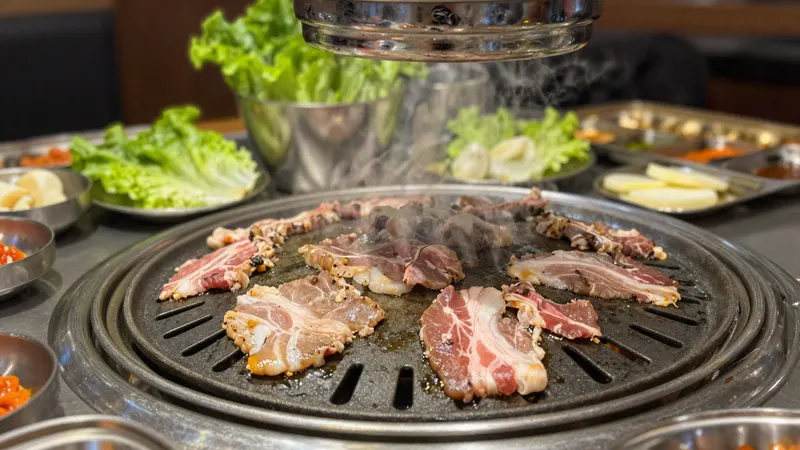
- The garlic, chili and wrapped leaves on the table are not a garnish. They are part of the dish and you are expected to use them
Frequently asked questions
What food is Busan known for?
Dwaeji gukbap, a pork broth served over rice, is the city's defining dish and was named a Busan Future Heritage in July 2025. Milmyeon, chilled wheat noodles created during the Korean War, is the summer counterpart and was designated a Busan local specialty food in 2006. Dongnae pajeon, Busan eomuk and ssiat hotteok complete the shortlist.
What is dwaeji gukbap and how do I eat it?
Pork broth over rice, unseasoned on purpose. You season it yourself: dadaegi chili paste for heat, salted shrimp for salt, and seasoned garlic chives stirred in on top. It differs from sundae gukbap in using pork meat rather than offal, and every shop makes the broth differently — some milky from bones, some clear from meat alone.
What is the difference between milmyeon and naengmyeon?
Milmyeon uses wheat noodles cut with starch rather than buckwheat, because wheat was the flour available in Busan during the Korean War. The noodles are chewier, and the broth commonly carries licorice, angelica and cinnamon, which gives it a slightly sweet, herbal edge. It comes as mul-milmyeon in cold broth or bibim-milmyeon in a spicy sauce.
What makes Dongnae pajeon different from ordinary pajeon?
According to Busan Metropolitan City, it adds water dropwort grown in Dongnae plus oysters and mussels from the nearby coast, uses a batter made partly from ground rice for a chewier texture, is cooked wetter than a standard pancake, and has egg poured over the top. It began as market food in the Dongnae district.
Where can I try Busan's signature dishes?
Dwaeji gukbap clusters in Seomyeon and near Busan Station and exists in every residential neighborhood. Milmyeon shops are citywide and busiest in summer. Dongnae pajeon means a trip to Dongnae on Line 1 or Line 4. Ssiat hotteok is a BIFF Square specialty, and fish cake is sold at Bupyeong Kkangtong Market, department store basements and the station counters.
Are side dishes free at Korean restaurants?
Yes. Banchan are included and refillable at no extra cost, and you can ask for more by pointing at the empty dish. Water, cups and cutlery are usually self-service — cutlery is often in a drawer under the table.