At a glance
- Menu price
- About 11,500 KRW per portion of samgyeopsal in Busan — but portions run small
- Per 200g
- 18,175 KRW once normalized, against 21,321 KRW in Seoul
- Minimum order
- Two portions at most restaurants, so roughly 23,000 KRW before anything else
- Ordering
- By the portion, 인분. 삼겹살 2인분 주세요 means two portions of pork belly, please
- Included free
- Banchan, lettuce and perilla leaves, ssamjang — refilled at no charge
- Eating alone
- Often refused at BBQ places. Dwaeji gukbap is the solo-friendly option
- Payment
- Cards accepted almost everywhere. One bill per table, not split
What a BBQ table actually costs
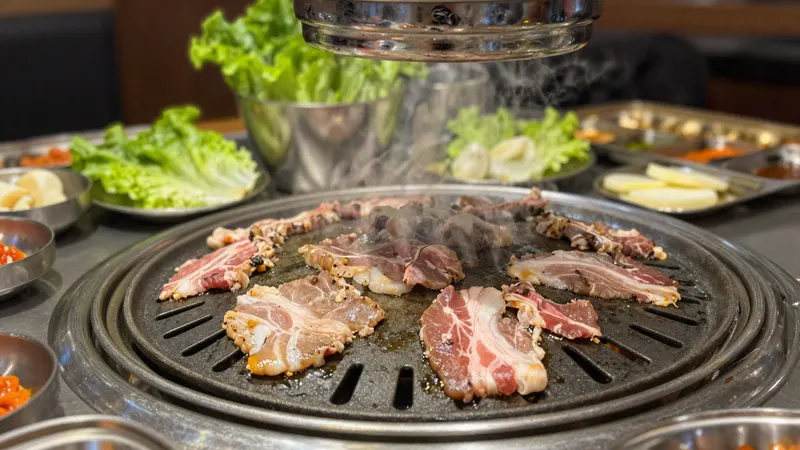
The Korea Consumer Agency surveys restaurant prices by region, which gives a firmer answer than most guides can offer. In Busan, as of July 2026, a portion of samgyeopsal averages 11,500 KRW on the menu. Normalized to 200g — because surveyed portions run anywhere from 100g to 250g — it works out to 18,175 KRW.
That gap between the two numbers is the thing to understand. The price you see on the wall is for one portion, and a Busan portion is usually well short of 200g. Two portions is the normal minimum for a table, so the realistic starting point is around 23,000 KRW for the meat alone.
| Busan average, July 2026 | Price |
|---|---|
| Samgyeopsal, one portion as listed | 11,500 KRW |
| Samgyeopsal, normalized to 200g | 18,175 KRW |
| Kimchi jjigae set meal | 8,429 KRW |
| Naengmyeon | 12,000 KRW |
| Samgyetang | 17,429 KRW |
The two-portion rule, and eating alone
Most BBQ restaurants will not fire up a grill for a single portion. Two is the usual minimum, which in practice means a solo traveler is either paying for two portions or being turned away.
This catches people out more than the price does, because nothing on the menu says it. If you are traveling alone and want grilled meat, some places do run single-serving setups, but they are the exception and you cannot count on finding one when you are hungry.
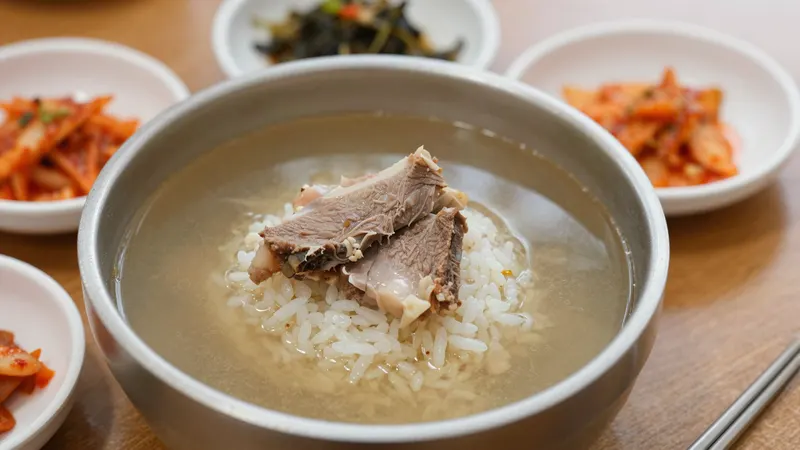
The reliable solo option in Busan is not BBQ at all. It is dwaeji gukbap — the pork and rice soup that is genuinely this city's dish, served to one person without comment, and cheaper than a BBQ table by a wide margin.
What to order if you have never done this
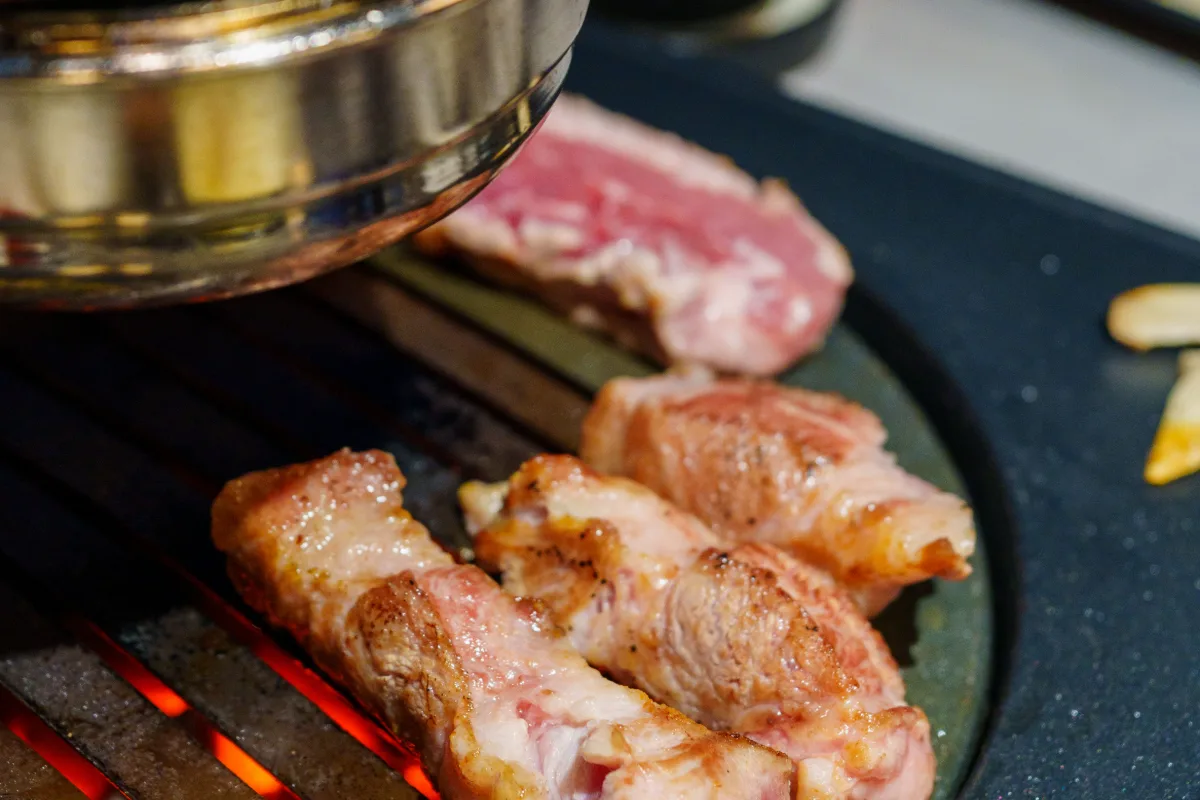
Samgyeopsal is thick-cut pork belly, unmarinated, grilled plain. Galbi is marinated short rib, beef or pork, and comes out sweeter. Between them they cover almost every first BBQ meal, and either is a safe order at any restaurant.
Pork is the default in Busan and the cheaper of the two. Beef galbi is a different price bracket entirely and is worth checking on the menu before ordering rather than after.
Reading the menu: the cuts in Korean
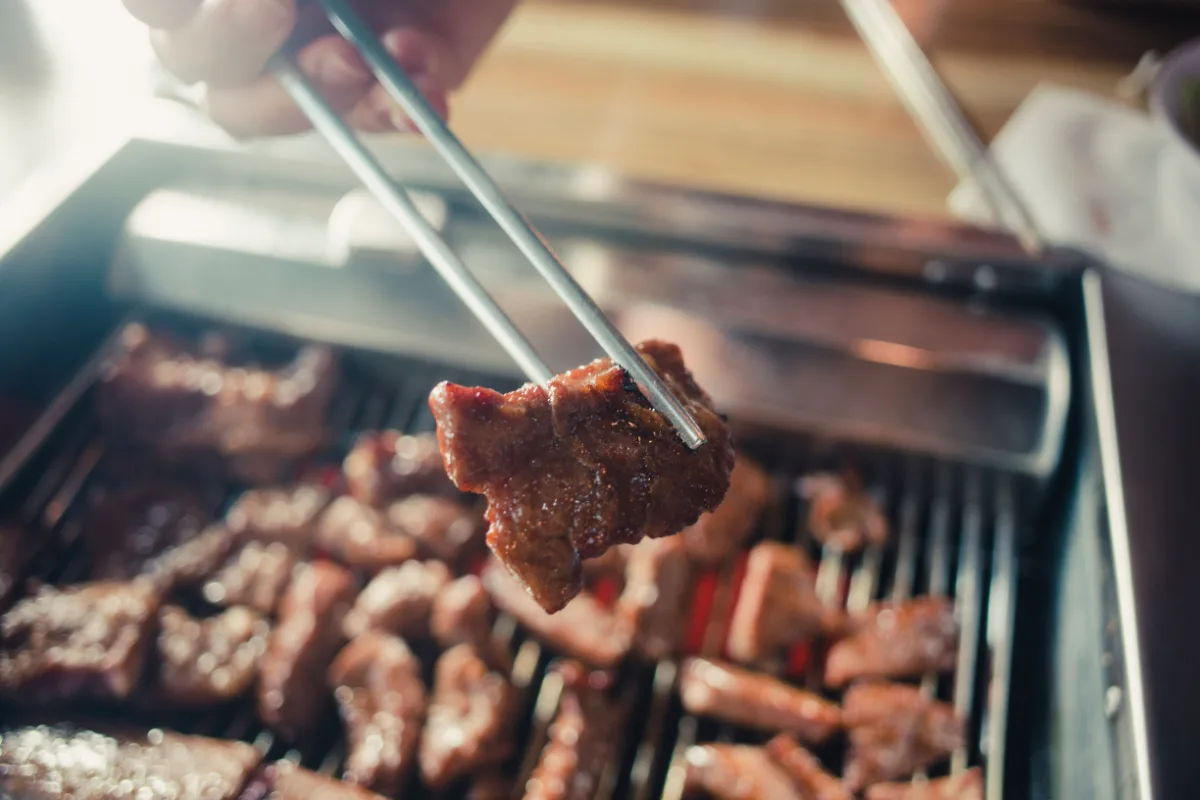
Menus often list the cuts by their Korean names, even where there is an English line underneath. The table below covers most of what you will see on the wall. Only samgyeopsal is in the official price survey, so check the menu for everything else — beef in particular sits in a higher price bracket.
Meat is ordered by the portion, written 인분 (inbun). Say the cut and the number — 삼겹살 2인분 주세요 (samgyeopsal i-inbun juseyo) is two portions of pork belly, please — or point at the line and hold up two fingers. A second round is ordered the same way, usually a portion or two at a time.
Rice is usually a separate order: ask for 공기밥 (gonggibap). The closing course comes once the meat is nearly finished — 된장찌개 (doenjang-jjigae), a soybean-paste stew, 냉면 (naengmyeon), cold noodles, or at some places 볶음밥 (bokkeumbap), rice fried on the grill in what is left.
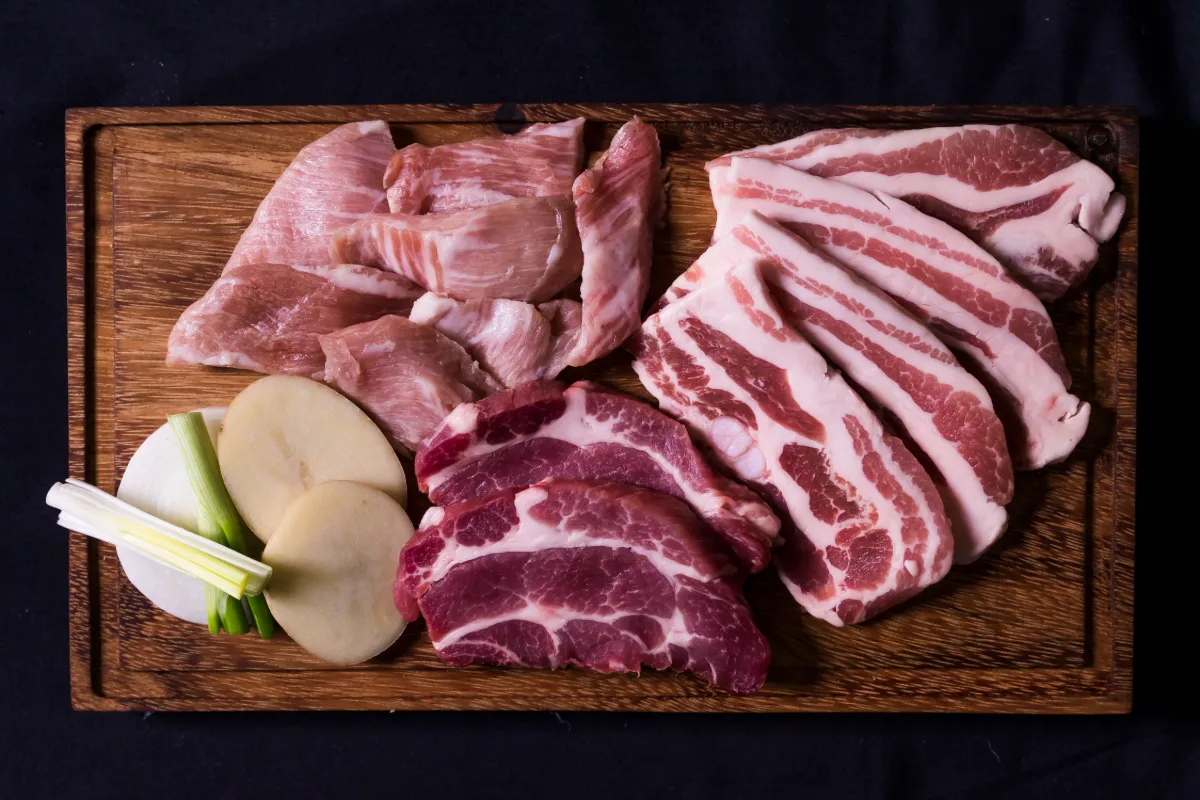
| On the menu | Say it | What it is |
|---|---|---|
| 삼겹살 | samgyeopsal | Pork belly, unmarinated. The default order |
| 목살 | moksal | Pork neck and shoulder. Leaner and chewier than belly |
| 항정살 | hangjeongsal | Pork jowl. A small, fatty, tender cut |
| 갈매기살 | galmaegisal | Pork skirt, from the diaphragm. Lean, with a firm chew |
| 돼지갈비 | dwaeji-galbi | Pork ribs in a sweet marinade. Burns quickly |
| 차돌박이 | chadolbagi | Beef brisket shaved paper-thin. Cooks in seconds |
| 소갈비 | so-galbi | Beef short rib, plain or marinated. The priciest common order |
| 1인분 / 2인분 | il-inbun / i-inbun | One portion / two portions |
What arrives free, and what you do with it
Banchan — the small side dishes — plus lettuce, perilla leaves and ssamjang arrive without being ordered and are refilled at no charge at most restaurants. This is not a starter you are being upsold; it is part of the meal, and refusing it is not expected.
The way to eat it: a piece of grilled meat in a lettuce leaf with rice, garlic and a dab of ssamjang, then the whole thing in one bite. It is hands-on and slightly messy by design.
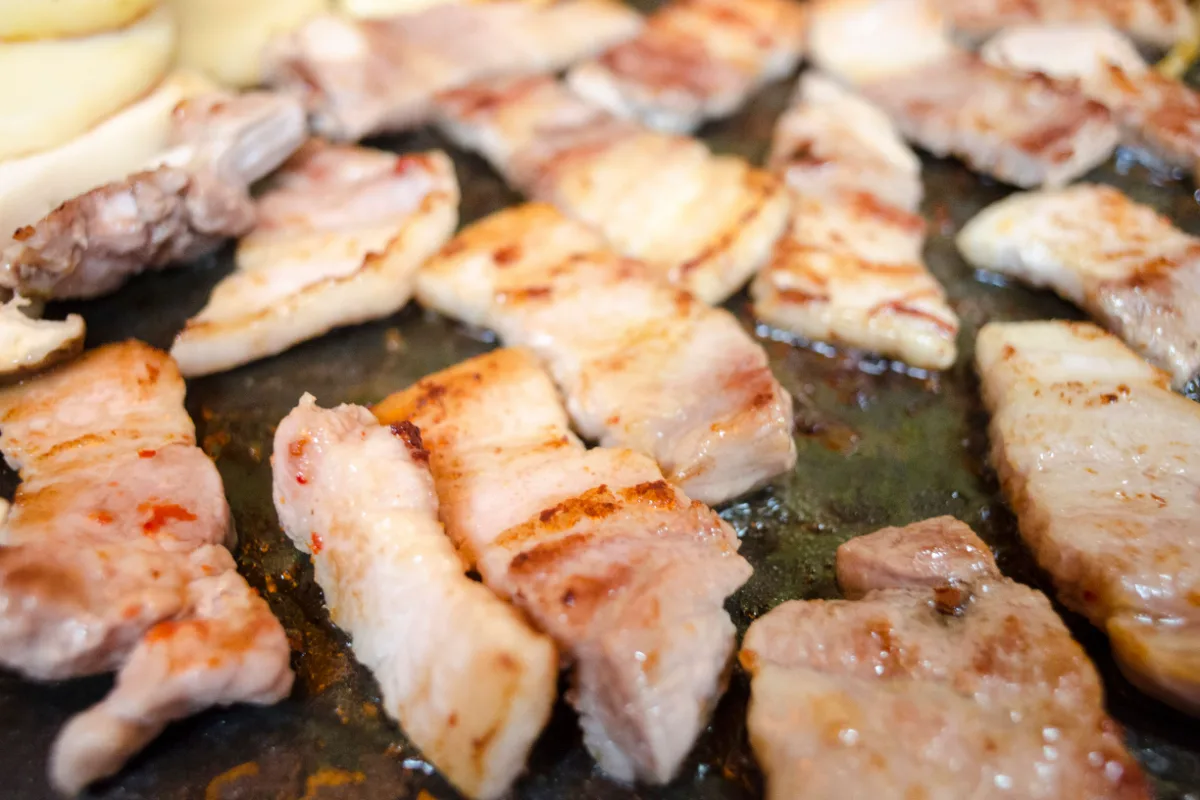
- Staff usually grill the first batch. Say so if you want them to keep going
- Scissors at the table are for cutting the meat once it is cooked, not before
- Soju or beer is the usual accompaniment, and entirely optional
- A stew or cold noodles at the end is a closing course, not a starter
- The grill runs hot. Thin marinated cuts burn faster than you expect
Where to go in Busan
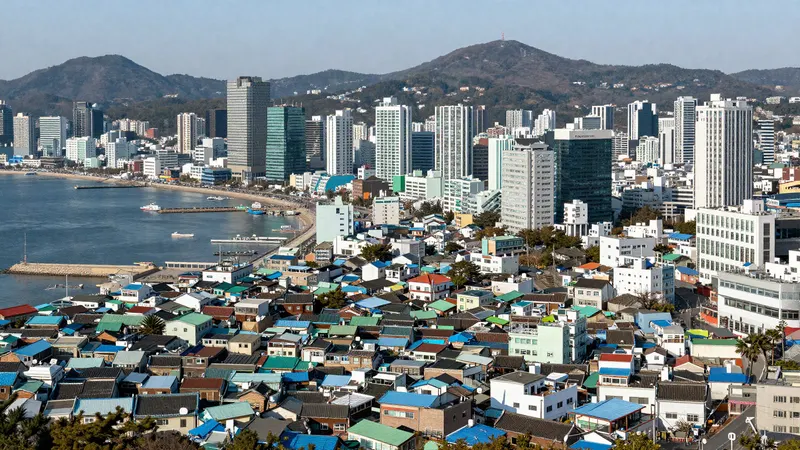
There is no single BBQ district. What there is instead is a rule of thumb: the denser the office and nightlife area, the more grills per street. Seomyeon has the widest concentration in the city and is the default answer for most visitors, being on both metro lines.
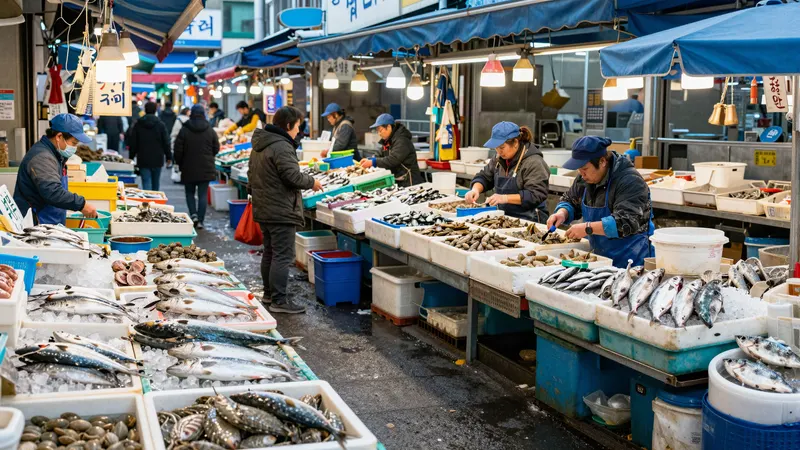
Nampo-dong and the old city have plenty too, usually smaller and older rooms, and pair naturally with a market afternoon. Haeundae's are priced for the beach and are the least interesting value of the three.
This guide does not name specific restaurants, and you should be skeptical of English-language lists that do — the turnover is high and a busy room with a Korean-language sign is a better signal than a review from two years ago.
Paying, and one thing about Busan
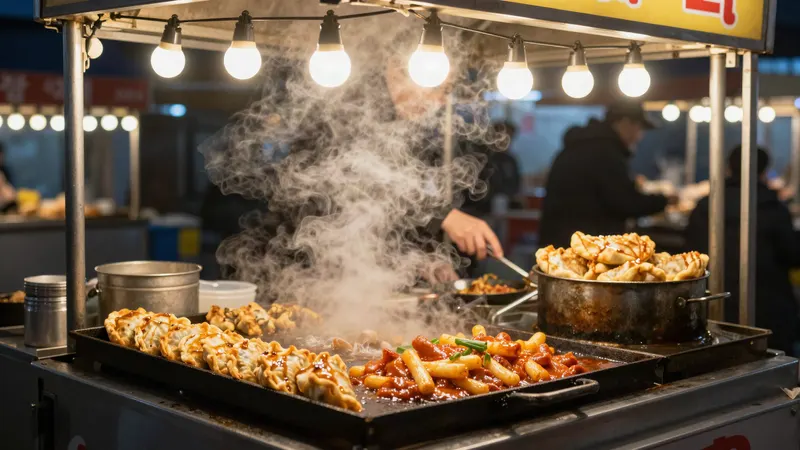
Cards work at essentially every BBQ restaurant, unlike the street food stalls where cash still rules. The bill is settled as one total for the table rather than split by what each person ate, so groups divide it up afterwards.
One last thing worth saying plainly: Korean BBQ is not a Busan specialty. It is excellent here and it is everywhere, but it is the same meal you would eat in Seoul or Daegu. Busan's own contribution to Korean pork cooking is dwaeji gukbap, and a trip that includes both is a better use of two meals than two nights of grilling.
Frequently asked questions
How much is Korean BBQ in Busan?
A portion of samgyeopsal averages 11,500 KRW on the menu in Busan as of July 2026, per the Korea Consumer Agency's price survey. Normalized to 200g that is 18,175 KRW, because listed portions are usually smaller than 200g. Since two portions is the normal table minimum, the meat alone starts around 23,000 KRW.
Can I eat Korean BBQ alone in Busan?
Often not. Most BBQ restaurants require a minimum of two portions and will not grill for one person, and nothing on the menu warns you. Some single-serving places exist but are the exception. The dependable solo meal in Busan is dwaeji gukbap, the pork and rice soup, which is served to one person as a matter of course.
Is Korean BBQ cheaper in Busan than Seoul?
On the Korea Consumer Agency's July 2026 figures, samgyeopsal normalized to 200g is 18,175 KRW in Busan against 21,321 KRW in Seoul. The agency cautions that surveyed restaurants differ between regions, so treat that as indicative rather than a precise gap.
What should I order as a first-timer?
Samgyeopsal, which is thick-cut unmarinated pork belly grilled plain, or galbi, which is marinated short rib and comes out sweeter. Pork is the default in Busan and the cheaper option; beef galbi sits in a different price bracket, so check the menu before ordering rather than after.
What are the most common Korean BBQ cuts?
For pork: samgyeopsal (belly, unmarinated), moksal (neck and shoulder), hangjeongsal (jowl), galmaegisal (skirt) and dwaeji-galbi (marinated ribs). For beef: chadolbagi (brisket shaved thin) and so-galbi (short rib), which costs noticeably more. Menus often list them by their Korean names — 삼겹살, 목살, 갈비 — so it helps to recognize those on sight.
How do you order Korean BBQ in Korean?
Meat is ordered by the portion, 인분 (inbun). Say the cut and the number — 삼겹살 2인분 주세요 (samgyeopsal i-inbun juseyo) is two portions of pork belly, please — or point at the menu line and hold up two fingers. Rice (공기밥, gonggibap) and the closing stew or noodles are separate orders.
Are the side dishes free?
Yes. Banchan, lettuce and perilla leaves and ssamjang arrive without being ordered and are refilled at no charge at most restaurants. They are part of the meal rather than something you are being upsold.
Where is the best area for Korean BBQ in Busan?
There is no single BBQ district. Seomyeon has the widest concentration and sits on both metro lines, which makes it the default. Nampo-dong has plenty of smaller, older rooms and combines well with a market afternoon. Haeundae is priced for the beach and is the weakest value of the three.
Do I need cash for Korean BBQ?
No. Cards are accepted at essentially every BBQ restaurant, unlike street food stalls where cash still rules. The bill comes as one total for the table rather than split by person, so groups settle up between themselves afterwards.