At a glance
- Availability sign
- 빈차 (bin-cha) lit up means the taxi is free
- Uber in Korea
- Uber Taxi dispatches a licensed local driver, not a private car — but it runs on your existing Uber account, so no Korean number or cash is needed
- Booking apps
- Uber Taxi or Kakao T — both dispatch the nearest available local taxi
- Fare
- Metered, and the meter cannot be manually adjusted — overcharging is rare
Hailing a taxi on the street
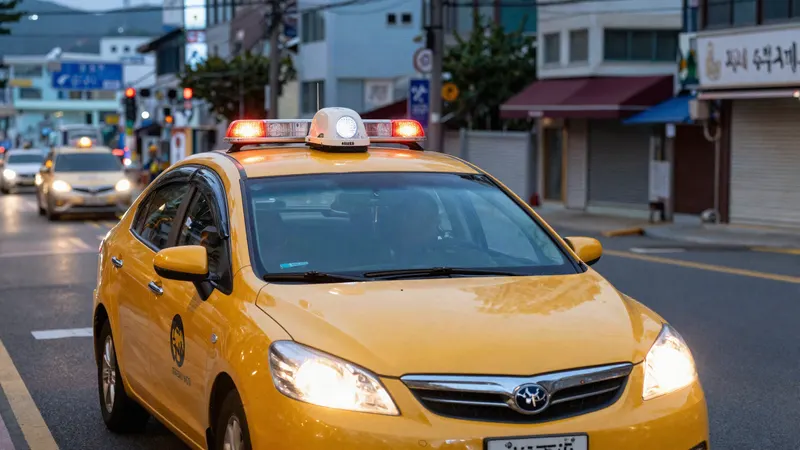
Occupied taxis show their meter running with a passenger inside; available ones display 빈차 (bin-cha, meaning "empty car") lit up in the front window or dashboard display. To call one over, a simple hand wave toward the car works — many drivers respond by flicking on their hazard lights briefly to signal they've seen you and are pulling over.
This is the same basic hailing method used across Korea, so it works the same way in Busan as anywhere else in the country.
When you can't find one on the street: Uber Taxi and Kakao T
Korea doesn't have Uber in the way most visitors expect — there are no private Uber drivers. What the Uber app does here is dispatch a licensed local taxi, the same car you'd hail on the street, through a partnership between Uber and Korean taxi operators. The real advantage for visitors isn't a different kind of car; it's that the app runs on your existing Uber account, so there's no Korean phone number to register, no cash needed, and the fare is charged automatically to the card already on file.
Uber Taxi has grown quickly in Busan specifically — the city government has partnered with it more than once to make transport easier for foreign visitors, and the company has reported ride volume in Busan growing sharply year over year as more tourists use the app they already have installed. Kakao T remains the more universally used local app among Koreans and works the same way — nearest-taxi dispatch, no private drivers — so either is a reasonable choice, and installing both before you land doesn't hurt.
The meter, and why overcharging is rare
Every legal taxi in Korea runs a fare meter that isn't something a driver can manually adjust, which makes outright overcharging genuinely uncommon compared to some other countries' taxi scenes. Fares are distance- and time-based, with a higher rate late at night. If a fare seems unusually high, it's more often a longer route than expected (traffic, one-way streets) than a rigged meter.
A cultural note, only for real emergencies
If you're genuinely running very late, saying 빨리빨리 (ppalli-ppalli, roughly "quickly, quickly") to a driver is a well-known way to signal urgency — it's a recognizable piece of Korean culture, often said with a laugh, but it does tend to get a driver moving with more urgency. It's not something to say for a routine ride; save it for when you actually need it.
Practical tips
- Tipping is not expected — the fare on the meter is the full price
- Have your destination ready in Korean or on a map app screen to show the driver, since not all drivers speak English
- Card payment is standard in Busan taxis alongside cash, and a T-money or Cashbee card works in most of them too
- Traffic, not the driver, is usually the reason a ride takes longer than expected — Busan's road layout is widely considered one of the more difficult in Korea to navigate by car
- For a long cross-city trip at rush hour the subway is usually faster than a taxi, and far cheaper
Frequently asked questions
How do I know if a Busan taxi is available?
Available taxis display 빈차 (bin-cha, meaning empty car) lit up in the front window or dashboard display, while occupied ones show the meter running with a passenger inside. A simple hand wave toward the car works to hail one — many drivers respond by briefly flicking on their hazard lights to signal they have seen you.
Can I use Uber in Busan?
Yes, though not in the way many visitors expect. The Uber app in Korea dispatches a licensed local taxi rather than a private driver, through a partnership between Uber and Korean taxi operators. The practical benefit is real anyway: it runs on your existing Uber account, so you don't need a Korean phone number or cash, and the fare bills automatically. Uber Taxi has grown quickly in Busan as more tourists use it, alongside the more traditionally dominant local app, Kakao T.
Do Busan taxi drivers overcharge tourists?
It is genuinely uncommon. Every legal taxi in Korea runs a fare meter that a driver cannot manually adjust. Fares are distance- and time-based with a higher rate late at night, so if a fare seems unusually high it is more often a longer route than expected — traffic or one-way streets — than a rigged meter.
Do I need to tip a taxi driver in Busan?
No, tipping is not expected — the fare on the meter is the full price. Card payment is standard in Busan taxis alongside cash. Have your destination ready in Korean or on a map app screen to show the driver, since not all drivers speak English.