At a glance
- Fare by card
- 1,550 KRW city bus, 1,480 village bus, 2,100 seat bus — flat, not by distance
- Fare in cash
- 1,700 / 1,600 / 2,200 KRW — and cash gets no transfer discount at all
- Children
- Free by transit card. Cash still costs 400 KRW
- Transfers
- Free or discounted within 30 minutes of tapping off, up to two, card only
- Where a bus beats the subway
- Gamcheon Culture Village, Taejongdae, Haedong Yonggungsa
- Live arrivals
- bus.busan.go.kr, or Naver Map / Kakao Map
Where the subway stops and the bus starts
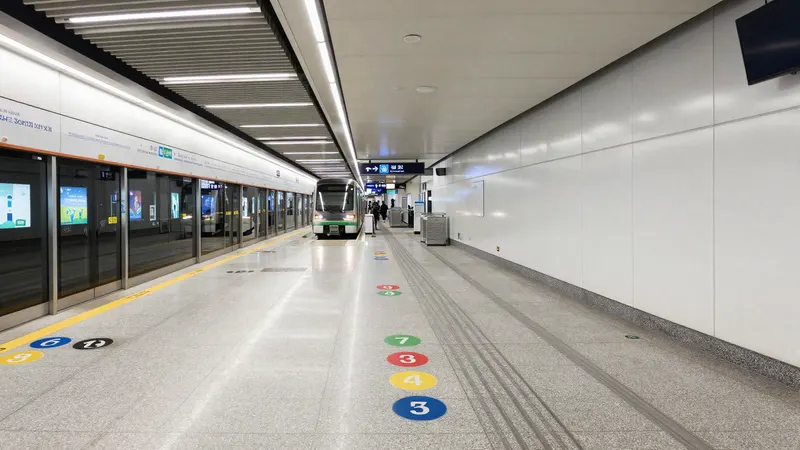
Busan's metro is good, and for most of a first trip it is all you need. But three of the places people most want to see have no station anywhere near them, and all three are reached by an ordinary city or village bus.
That is the honest case for learning the bus here. Not that it is charming, but that Gamcheon, Taejongdae and Haedong Yonggungsa are otherwise a taxi each way.
| Where you're going | Start from | Bus |
|---|---|---|
| Gamcheon Culture Village | Toseong Station (Line 1), Exit 6 | Village bus Saha 1-1, Seo-gu 2 or Seo-gu 2-2 → Gamjeong Elementary School |
| Taejongdae | Nampo Station (Line 1), Exit 6 or 8 | 8, 17, 30, 88 or 186 |
| Taejongdae | Busan Station (Line 1), Exit 7 | 17, 88 or 101 |
| Haedong Yonggungsa | Haeundae Station (Line 2), Exit 7 | 181, 100 or Haeundae 9 |
What it costs
Busan charges a flat fare. One tap, one price, whether you ride two stops or forty. The only exception is route 2000, which leaves the city and charges accordingly.
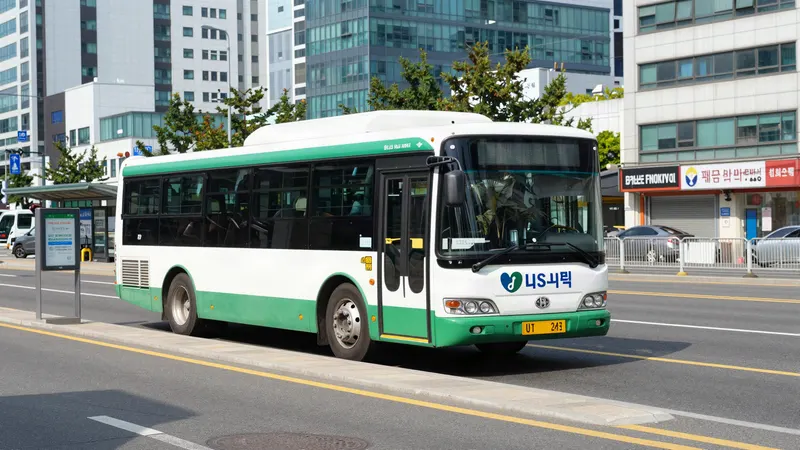
Which fare you pay depends on the kind of bus, and the difference between a city bus and a village bus is not obvious from the outside — village buses are smaller, run short hillside loops, and carry a district name in the number, like Seo-gu 2 or Saha 1-1. The bus to Gamcheon is one of them.
| Bus type | Card | Cash |
|---|---|---|
| City bus (일반) | 1,550 KRW | 1,700 KRW |
| Village bus (마을버스) | 1,480 KRW | 1,600 KRW |
| Seat bus (좌석) | 2,100 KRW | 2,200 KRW |
| Late-night city bus | 2,000 KRW | 2,100 KRW |
| Late-night seat bus | 2,500 KRW | 2,600 KRW |
Tap on, tap off — and the distance myth
You will read that Busan buses charge by distance and that failing to tap off gets you billed for the whole route. That is a Seoul rule, and it is not how Busan works. The fare is flat, and a missed tap-off does not raise the price of the ride you just took.
So why tap off? Because of the next ride. The card has to see you leave one vehicle before it will discount the following one, and if it never sees you get off, your next bus or subway is charged as a fresh full fare.
The practical version: if this is your only journey of the hour, tapping off changes nothing. If there is any chance you will board something else within half an hour, tap. It costs nothing to do and it is the one habit worth forming.
The transfer rules that catch visitors out
Transfers are where Busan quietly saves you money — a bus and a subway leg can cost close to one fare instead of two. The conditions are specific, and a few of them surprise people who assume the system works like the one at home.
- Thirty minutes, measured from tapping off to tapping on again. There is no evening extension in Busan — a few very infrequent routes get a longer window, but do not plan around it
- Two transfers, so three vehicles in one journey. The fourth is a fresh fare
- Card only. Cash gets no discount at any point, which is most of the reason a card is worth having
- The same route number never counts twice, even with something else in between. Bus 10, then bus 138, then bus 10 again charges full price for that second 10 — a there-and-back trip on one route is two full fares
- One card, one person. Tapping twice to pay for a friend works, but only one of you gets the transfer discount
- Airport limousine buses are excluded entirely: no transfer discount in either direction, whatever else you tapped
- A low balance cancels the discount and charges you the cash rate, so top up before a day of hopping
Actually riding one
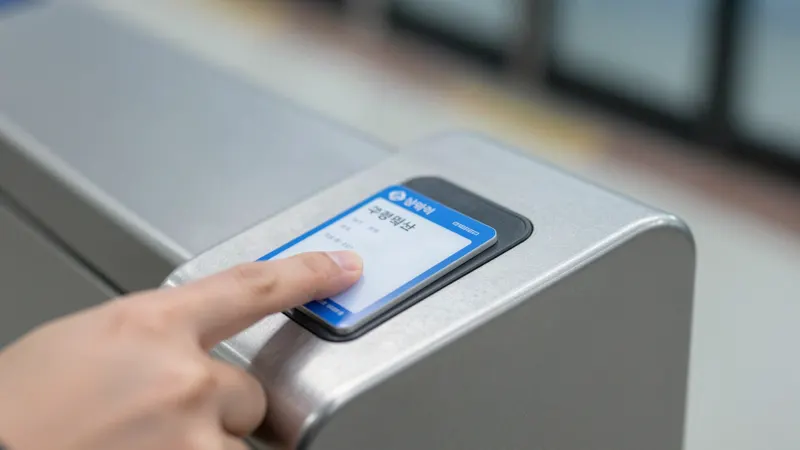
Board at the front door, tap the reader beside the driver, and leave by the middle or rear door, tapping the reader there on the way out. Buses do not linger, so have the card out before the door opens rather than digging for it at the reader.
Stops are announced aloud and shown on a screen at the front, often in English as well as Korean, but the announcement comes as you approach — press the stop button when you hear the stop you want, not after. If you are unsure, follow your position in a map app; watching the dot move is more reliable than listening for a place name you have never heard pronounced.
- A T-money or Cashbee card works on every bus in the city, and on the subway
- Cash is accepted but the driver will not usually make change — you need the exact fare
- Live arrival times are on bus.busan.go.kr and in both local map apps
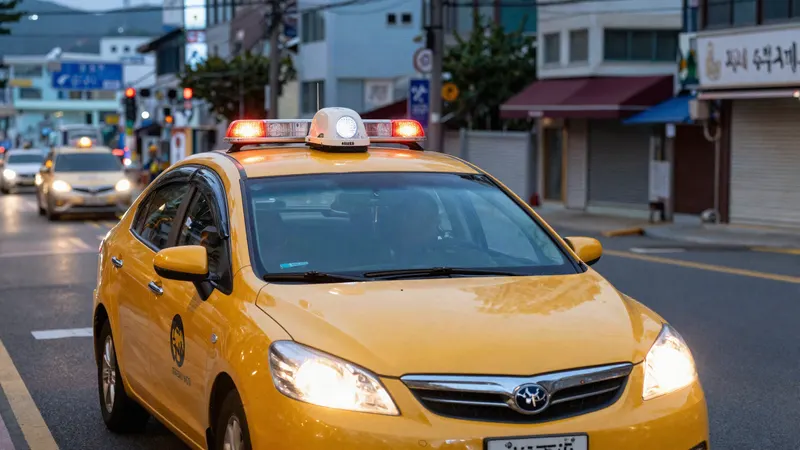
- For a hillside destination with luggage or a tight schedule, a taxi is often worth the difference
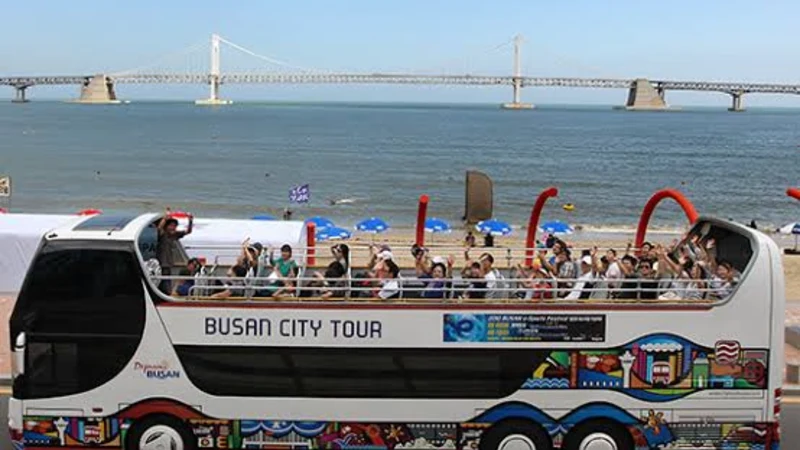
- Touring rather than getting somewhere? The City Tour Bus is a separate service with its own ticket, and it reaches Gamcheon and Taejongdae directly
Frequently asked questions
How much is a bus in Busan?
By transit card, 1,550 KRW on a normal city bus, 1,480 KRW on a village bus and 2,100 KRW on a seat bus. Cash costs 1,700, 1,600 and 2,200 KRW respectively. Children ride free with a transit card. The fare is flat, so the price is the same whether you ride two stops or forty.
Is the fare charged by distance?
No. Busan city buses charge a flat fare regardless of how far you ride — route 2000, which runs outside the city, is the only exception. The distance-based rule you may have read about applies to Seoul, not here.
Do I have to tap out when I get off?
It does not change what you pay for that ride, but it decides whether your next one is discounted. Without a tap-off the card has no record of you leaving, so the following bus or subway is charged as a full new fare. Tap every time — it is free and it is the habit that saves money.
How do transfers work?
Free or discounted if you board the next vehicle within 30 minutes of tapping off, for up to two transfers — three vehicles in one journey. You must pay by card; cash never gets the discount. The same route number does not count twice, even later in the chain, so riding bus 10 out and bus 10 back is two full fares. Airport limousine buses are excluded from transfers altogether.
Can I pay cash on a Busan bus?
Yes, but it costs more, the driver will not usually give change, and cash fares get no transfer discount at all. Over a day of sightseeing a transit card pays for itself.
Which bus goes to Gamcheon Culture Village?
From Toseong Station on Line 1, leave by Exit 6 and take village bus Saha 1-1, Seo-gu 2 or Seo-gu 2-2, getting off at Gamjeong Elementary School. Those are village buses, so the fare is 1,480 KRW by card rather than 1,550.
Which bus goes to Taejongdae?
From Nampo Station on Line 1, Exit 6 or 8, take bus 8, 17, 30, 88 or 186. From Busan Station on Line 1, Exit 7, take bus 17, 88 or 101. Both drop you at the Taejongdae stop.
How do I know when to get off?
Stops are announced over a speaker and shown on a screen at the front, often in English as well as Korean, but the announcement comes as the bus approaches — press the stop button then, not after. Tracking your position in Naver Map or Kakao Map is the more reliable method on a first ride. Google Maps has limited transit routing inside Korea.