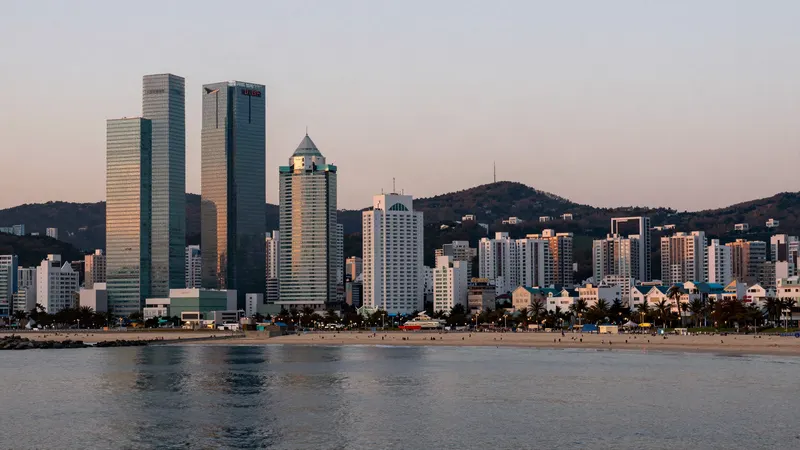
There isn't a single 'best' area — only a best fit
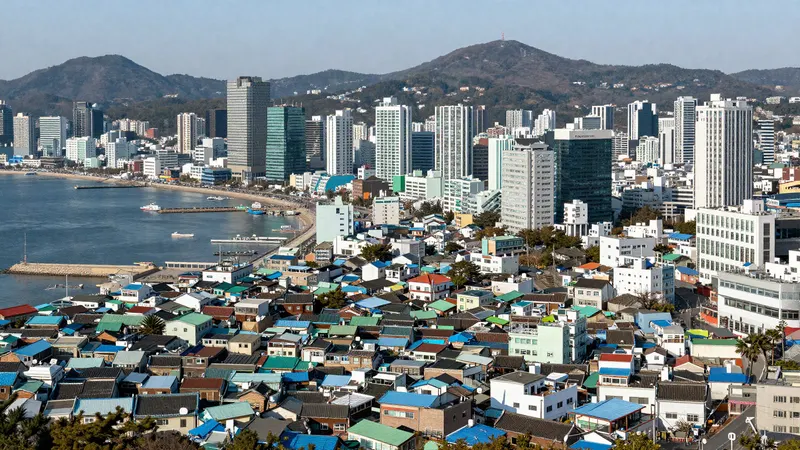
Busan spreads along the coast rather than around one center, so where you stay shapes your trip more than it would in a compact city. The three areas visitors compare most are Haeundae, Seomyeon and Nampo-dong, and each suits a different kind of trip.
Where visitors actually go — and why it splits the decision
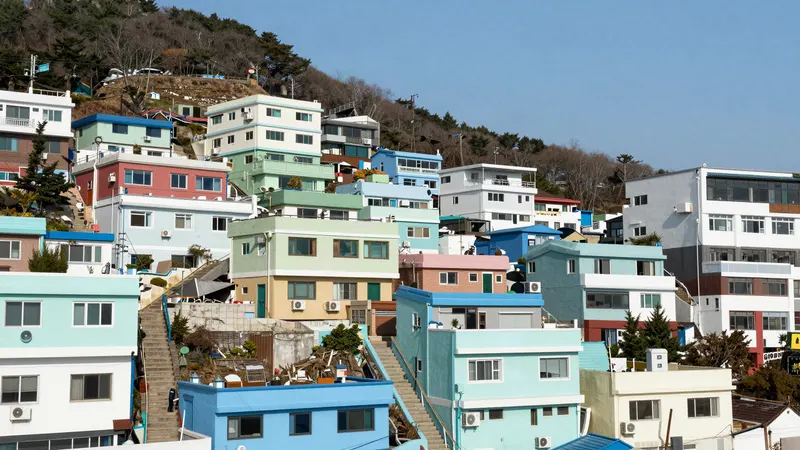
Busan's own survey of 1,200 foreign visitors in the second half of 2025 asked which places they went. The two most visited were Haeundae Beach (43.8%) and Gamcheon Culture Village (42.7%), and they sit on opposite sides of the city. After them came Gwangan Bridge (25.2%), Haedong Yonggungsa (20.3%), Gwangalli Beach (19.7%), Jagalchi Market (19.2%), Seomyeon (17.9%) and BIFF Square in Nampo-dong (16.1%).
With the two most visited places at opposite ends, a trip that takes in both means crossing the city at least once. So the useful question is less 'which area is best' than 'which side do I want to wake up on, and how many times will I cross'.
Haeundae — for beach access and a resort feel
Haeundae has Busan's most famous beach, the highest concentration of large hotels, and easy access to Dongbaek Island and the Blueline Park coastal train. It's the most relaxed base if beach time and sea views are a priority, and it has plenty of cafes and restaurants of its own.
The trade-off is distance: there's no direct light rail from Gimhae Airport, and reaching the old-city markets around Nampo-dong takes 30–45 minutes by subway or bus.
Seomyeon — for transit and central convenience
Seomyeon is Busan's commercial and transit core, sitting on both Metro Line 1 and Line 2, with the widest range of shopping, restaurants and mid-range hotels. It's the most practical base for visitors who plan to day-trip across several different neighborhoods rather than settle into one area.
It has less character on its own than Haeundae or Nampo-dong — it's a base for reaching everywhere else more than a destination itself.
Nampo-dong — for the old city and Jagalchi Market
Nampo-dong sits beside Jagalchi Market and BIFF Square, in the older, denser part of the city. It's a strong choice for visitors more interested in markets, street food and a walkable historic district than beach time, and it connects easily to Gamcheon Culture Village by a short bus or taxi ride.
How you arrive changes the answer
Busan's city figures for January to July 2026 split foreign arrivals almost evenly two ways: 42.0% came in through Gimhae Airport and 41.8% arrived from somewhere else in Korea. Another 16.2% came by sea.
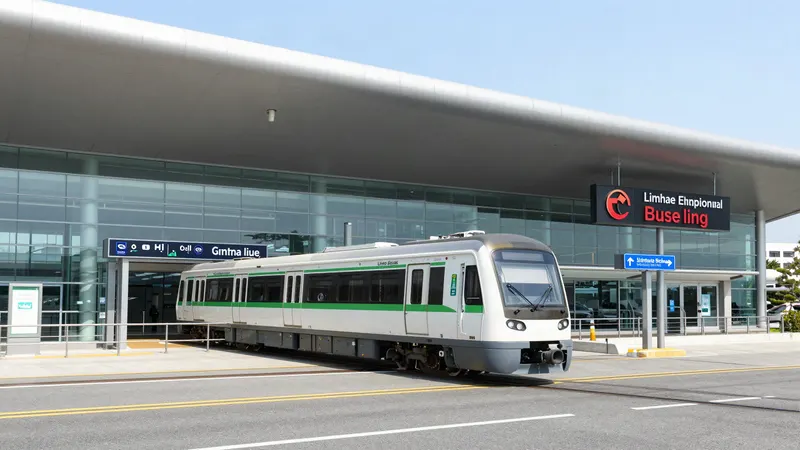
Each gateway favors a different base. From Gimhae, the light rail and Metro Line 2 make Seomyeon the quickest to reach (every airport route compared). If you come down from Seoul on the KTX, you arrive at Busan Station, a couple of stops from Nampo-dong on Line 1 (getting on from Busan Station). The international ferry terminal is a short walk from Busan Station as well.
The Busan Institute's analysis shows how differently nationalities arrive: 77% of American and 63% of Chinese visitors reached Busan via Seoul or another region, while visitors from Japan and Taiwan are the ones best served by direct flights into Gimhae.
Where the card spending points
The Busan Institute's analysis of foreign card spending, based on BC Card data for 2023 to 2025, is the closest thing to a map of where visitors base themselves. Spending on accommodation almost doubled, from an estimated ₩45 billion in 2023 to ₩86 billion in 2025, and the report groups three Haeundae districts into what it calls a 'stay-tourism' zone, where hotel, leisure and restaurant spending come together. Seomyeon's Bujeon 2-dong stands out for a different mix: clinics, leisure venues and department stores.
This describes where money is spent, not where you should stay. But it is the only official picture there is.
Quick comparison
| Area | Best for | Airport access | Nightlife & food |
|---|---|---|---|
| Haeundae | Beach, resort hotels, relaxed pace | Limousine bus, no direct rail | Strong, beach-focused |
| Seomyeon | Central transit, day-tripping | Light rail + Metro, fastest | Strong, dense and varied |
| Nampo-dong | Markets, old city, walkability | Light rail + Metro | Strong, market and street food |
A simple way to decide
- First trip, want to relax and don't mind a longer airport transfer: Haeundae
- Want to see as much of the city as possible in a short trip: Seomyeon
- Most interested in food markets and old-city streets: Nampo-dong
- Arriving on the KTX from Seoul for a night or two: Nampo-dong or the Busan Station area
Frequently asked questions
Where is the best area to stay in Busan?
There is no single best area, only a best fit. Busan spreads along the coast rather than around one center, so where you stay shapes your trip more than it would in a compact city. Haeundae suits beach time and a relaxed pace, Seomyeon suits day-tripping across neighborhoods, and Nampo-dong suits markets and old-city walking.
Is Haeundae a good base for a first visit?
It is the most relaxed base if beach time and sea views are a priority, with Busan's most famous beach, the highest concentration of large hotels, and easy access to Dongbaek Island and the Blueline Park coastal train. The trade-off is distance: there is no direct light rail from Gimhae Airport, and reaching the old-city markets around Nampo-dong takes 30–45 minutes by subway or bus.
Why do people recommend Seomyeon?
Seomyeon is Busan's commercial and transit core, sitting on both Metro Line 1 and Line 2, with the widest range of shopping, restaurants and mid-range hotels. It is the most practical base for day-tripping across several neighborhoods. It has less character of its own than Haeundae or Nampo-dong — it is a base for reaching everywhere else more than a destination itself.
When should I book accommodation in Busan?
Hotel availability and prices shift with festival dates, especially during the Busan International Film Festival in October. Book well ahead if your trip overlaps with a major festival.
Where do most foreign visitors stay in Busan?
There is no official figure by neighborhood — Busan's visitor survey asks what kind of place people stayed in, not where. By type, 70.8% of foreign visitors in the second half of 2025 stayed in hotels: 43.4% in two- or three-star and 27.4% in four- or five-star hotels. Card spending on accommodation concentrates in Haeundae, which the Busan Institute groups as a stay-tourism zone.
Does it matter whether I arrive by plane or by train?
Yes. From Gimhae Airport, the light rail and Metro Line 2 make Seomyeon the quickest base to reach. The KTX from Seoul arrives at Busan Station, a couple of stops from Nampo-dong on Line 1. In January to July 2026, 42.0% of foreign visitors arrived through Gimhae and 41.8% from elsewhere in Korea.