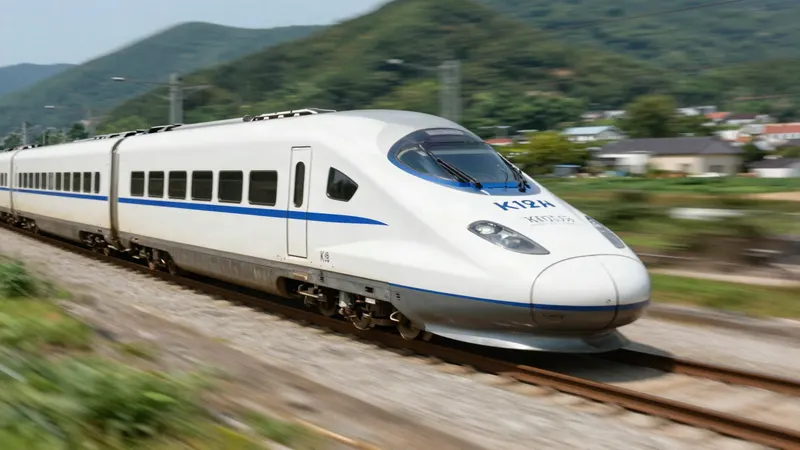
At a glance
- Journey time
- About 2 hr 15 min on the fastest trains; up to 3 hours on ones that stop more
- Standard fare
- 54,400 KRW Seoul–Busan, down from 59,800 KRW on September 1, 2026
- Departure stations
- Seoul Station or Suseo Station — both are KTX now, no separate operator
- Arrival
- Busan Station, on Metro Line 1
- Booking
- The Korail+ app or korail.com, both in English. Seats open one month ahead
- Rail pass
- A KORAIL PASS does not pay for itself on a Seoul–Busan return alone
What changed on September 1, 2026
For nine years Korea had two high-speed operators on this route. Korail ran KTX from Seoul Station; a separate company, SR, ran SRT from Suseo Station in the southeast of Seoul. They used much of the same track, they were booked on different websites, and a ticket for one was useless on the other.
That ended. Korail and SR were merged, and from September 1, 2026, both are simply KTX. The SRT brand is gone, everything is searched and booked in one place, and fares were cut to the lower SRT level — an average reduction of about 10%. On this route the standard fare went from 59,800 KRW to 54,400 KRW.
Two practical consequences. First, most English-language advice you will find about this journey — including 'decide between KTX and SRT' — is now describing a system that does not exist. Second, capacity went up rather than down: the Suseo side gained roughly 30% more seats, with about 15,000 extra seats on weekdays and up to 17,000 at weekends.
How long it takes, and what it costs
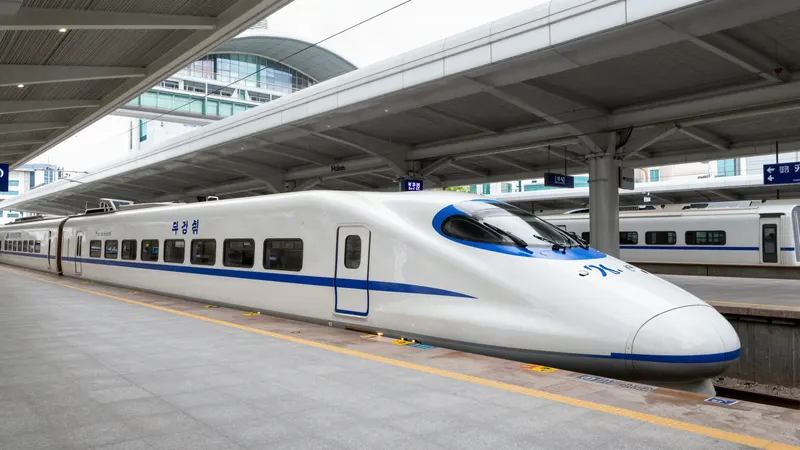
The fastest Seoul–Busan services run in about 2 hours 15 minutes. Trains that call at more intermediate stations — Daejeon, Dongdaegu and others — take closer to 2 hours 40 minutes or three hours. The difference is entirely in the number of stops, not the train, so when you are choosing between departures the journey time in the results is the thing to look at, not the train number.
Standard class is 54,400 KRW. First class, called 특실, costs more and buys you a 2+1 seat layout with more legroom rather than any meaningful difference in speed or service; on a two-hour ride most people do not need it. Children's fares and group discounts exist and are applied at booking.
Compare that with the alternatives honestly. An express bus is cheaper and takes four to five hours. A domestic flight from Gimpo to Gimhae is about an hour in the air, but with airport transfers at both ends and check-in, the door-to-door time is roughly the same as the train, and Gimhae is further from central Busan than Busan Station is. For a first trip, the train is the straightforward answer.
| Time | Typical cost | Arrives | |
|---|---|---|---|
| KTX | 2 hr 15 min – 3 hr | 54,400 KRW standard | Busan Station, Line 1 |
| Express bus | 4–5 hr | Cheaper than the train | Nopo terminal, the northern end of Line 1 |
| Flight | About 1 hr in the air | Varies widely | Gimhae Airport, 40–60 min from downtown |
Seoul Station or Suseo Station
Now that both are KTX, this is purely a question of which station is easier from where you are staying. Seoul Station is central, on Metro Lines 1 and 4, and connected to the Airport Railroad from Incheon — if you are anywhere near Myeongdong, Jongno or Hongdae, it is the obvious choice. Suseo Station is in the southeast on Line 3 and the Suin-Bundang Line, and is much more convenient from Gangnam, Jamsil or Songpa.
One thing to check in the results rather than assume: after the merger, some Suseo departures run on newer routings that call at Seodaejeon and Gupo. Those are legitimate trains, but they take longer. The booking screen shows the journey time for each service, which is the only number that matters here.
Gupo is worth knowing about as an alighting point. It is in the northwest of Busan on Metro Line 3, so if you are staying that side of the city — or heading for Gimhae — getting off there rather than riding on to Busan Station can save you a backtrack.
Booking
The merged booking runs through the Korail+ app and korail.com, both with English interfaces, and both now return Seoul Station and Suseo Station departures in one search. Tickets can be bought from abroad with a foreign card, and seats open one month before the departure date.
How far ahead to book depends entirely on the calendar. Around Lunar New Year and Chuseok, trains in both directions sell out within minutes of opening and a month's notice is not excessive. Summer weekends and the days around any long public holiday are busy but manageable. On an ordinary weekday, a few days ahead is plenty, and buying an hour before departure usually still works.
If a train is sold out you are not necessarily stuck: standing tickets exist for reserved services, and on a two-hour ride they are a reasonable fallback. You keep your passport with you either way — the ticket is issued to a name.
Is a rail pass worth it?
The KORAIL PASS is a foreigner-only pass, unavailable to Korean nationals, that lets you ride Korail services for a set number of days. It comes as a select pass: you buy 2, 3, 4 or 5 travel days and use them on any days you like within a 10-day window from the start date. Current adult prices are 131,000 KRW for two days, 186,000 for three, 234,000 for four and 275,000 for five, with child fares roughly half.
Do the arithmetic before you buy. A Seoul–Busan return at the new fare is 108,800 KRW, against 131,000 KRW for the cheapest pass. The pass loses on that trip alone. It starts to win when you are also taking side trips — Gyeongju, Jeonju, Yeosu, or a day out from Busan — and each of those journeys is riding on a pass day you have already paid for.
The mechanics: seat reservations open a month ahead and you may reserve up to two per person per day; if a train is sold out you can still board standing with the pass and your passport. First class is available to pass holders at 50% of the first-class fare. A passport and a credit card are needed to buy one, and the pass excludes metropolitan commuter railways and temporary tourist trains.
What the ride is actually like
- Seats are reserved and face forward in one direction of travel; on some services half the carriage faces backward, and it is not something you can choose at booking
- There are no dedicated luggage compartments. Racks sit above the seats and at the ends of each carriage, and a large suitcase goes at the carriage end — board a few minutes early if you have one
- Power sockets exist on most services, though not at every seat, and Wi-Fi is available but unremarkable
- Announcements are made in Korean and English, and the scrolling display shows the next station in both
- Catering is minimal — vending machines rather than a full dining car on most services. Buying food at the station before boarding is what everyone does
- Carriages are quiet by convention. Phone calls happen in the vestibules between cars, not at the seats
Arriving in Busan
Busan Station sits on Metro Line 1, which is the old city's spine: Nampo-dong and Jagalchi are two or three stops south, Seomyeon is a straight run north. For Haeundae or Gwangalli you change to Line 2 at Seomyeon, which brings the total to 45 to 60 minutes from the platform.
The taxi rank is directly outside the main exit, and because the station is already close to downtown, fares into Nampo-dong or Seomyeon are short. With two or more people and luggage, it is usually the better call than dragging suitcases onto the subway.
The station has coin lockers, which matters if your train back is the same evening — leave the bags and do the one-day old city route, which starts two stops away.
- Full onward options, with bus numbers and fares: Busan Station to the city
Frequently asked questions
How long does the train from Seoul to Busan take?
About 2 hours 15 minutes on the fastest services, and up to three hours on trains that call at more stations along the way. The difference is the number of stops rather than the train itself, so compare the journey times shown in the booking results.
What is the difference between KTX and SRT now?
There is none. Korail and SR merged, and from September 1, 2026 both services run as KTX under one name, searched and booked in one place. The SRT brand no longer exists. The only remaining difference is which Seoul station you leave from — Seoul Station or Suseo Station.
How much is a KTX ticket from Seoul to Busan?
The standard-class fare is 54,400 KRW, reduced from 59,800 KRW when the merger took effect on September 1, 2026 and fares were cut by about 10% on average. First class costs more and buys a roomier 2+1 seat layout. Confirm the current fare when booking, since the post-merger fare table is still settling.
Should I leave from Seoul Station or Suseo Station?
Whichever is easier to reach. Seoul Station is central, on Lines 1 and 4 and the Incheon Airport Railroad. Suseo Station is in the southeast on Line 3, far better from Gangnam, Jamsil or Songpa. Check the journey time in the results — some Suseo departures now route via Seodaejeon and Gupo and take longer.
How far in advance should I book?
Seats open one month ahead. Around Lunar New Year and Chuseok, book as soon as they do — those trains sell out in minutes. Summer weekends and long holiday weekends are busy but manageable. On an ordinary weekday a few days ahead is plenty, and standing tickets are a workable fallback on a two-hour ride.
Is the KORAIL PASS worth buying for Seoul and Busan?
Not for that journey alone. A Seoul–Busan return at 54,400 KRW each way comes to 108,800 KRW, and the cheapest pass is 131,000 KRW for two travel days. It pays off once you add side trips — Gyeongju, Jeonju, Yeosu — that use days you have already bought.
Is there space for large luggage on the KTX?
There are no dedicated luggage compartments. Racks run above the seats and at the ends of each carriage, and large suitcases go at the carriage ends. Board a few minutes early if you are carrying one, since those spaces fill first.