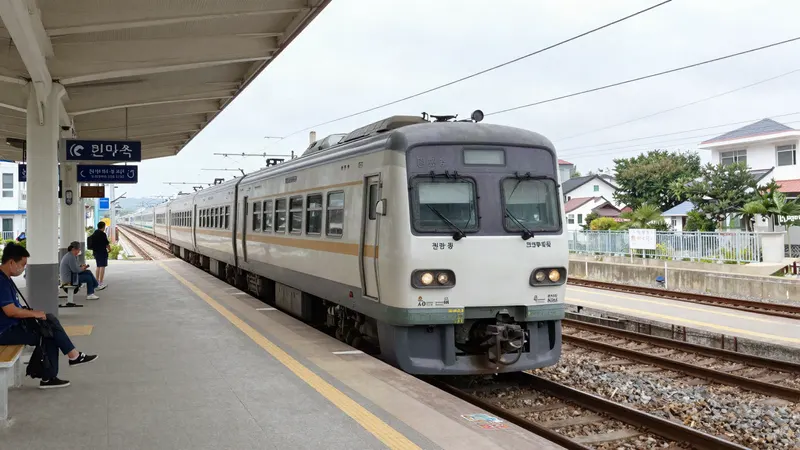
At a glance
- Donghae Line
- Bujeon to Taehwagang in Ulsan — 63.8 km, 23 stations
- End to end
- About 76 minutes
- Frequency
- Roughly every 15 minutes at peak, every 30 minutes off-peak
- Why it matters
- It is the rail route to Osiria, Songjeong, Gijang and Ilgwang
- Paying
- Use a loaded transit card. Day passes and single-use metro tickets do not transfer
- Other rail
- Bujeon Station for Gyeongjeon Line trains west; Gupo on Line 3 for some KTX services
Three rail systems, and which one you will actually use
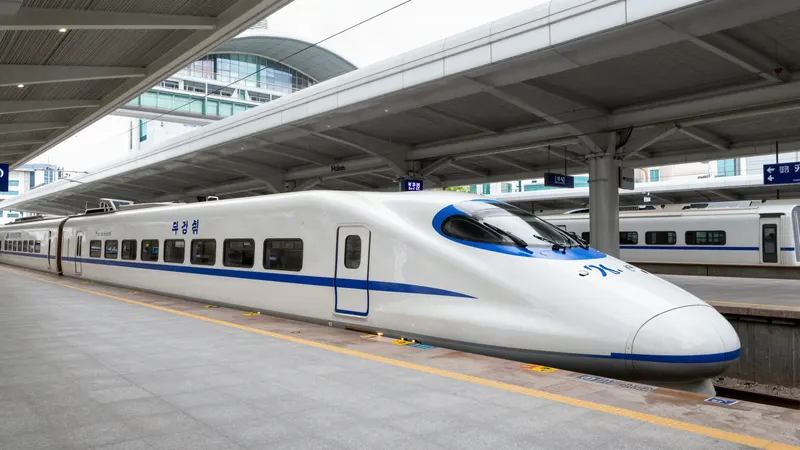
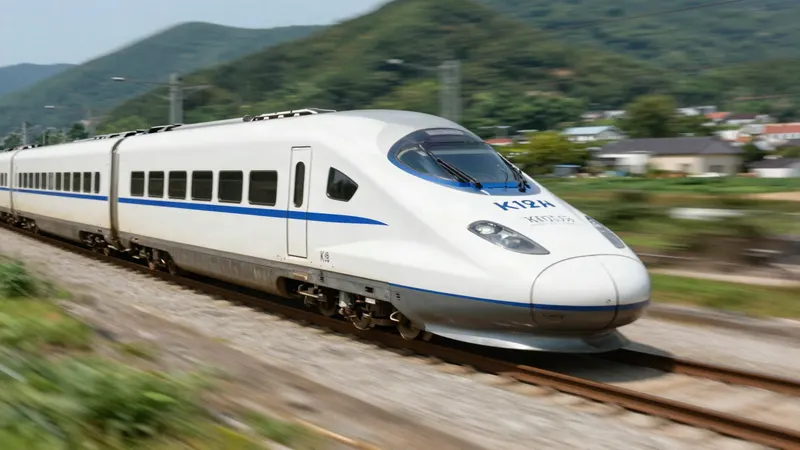
Busan has more rail than the metro map suggests, and the pieces are run by different organizations, which is why they behave differently when you tap a card. The four numbered lines and the Busan–Gimhae Light Rail are the city's own network. The Donghae Line is a commuter railway run by Korail along the eastern coast. And the national long-distance network — KTX, ITX and Mugunghwa services — passes through the city with stops at Busan Station, Bujeon and Gupo.
For a visitor, the ranking is simple. The numbered lines do almost everything. The Donghae Line does the one thing they cannot, which is reach the coast northeast of Haeundae. The national line is mostly for leaving the city, not moving around inside it.
The full metro network, including how the Donghae Line appears on the map, is in the metro map guide. This page is about what happens once you step off the numbered lines.
The Donghae Line: what it is and where it goes
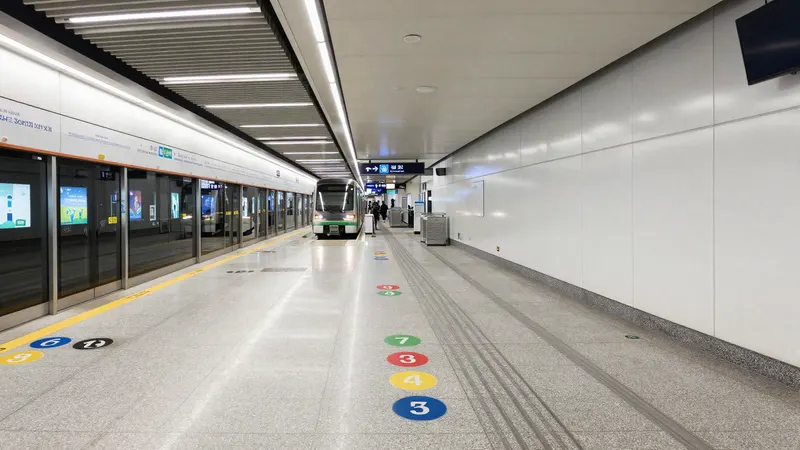
The Donghae Line commuter service runs from Bujeon, in central Busan, north along the coast to Taehwagang Station in Ulsan. Korail puts the route at 63.8 km with 23 stations. End to end it takes about 76 minutes, and trains come roughly every 15 minutes at peak times and every 30 minutes in between — frequent enough to turn up and go, but not so frequent that you should ignore the timetable on a tight schedule.
The section as far as Ilgwang opened first, and the extension on to Ulsan opened on December 28, 2021, which is recent enough that plenty of older guidebooks and blog posts do not mention it at all. That extension is what turned the line from a local commuter service into something a visitor might use for a day out.
In practice the stops that matter to a first-time visitor are all in the northeastern half. Osiria is the station for Haedong Yonggungsa and the theme park district. Songjeong puts you at the quieter beach beyond Haeundae and at the far end of Blueline Park. Gijang and Ilgwang are working coastal towns with markets and beaches that see very few foreign visitors. Taehwagang is Ulsan, which is a genuine day trip rather than a detour.
The times below are approximations worked back from the 76-minute end-to-end figure, not a timetable. A route app will give you the exact departure you want.
| Get off at | For | Rough time from Bujeon |
|---|---|---|
| Centum / BEXCO | BEXCO, the convention and exhibition district | Under 20 min |
| Sinhaeundae | The inland side of Haeundae | About 20 min |
| Songjeong | Songjeong Beach, the Blueline Park terminus | About 30 min |
| Osiria | Haedong Yonggungsa and the Osiria resort area | About 35 min |
| Gijang | Gijang market town, anchovies and conger eel | About 40 min |
| Ilgwang | Ilgwang Beach, quiet even in August | About 45 min |
| Taehwagang | Ulsan — a day trip, not a detour | About 76 min |
Paying, and the transfer trap
The Donghae Line is not on the Busan metro fare table. It runs on Korail's metropolitan railway tariff, which charges a base fare for the first 10 km and then adds a step for each further distance band — and on this line specifically the steps come every 10 km rather than the 5 km used on Korail's other metropolitan lines. The upshot is that a short hop is cheap and a run all the way to Ulsan is not, and the exact amount is calculated when you tap out.
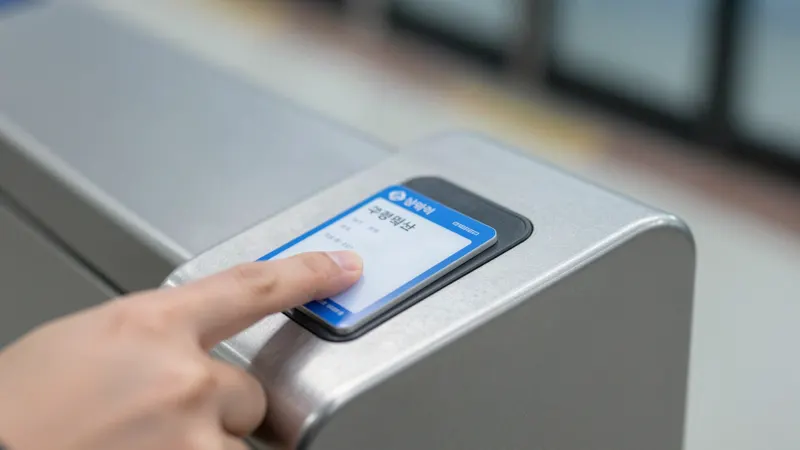
Use a loaded transit card. A T-money or Cashbee card works across the boundary between the metro and the Donghae Line, though the transfer can carry an extra charge compared with a same-system transfer. What does not work is a single-use metro ticket or a multi-day unlimited metro pass — neither covers the Donghae Line, and finding that out at the gate on the way to a temple is a bad start to the day.
This is the single most common way visitors get caught out by Busan's transit system, and it is worth setting against what a day pass looks like it is offering. If Osiria or Songjeong is in your plan, the card is not optional.
A station with the same name is often not the same station
Korail and the city built their networks separately, and the naming reflects that rather than any plan. Several Donghae Line stops share a name with a metro station that is a walk away, or share a district name with a metro station that is not even close.
The clean transfers are Geoje, where the Donghae Line meets Line 3, and Gyodae, where it meets Line 1. Dongnae connects to Lines 1 and 4, but the platforms are in separate buildings and you walk between them. BEXCO connects to Line 2 through a long passage that comes out at Busan Museum of Art Station — it works, but allow for the walk.
The two that genuinely catch people: Centum on the Donghae Line is not Centum City on Line 2, and Bujeon on the Donghae Line is not the Line 1 station of the same name. They are neighbors, not the same building. If a route app tells you to change at one of these, believe the app about the walking time rather than assuming it is a cross-platform interchange.
Bujeon Station, the terminus nobody mentions
Bujeon is Busan's second long-distance railway station, sitting just north of Seomyeon, and it is where trains on the Gyeongjeon Line start rather than at Busan Station. That line runs west along the south coast — Masan and Changwon, then Jinju, then on toward Suncheon and further west. If you want a day out in that direction, Bujeon is your departure point and Busan Station is not.
The rolling stock is changing. From September 1, 2026 the newer ITX-Maum trains began replacing Mugunghwa services on the Gyeongjeon Line, so the train type shown when you book may not match older timetables you find online. The route is the same; the name on the front is not.
Bujeon is also the southern terminus of the Donghae Line, which makes it the one place where the coastal commuter service and the westbound long-distance service meet. Metro Line 1 has a station of the same name nearby, which brings you back to the naming problem above.
Gupo, and the in-city hop that mostly does not work
Gupo Station sits in the northwest of the city on Metro Line 3, and a number of national-line services stop there — including, since the KTX and SRT merger in September 2026, some high-speed trains routed via Seodaejeon and Gupo. If you are staying on that side of the city, or heading for Gimhae, getting off at Gupo instead of riding on to Busan Station saves a backtrack.
What does not work well is using the national line as local transit — riding a Mugunghwa from Busan Station to Gupo, for instance, to skip the subway. It is technically possible and it is genuinely fast, but most services through the city are expresses that do not stop at the smaller stations, so only a handful of trains a day connect the two. Doing it means building your afternoon around a timetable instead of walking onto the next train.
It is a fun thing to try if you like trains. It is not a transit strategy, and nothing in an itinerary should depend on it.
Checking before you go
- Donghae Line departures show up in ordinary route apps alongside the metro, so search the destination rather than the line
- For national-line services, check the Korail timetable for your actual travel date — services are added and removed, and the post-merger timetable is still settling
- Last trains on the Donghae Line run earlier than you might expect for a coastal day trip. Check the return before you commit to the outbound
- Osiria and Songjeong are both a walk from the station rather than at the door — allow 10 to 20 minutes on top of the rail time
- Weekends in summer fill the northbound trains with locals heading to the same beaches you are
Frequently asked questions
What is the Donghae Line and do I need it?
It is a Korail commuter railway running 63.8 km from Bujeon in central Busan up the coast to Taehwagang in Ulsan, with 23 stations and an end-to-end time of about 76 minutes. You need it if you are going to Haedong Yonggungsa (Osiria station), Songjeong Beach, Gijang or Ilgwang — the numbered metro lines do not reach any of them.
Does a Busan day pass work on the Donghae Line?
No. The Donghae Line is Korail's, not the city's, and neither a multi-day unlimited metro pass nor a single-use metro ticket covers it. Use a loaded T-money or Cashbee card, which works across the transfer, though it can carry an extra charge compared with a same-system change.
How often do Donghae Line trains run?
Roughly every 15 minutes at peak times and every 30 minutes off-peak. That is frequent enough to turn up and go for most of the day, but check the last train back before committing to a coastal trip — it is earlier than the metro's.
Is Centum station on the Donghae Line the same as Centum City on Line 2?
No, and neither is Donghae Line Bujeon the same as Line 1 Bujeon. They are separate stations that happen to share district names. The clean transfers between the Donghae Line and the metro are Geoje with Line 3 and Gyodae with Line 1; Dongnae and BEXCO work but involve a walk.
Which station do I use for trains west along the south coast?
Bujeon Station, not Busan Station. Gyeongjeon Line services toward Masan, Changwon, Jinju and Suncheon start there. From September 1, 2026 the newer ITX-Maum trains began replacing Mugunghwa on that line, so the train type in older timetables may be out of date.
Can I ride a regular train between stations inside Busan?
Technically, but rarely usefully. Most national-line services through the city are expresses that skip the smaller stations, so only a few trains a day link Busan Station and Gupo. It is a fun trick if you like trains; it is not something to build an itinerary around.