At a glance
- Best for
- A single free day, a stopover, or a cruise port call
- Base area
- Nampo-dong or Jagalchi — everything below is on Metro Line 1
- Walking
- Moderate, plus one hillside village that is almost entirely stairs
- Watch out
- Jagalchi closes the 1st and 3rd Tuesday; Gukje Market the 1st and 3rd Sunday
- Cost
- Transit and entry come to a few thousand won — the spending is all food
- Not covered
- Haeundae and Gwangalli. See the two-day route if you want both sides
Why this route stays on one side of the city
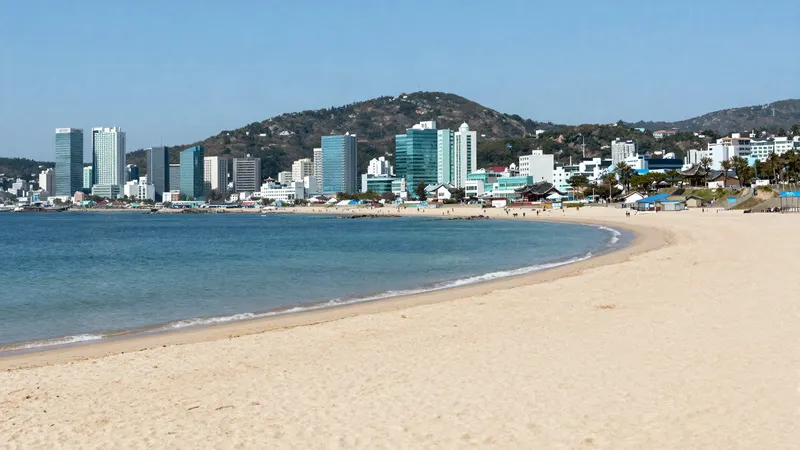
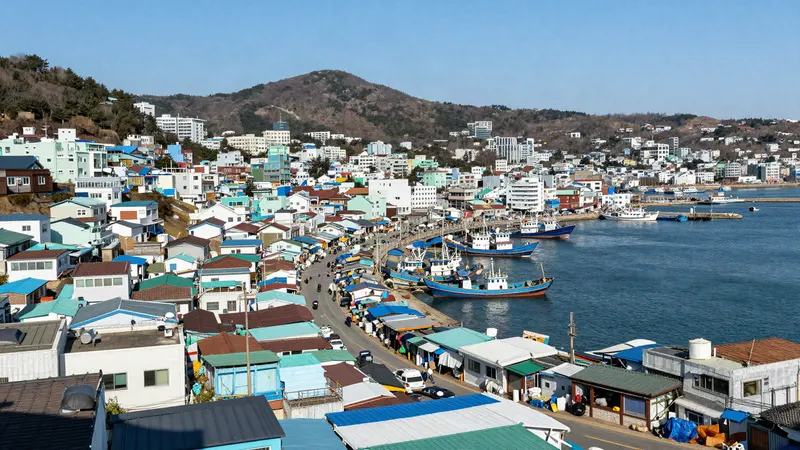
Busan is long and coastal rather than compact. The old city — Nampo-dong, Jagalchi, Gamcheon — sits at the western end, and the beach districts of Haeundae and Gwangalli sit at the eastern end. There is no direct subway line between them, so crossing means a transfer and 30 to 45 minutes each way. Do it twice in one day and you have spent an hour and a half underground for nothing.
The old city wins on a single day for three reasons. It is dense: four of the stops below are within walking distance of each other. It does not depend on the weather in the way a beach does. And it is the part of Busan that is actually distinct from Seoul — a working fish market, a refugee-built hillside neighborhood, and the alley where the film festival started.
Everything here is on Metro Line 1, the orange line, which is the old city's spine. A single ride is 1,600 KRW up to 10 km and 1,800 KRW beyond, and a transit card saves 100 KRW a ride plus transfer discounts.
Before you start: three things worth sorting
- Check the date against the closures. Jagalchi Market closes on the 1st and 3rd Tuesday of each month, and Gukje Market on the 1st and 3rd Sunday. If your one day lands on one of those, swap the order and lead with Gamcheon
- Carry 30,000 to 50,000 KRW in cash. Market stalls and street food carts still take notes only, and the hotteok you want costs less than the card minimum most stalls will accept
- Put your bag in a coin locker before you start rather than carrying it up Gamcheon's stairs — the main metro stations and Busan Station have them
- Wear shoes you can climb in. Gamcheon has no flat route through the middle of it
- Start at 08:30 if you can. Everything below gets more crowded after 11:00, and the fish market is best before it does
08:30 — Jagalchi Market
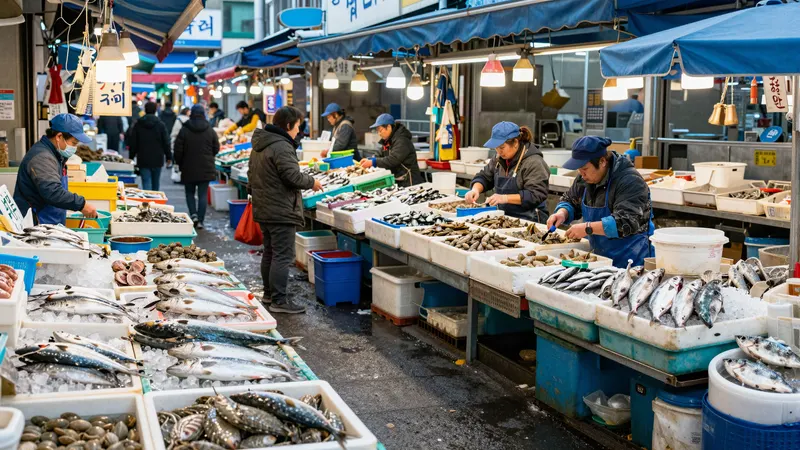
Jagalchi is Korea's largest seafood market and it has been working since long before anyone came to look at it. The floor runs roughly 05:00 to 22:00, so at 08:30 you are arriving in the middle of an ordinary working morning rather than at a tourist attraction — which is the point. Get off at Jagalchi Station Exit 10 on Line 1, or Nampo Station Exit 2; both are a three to five minute walk.
Walk the ground floor first: tanks of live fish, women filleting at speed, and hagfish that will move when you least expect it. Then take the escalator to the rooftop observatory, open roughly 09:00 to 21:00 and free, for the view over the harbor. It is the cheapest viewpoint in this city and almost nobody on a one-day trip knows it is there.
If you want to eat here, the system is that you buy fish from a stall downstairs and a restaurant upstairs cooks it for a fee. It is worth doing, but it is a 90-minute commitment and it is easier at dinner than at breakfast. On a one-day plan, the sensible version is to look now and eat at the market on the way back if the evening is still open.
10:30 — Gukje Market and BIFF Square
From Jagalchi it is about ten minutes on foot north to Gukje Market, which opened as a place for refugees to trade after the Korean War and now runs roughly 1,489 shops in six numbered zones. It opens 09:00 to 20:00 and closes the 1st and 3rd Sunday of each month. Go in without a plan — the appeal is the density, not any particular shop — and come out at the side nearest BIFF Square.
BIFF Square is the pedestrian street in the old cinema district, renamed in February 2011 after the film festival that started here. It is the street food stop, and the right way to do it is to graze rather than sit: ssiat hotteok split and packed with seeds, tteokbokki, dumplings, fried skewers, and bibim dangmyeon. Budget an hour and treat it as lunch.
This whole block — Jagalchi, Gukje, Bupyeong Kkangtong and BIFF Square — is one continuous walk. Nothing here needs transit, and the only reason to look at a map is to find your way back out.
13:30 — Gamcheon Culture Village
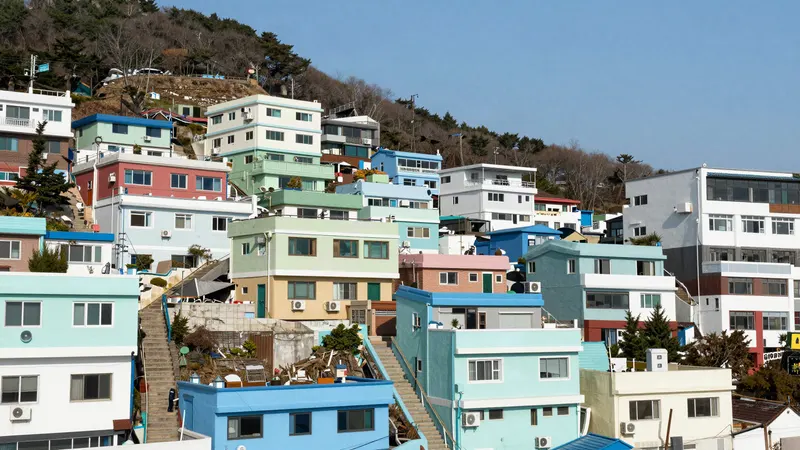
Gamcheon is the afternoon, and it needs the afternoon: the hillside faces in a direction that makes the light better later in the day, and two hours is a minimum rather than a target. From Nampo-dong, take Line 1 one stop to Toseong Station and leave by Exit 6, then take village bus Saha 1-1, Seo-gu 2 or Seo-gu 2-2 up to the Gamjeong Elementary School stop. Coming from Goejeong Station, use Exit 6 and village bus Saha 1 or Saha 1-1, then walk five minutes.
The village is free to walk through. An information center sells a stamp map that routes you past the viewpoints, which is a reasonable purchase if you want structure. Opening hours are 09:00 to 18:00 from March to October and 09:00 to 17:00 from November to February — not because there is a gate, but because that is when the facilities are staffed.
Two things matter here more than anywhere else on this route. First, people live in these houses. Keep your voice down, do not photograph into windows, and note that drones are prohibited. Second, there is no step-free route through the core, so if stairs are a problem, this is the stop to swap out.
Taxis do go up. From Nampo-dong it is around 15 minutes and under 10,000 KRW, which is worth it in August or if the legs have already gone.
17:30 — back down, and the evening
Come back down to Nampo-dong and you have three reasonable evenings depending on how much is left in the tank.
The short one: Yongdusan Park, seven minutes uphill from Nampo Station Exit 7, which is open at all hours and free. Busan Tower stands in it, 10:00 to 22:00 with last tickets at 21:30, and is ticketed — check the price on the day rather than trusting an old blog. Even without going up, the park itself is the easiest place in the old city to watch the light go.
The long one: Bupyeong Kkangtong night market, which runs 19:30 to 24:00 year-round and is a different set of stalls from the daytime market on the same ground.
The one worth breaking the plan for: go back to Jagalchi and do the buy-downstairs, cook-upstairs dinner you skipped in the morning. It is the single most Busan thing available on a one-day trip.
The day in one table
| Time | Stop | Getting there | Duration |
|---|---|---|---|
| 08:30 | Jagalchi Market + rooftop | Line 1, Jagalchi Exit 10 | 1.5–2 hrs |
| 10:30 | Gukje Market | 10 min walk north | 45 min |
| 11:30 | BIFF Square — lunch by grazing | 5 min walk | 1 hr |
| 13:30 | Gamcheon Culture Village | Line 1 to Toseong Exit 6, then village bus | 2–3 hrs |
| 17:30 | Back to Nampo-dong | Village bus + Line 1 | 40 min |
| 18:30 | Yongdusan Park, night market, or dinner at Jagalchi | On foot | Open |
Three variations on the same route
If you are off a cruise ship, you have about six hours, not ten. Cut Gukje Market and go Jagalchi at 09:00, BIFF Square at 10:30, Gamcheon at 12:00, back on board by 16:00. The port terminal to Jagalchi is a short taxi ride.
If it rains, Gamcheon becomes hard work — the stairs get slippery and the views are the whole point. Swap it for the covered markets: Gukje, Bupyeong Kkangtong and the underground shopping arcade beneath Nampo-dong, which lets you move between several blocks without coming back up.
If you arrive at midday, reverse the order. Gamcheon first while there is light, then down to Nampo-dong for the markets in the evening — Jagalchi and the night market are both open late, and BIFF Square is actually better after dark.
What this day costs
- Metro: four or five rides at 1,600–1,800 KRW each, plus two village bus fares — under 10,000 KRW for the day
- Entry: Jagalchi, its rooftop observatory, Gukje Market, Gamcheon and Yongdusan Park are all free. Busan Tower's observation deck is the only ticket on this route
- Food: street food grazing runs 2,000–5,000 KRW per item; a market seafood dinner is the one thing here that can cost real money
- A taxi up to Gamcheon from Nampo-dong is around 10,000 KRW and often the best money spent all day
Frequently asked questions
Can I see Busan in one day?
You can see one side of it properly. Busan is long and coastal, and there is no direct subway between the old city and the beach districts — crossing costs 30 to 45 minutes each way. A one-day plan should pick one side and stay there, and the old city is the denser, more distinctive half.
What is the best one-day route in Busan?
Jagalchi Market at 08:30 while it is still a working market, Gukje Market at 10:30, BIFF Square for street food around 11:30, Gamcheon Culture Village from 13:30 for two to three hours, then back to Nampo-dong for Yongdusan Park, the night market or a seafood dinner. Everything except Gamcheon's village buses is on Metro Line 1.
Which days should I avoid for this itinerary?
Jagalchi Market closes on the 1st and 3rd Tuesday of each month and Gukje Market on the 1st and 3rd Sunday. Neither closure stops the rest of the route, but if your one free day lands on one of them, lead with Gamcheon and treat the markets as a walk-through.
How do I get to Gamcheon Culture Village from Nampo-dong?
Take Line 1 to Toseong Station, leave by Exit 6, and take village bus Saha 1-1, Seo-gu 2 or Seo-gu 2-2 to the Gamjeong Elementary School stop. From Goejeong Station, Exit 6 and village bus Saha 1 or Saha 1-1, then a five-minute walk. A taxi from Nampo-dong takes about 15 minutes and costs under 10,000 KRW.
Does this one-day itinerary include Haeundae or Gwangalli?
No. Reaching the beach districts from the old city costs too much of a single day. If you want both sides, follow the two-day itinerary, which puts the old city on day one and the beaches on day two.
How much does a day on this route cost?
Transit comes to under 10,000 KRW for the day. Jagalchi, its rooftop observatory, Gukje Market, Gamcheon and Yongdusan Park are free — Busan Tower's observation deck is the only ticket. The variable is food, from a few thousand won of street food to a full seafood dinner at the market.