At a glance
- Day 1
- Old city — Jagalchi, Gukje Market, BIFF Square, Gamcheon Culture Village
- Day 2
- Beach side — Haeundae, Dongbaekseom, Blueline Park, Gwangalli
- Best base
- Seomyeon, where Lines 1 and 2 cross — about 30 minutes from either half
- Transit note
- No direct subway links the two halves. Budget 45–60 minutes with the transfer
- Saturday bonus
- The Gwangalli drone show runs on Saturday evenings — check the official schedule
- Left out
- Yonggungsa, Taejongdae and Beomeosa. Those are the third day
Split the city by area, not by attraction
The mistake people make with two days in Busan is building a list of sights and then visiting them in order of fame. That produces a schedule that crosses the city three times. Busan runs east to west along the coast, the old city sits at the western end on Metro Line 1, the beaches sit at the eastern end on Line 2, and the only way between them is a transfer — realistically 45 to 60 minutes door to door.
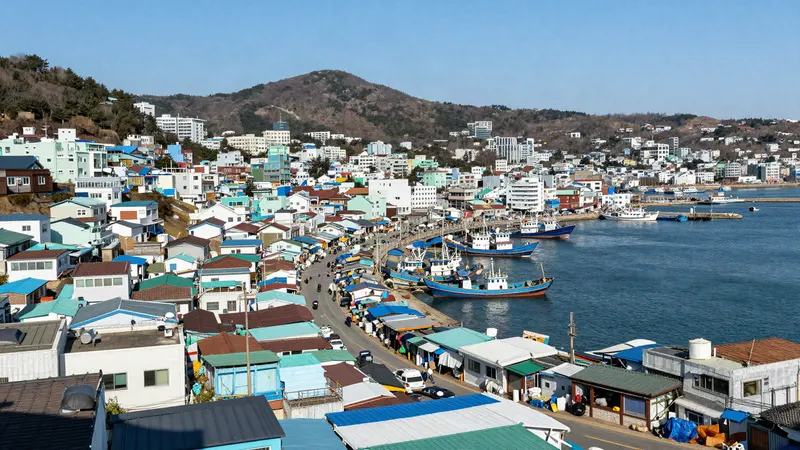
So the two days split cleanly. Day one is the old city: a working fish market, two covered markets, a street food alley and a hillside village, all within a few stops of each other. Day two is the coast: two beaches, a headland walk and an old railway line converted into a tourist train. Neither day needs a car, and neither day needs you to cross town.
If you have three days, the third adds the outliers — Haedong Yonggungsa, Taejongdae and Beomeosa — which is exactly why they are not in this plan. Each of them is a half-day round trip on its own.
Where to base yourself
Seomyeon is the compromise answer, because it is where Lines 1 and 2 cross. From there both halves of the city are roughly half an hour, and you are in the middle of the city's densest eating and shopping district when you come back at night. It is also the cheapest of the three obvious bases.
Haeundae is the answer if the beach is the reason you came: you wake up on day two already where you need to be, and day one costs you the long commute instead. Nampo-dong is the reverse, and is the best choice if you are arriving by train at Busan Station or leaving early.
Whichever you pick, the commute is the same total amount of time — you are only choosing which day pays it. The accommodation guide has the fuller comparison.
Day 1 — the old city
Day one is the one-day route, and it works best starting early. Jagalchi Market at 08:30 while it is still a working morning, north to Gukje Market around 10:30, BIFF Square for street food as lunch, then Line 1 one stop to Toseong Station for Gamcheon Culture Village in the afternoon, when the hillside light is better.
Two closing days can wreck this: Jagalchi shuts on the 1st and 3rd Tuesday of each month, Gukje Market on the 1st and 3rd Sunday. With two days you have an easy fix — swap day one and day two.
Finish in Nampo-dong. Yongdusan Park is seven minutes uphill from Nampo Station Exit 7 and is free and always open; the Bupyeong Kkangtong night market runs 19:30 to 24:00 year-round; or go back to Jagalchi and do the buy-downstairs-cook-upstairs seafood dinner, which is the best meal available on this itinerary.
- Full hour-by-hour version, with bus numbers and costs: Busan in One Day — the old city route
Day 2, morning — Haeundae and Dongbaekseom
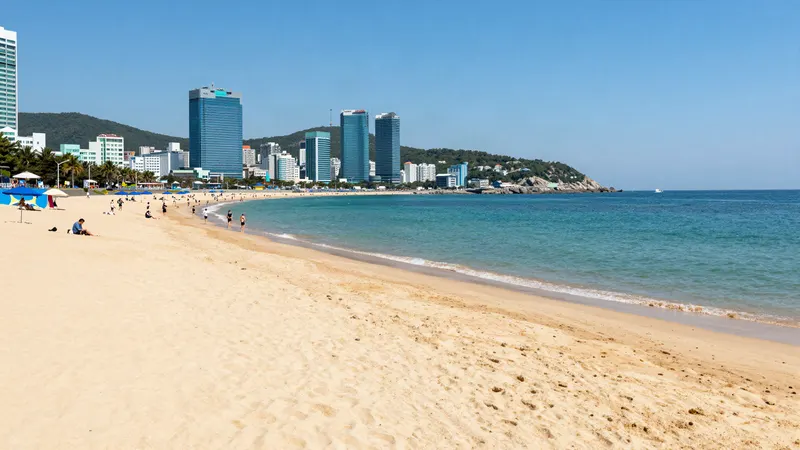
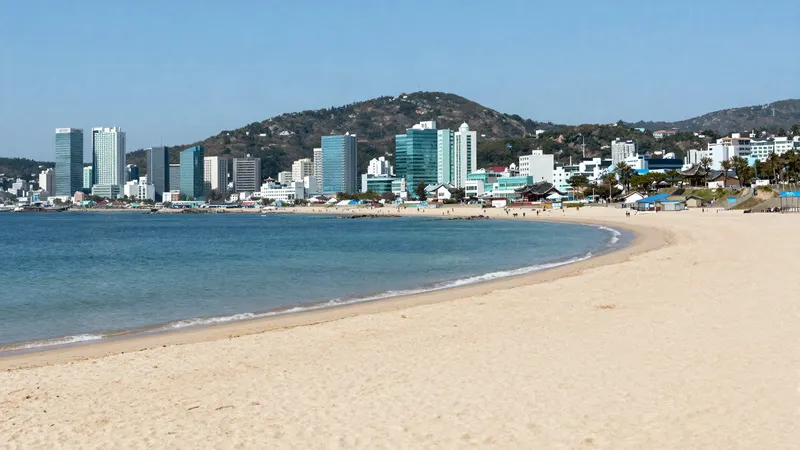
Take Line 2 to Haeundae Station. Exit 3 puts you near the middle of the beach and Exit 5 near the western end; the sand runs about 1.5 km, so the two ends are a twenty-minute walk apart. Admission is free, and there are restrooms, showers, changing rooms and a tourist information center on site.
The swimming season matters if you are here in summer. In 2026 it ran June 26 to September 15 with lifeguards on duty 09:00 to 18:00 — check the dates before a summer trip, since they move each year. Outside those dates the beach is open to walk on but nobody is watching the water.
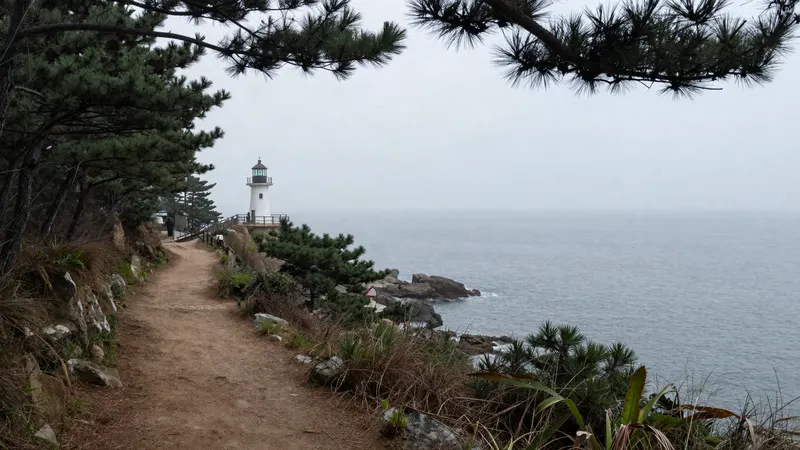
Walk west and the sand ends at Dongbaekseom, a pine-covered headland with a coastal deck of about 950 meters. The full loop is 30 to 45 minutes on a flat railed path, and it takes in the Nurimaru APEC House — free, 09:00 to 18:00, closed the first Monday of each month — plus a lighthouse and the viewpoint where Gwangan Bridge and the Marine City towers line up. This is the highest return per minute anywhere on the two days.
Day 2, midday — Blueline Park, or lunch and a slower pace
At the opposite, eastern end of Haeundae Beach is Mipo, where the old Donghae Nambu railway has been rebuilt as Blueline Park. Two things run along it and they are not the same. The beach train covers the full 4.8 km from Mipo through Cheongsapo to Songjeong at ground level; the Sky Capsule runs only the 2 km between Mipo and Cheongsapo, elevated, in small four-person cabins.
The Sky Capsule is the one that sells out, often days ahead in summer and at weekends, so decide before you are standing at the window. If it is gone, the beach train is the better value anyway — you can get off and back on along the route, and the section past Cheongsapo is the prettiest part of the line.
If trains are not your thing, this is the slot to eat properly and slow down. The streets immediately behind Haeundae Beach are dense with restaurants, and the traditional market a few blocks inland is where the prices stop being beach prices.
Day 2, evening — Gwangalli
Move to Gwangalli for the last stretch. From Haeundae a taxi takes 10 to 15 minutes and runs roughly 6,000 to 9,000 KRW, which for two people beats the subway on both time and hassle. By metro it is Line 2 to Gwangan Station, Exit 3 or 5, then an eight or nine minute walk.
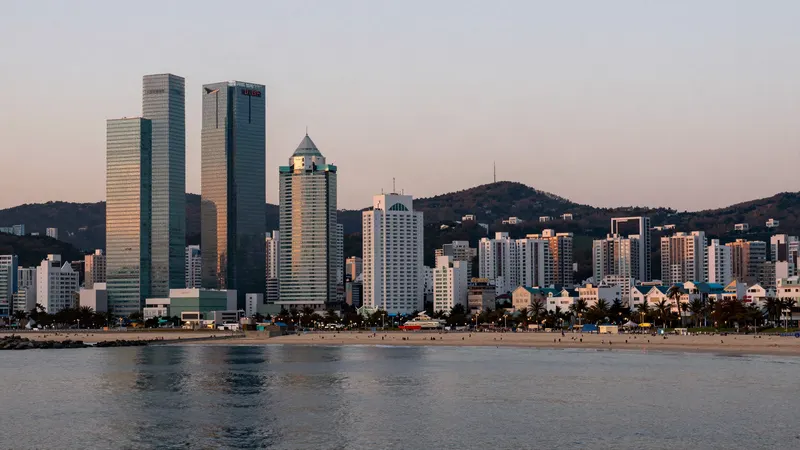
Gwangalli is the evening beach rather than the swimming one. Gwangan Bridge fills the view, the strip behind the sand is solid cafes and bars, and the whole place is oriented toward sitting and looking rather than going in the water. Arrive an hour before sunset and you get the light changing on the bridge, which is the single most photographed thing in this city.
If your second day is a Saturday, you have landed on the drone show. It runs on Saturday evenings over the water off Gwangalli, and the times are published on the official schedule rather than being fixed year-round — check it the same week, and arrive early, because the beach fills up.
The two days in one table
| Morning | Afternoon | Evening | |
|---|---|---|---|
| Day 1 | Jagalchi Market + Gukje Market | Gamcheon Culture Village | Nampo-dong: Yongdusan Park, night market or seafood |
| Day 2 | Haeundae Beach + Dongbaekseom | Blueline Park from Mipo, or a long lunch | Gwangalli and the bridge at sunset |
Getting between the pieces
| Leg | How | Time |
|---|---|---|
| Seomyeon → Nampo-dong | Line 1, direct | About 15 min |
| Seomyeon → Haeundae | Line 2, direct | About 30 min |
| Nampo-dong → Haeundae | Line 1 to Seomyeon, transfer to Line 2 | 45–60 min |
| Haeundae Beach → Dongbaekseom | On foot, west along the sand | 15–20 min |
| Haeundae Beach → Mipo (Blueline Park) | On foot, east along the sand | 15–20 min |
| Haeundae → Gwangalli | Taxi, 6,000–9,000 KRW | 10–15 min |
Adjusting the plan
- Rain: day two loses most of its point. Swap the beaches for the covered markets and the underground arcades in Nampo-dong, and move the coast to the drier day
- Winter: the beaches are still worth walking — Gwangalli at night does not depend on the weather being warm — but skip the swimming-season logic entirely
- Arriving late on day one: reverse the order and do Gamcheon first while there is light, then the markets after dark, which suits BIFF Square better anyway
- Traveling with someone who cannot manage stairs: drop Gamcheon and give day one to the markets, Yongdusan Park and the Nampo-dong waterfront instead
- Only one of your two days is a weekend: make that the Gwangalli day, for the drone show
- Coming by KTX: day one from Busan Station is the easy one — Nampo-dong is two stops away on Line 1
Frequently asked questions
How should I split two days in Busan?
One day per side of the city. Day one is the old city — Jagalchi Market, Gukje Market, BIFF Square and Gamcheon Culture Village, finishing in Nampo-dong. Day two is the coast — Haeundae Beach and Dongbaekseom in the morning, Blueline Park or a long lunch at midday, and Gwangalli for sunset. Mixing them costs you an hour of transit you do not have.
Where should I stay for a two-day Busan trip?
Seomyeon, where Lines 1 and 2 cross, puts both halves about 30 minutes away and is the cheapest of the obvious bases. Haeundae is better if the beach is the reason you came, and Nampo-dong if you are arriving or leaving by train at Busan Station. The total commute is the same either way — you are choosing which day pays it.
How long does it take to get from Nampo-dong to Haeundae?
Realistically 45 to 60 minutes door to door. There is no direct line: you take Line 1 to Seomyeon, transfer to Line 2, and ride out to Haeundae Station. That is why this itinerary keeps each day on one side of the city.
Is Blueline Park worth doing on a two-day trip?
The beach train is, and it runs the full 4.8 km from Mipo through Cheongsapo to Songjeong with hop-on, hop-off stops. The Sky Capsule covers only the 2 km to Cheongsapo and sells out days ahead in summer and at weekends, so book before you go rather than turning up at the window.
When is the Gwangalli drone show?
Saturday evenings over the water off Gwangalli Beach. The times shift with the season and shows are canceled in bad weather, so check the official Gwangalli M Drone Light Show schedule in the same week. Arrive early — the beach fills up well before the start.
What gets left out of a two-day Busan trip?
Haedong Yonggungsa, Taejongdae and Beomeosa Temple. Each is a half-day round trip from the city center, which is why they belong to a third day rather than being squeezed into these two.