At a glance
- Best viewing spot
- Gwangalli Beach, looking across the bay
- Best time
- After dark, when the bridge's LED lighting is active
- Getting there
- Metro Line 2 to Gwangan Station, Exit 3 or 5, then an 8–9 min walk to the beach; taxi from Haeundae ~10–15 min, roughly 6,000–9,000 KRW
- Cost
- Free to view from the beach; driving across the bridge itself has a toll
- The bridge
- About 7.4 km on two decks — Korea's largest double-deck bridge over the sea, linking Namcheon-dong with Centum City
- Lighting
- An LED display that changes by day of the week and season; details on the operator's website
A bridge that's also a nightly show
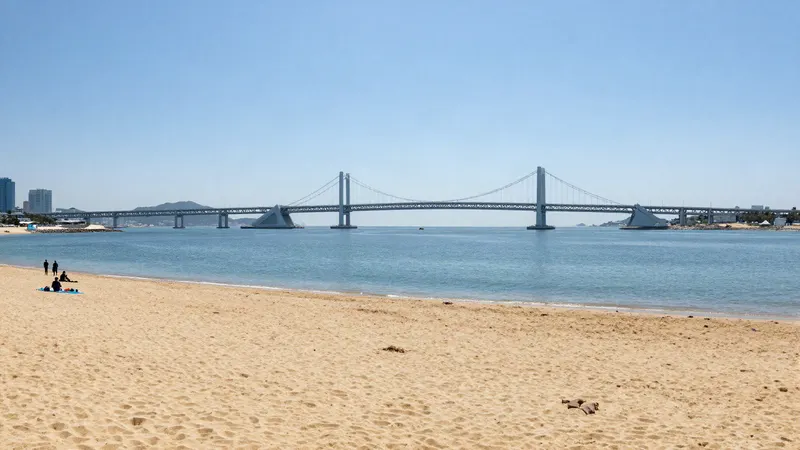
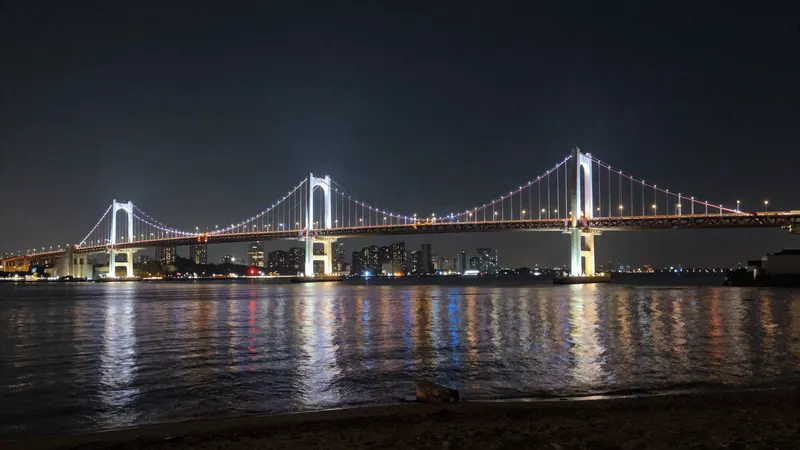
Gwangandaegyo, usually called Gwangan Bridge by visitors, is a long suspension bridge spanning Gwangalli Bay. Unlike most of Busan's other top-ranked sights, the appeal here isn't a place you walk through — it's a view you look at, most often from Gwangalli Beach directly across the water. After dark, the bridge runs a changing LED lighting display that's one of the most reliably photogenic sights in the city.
The numbers explain why it fills the view. It runs about 7.4 km on two decks, from Namcheon-dong in Suyeong-gu to Centum City in Haeundae, and the Korea Tourism Organization calls it Korea's largest double-deck bridge over the sea. Visit Busan calls it the Diamond Bridge, and after dark it earns the name.
It's genuinely worth building an evening around, rather than treating it as a quick daytime photo stop.
How the lighting works
The display is LED lighting paired with a sound system, which Visit Busan describes as the largest bridge LED installation in the world. It is not one pattern on repeat: the Korea Tourism Organization says the colors change by day of the week and by season, and Visit Busan says the program is different every day.
Two things follow. Seeing it once is not seeing all of it, so a second evening from a different spot is not wasted. And if you are planning around a particular show, check with the operator, the Busan Facilities Corporation — a fixed schedule quoted elsewhere may be out of date.
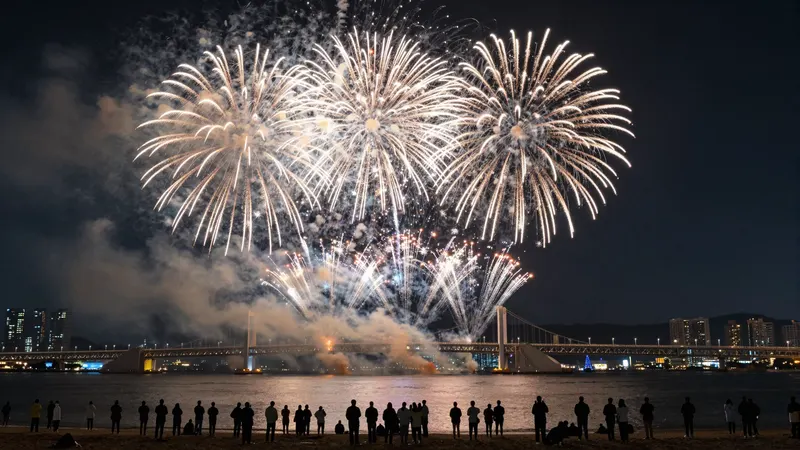
On the night of the Busan Fireworks Festival — November 7 this year — the water in front of the bridge becomes the stage, and the beach fills hours in advance.
Five places to watch it from
Gwangalli Beach itself is the simplest and most popular viewing spot — walk onto the sand and the bridge is directly in front of you across the bay. For a slightly elevated view with a drink in hand, the cafes and rooftop bars lining the street behind the beach fill up specifically for this view in the evening, so arriving before sunset secures a better seat.
Millak Waterside Park, at the Millak end of the beach, is the closest you can get: Visit Busan describes it as the nearest view of both the bridge and Marine City's night skyline. It is about 20 minutes on foot from Gwangan Station Exit 3, and buses 41, 83-1 and 210 stop at the park. One thing to know before you bring a drink: it has been an alcohol-free zone since July 1, 2023.
From the Haeundae side, the observation deck on the coastal path around Dongbaekseom frames the bridge together with Nurimaru APEC House, where the 2005 APEC summit met, with Oryukdo further to the left. It is about 20 minutes on foot from Dongbaek Station Exit 1.
For the whole city at once, there is the Hwangnyeongsan viewpoint rest area on the mountain behind the bay. The rest area is open 11:00 to 02:00 and closes only on the main holiday days. Visit Busan lists no public transport route to it, so plan on a taxi both ways.
- Full details: Gwangalli Beach — a first-timer's guide
| Spot | What you see | Getting there | Hours / cost |
|---|---|---|---|
| Gwangalli Beach | The full span, straight on | Metro Line 2, Gwangan Station Exit 3 or 5, 8–9 min walk | Always open, free |
| Millak Waterside Park | The closest view, with Marine City behind | Gwangan Station Exit 3, about 20 min walk; bus 41, 83-1 or 210 | Always open, free, no alcohol |
| Dongbaekseom observation deck | The bridge with Nurimaru APEC House, Oryukdo to the left | Metro Line 2, Dongbaek Station Exit 1, about 20 min walk | Path always open, free |
| Hwangnyeongsan viewpoint | The city from above | Taxi — no public transport route listed | 11:00–02:00, closed on main holidays |
| Rooftop cafes behind Gwangalli | The beach view, a floor or two up | Same as Gwangalli Beach | Varies by cafe; arrive before sunset |
Crossing it by car or taxi
On foot, you watch the bridge; to be on it, you need a car. The Korea Tourism Organization singles out the view from the upper deck — Oryukdo, Hwangnyeongsan, Gwangalli Beach and Dongbaekseom in one sweep — which turns a taxi between Haeundae and Namcheon-dong into a small sightseeing trip of its own.
There are no toll booths. The bridge uses smart tolling, which reads number plates as cars pass without slowing down. If you are driving a rental car, the operator's website has a payment option for renters and a lookup for unpaid tolls; its customer center is 1688-8830, open 06:30 to 23:00.
Practical tips
- Go after dark specifically for the lighting — daytime views are pleasant but not the main draw
- Rooftop cafes and bars facing the bridge get busy on weekend evenings; arrive early for a window seat
- If your visit overlaps with Busan's fireworks festival, expect Gwangalli and this view to be extremely crowded
- The walk from Gwangan Station to the beach is short and flat, suitable for any pace
- The lighting program changes every day — check the operator's website if you want a particular show
Frequently asked questions
Where is the best place to see Gwangan Bridge?
Gwangalli Beach is the simplest and most popular spot — walk onto the sand and the bridge is straight ahead. For the closest view, go to Millak Waterside Park; from the Haeundae side, the Dongbaekseom observation deck; and for the city from above, the Hwangnyeongsan viewpoint.
When should I go to see Gwangan Bridge?
Go after dark specifically. The bridge runs a changing LED lighting display in the evening, which is the main draw — daytime views are pleasant but not the reason most people come.
Does it cost anything to see Gwangan Bridge?
Viewing it from Gwangalli Beach is free. Driving across the bridge has a toll, collected automatically by number-plate recognition — there are no toll booths.
How do I get to the Gwangan Bridge viewpoint?
Take Metro Line 2 to Gwangan Station and leave through Exit 3 or Exit 5, then walk 8–9 minutes to the beach — a short, flat walk suitable for any pace. From Haeundae, a taxi takes roughly 10–15 minutes and typically costs 6,000–9,000 KRW.
How long is Gwangan Bridge?
About 7.4 km. It is a double-deck bridge running from Namcheon-dong in Suyeong-gu to Centum City in Haeundae, and the Korea Tourism Organization describes it as Korea's largest double-deck bridge over the sea.
Is the light show the same every night?
No. The Korea Tourism Organization says the colors change by day of the week and by season, and Visit Busan says the program is different every day. The operator, the Busan Facilities Corporation, publishes the details.
Can you drink at Millak Waterside Park?
No. Visit Busan notes that Millak Waterside Park has been an alcohol-free zone since July 1, 2023. It is still free, open at all hours, and the closest place to watch the bridge from.