At a glance
- Location
- Dongbaek-ro 99, at the western end of Haeundae Beach
- Getting there
- Metro Line 2 — Haeundae Station Exit 5, or Dongbaek Station Exit 1. Buses 139, 307, 1003
- Coastal walk
- About 950 m along the sea side; 30–45 minutes at a relaxed pace
- Entry
- Free, open year-round, no ticket or reservation
- Nurimaru APEC House
- 09:00–18:00 daily, free. Closed the first Monday of each month
- Best time
- Early morning, or after dark for the Marine City skyline
A short walk that covers three things at once
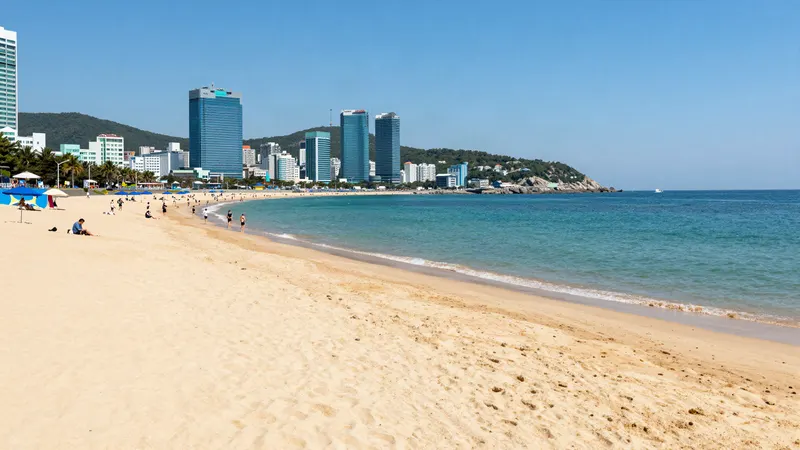
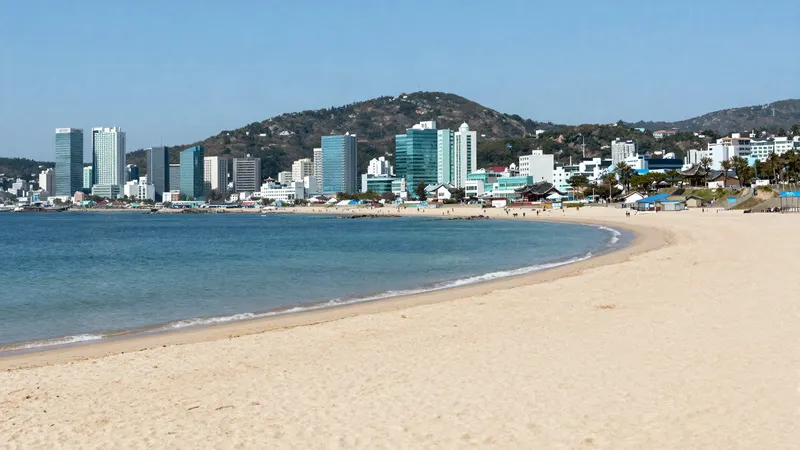
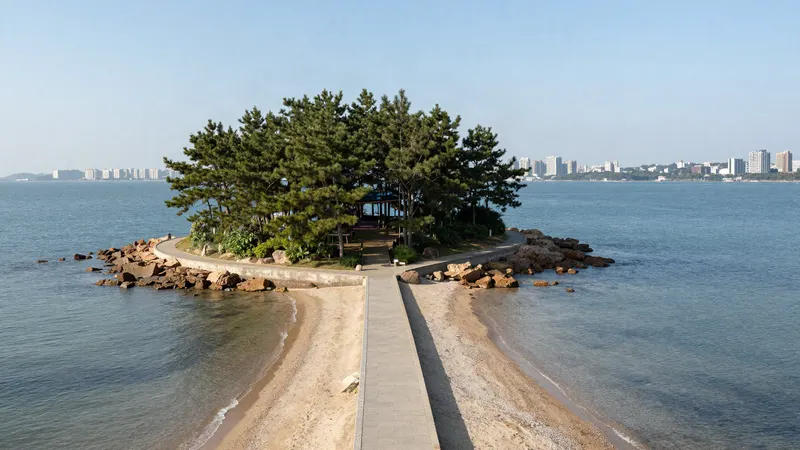
Dongbaekseom sits at the western end of Haeundae Beach, a low headland covered in pines and camellias. It is called an island, and old maps drew it as one, but it has long been joined to the shore — there is no ferry, no bridge and no ticket. You walk on from the beach and you walk off again.
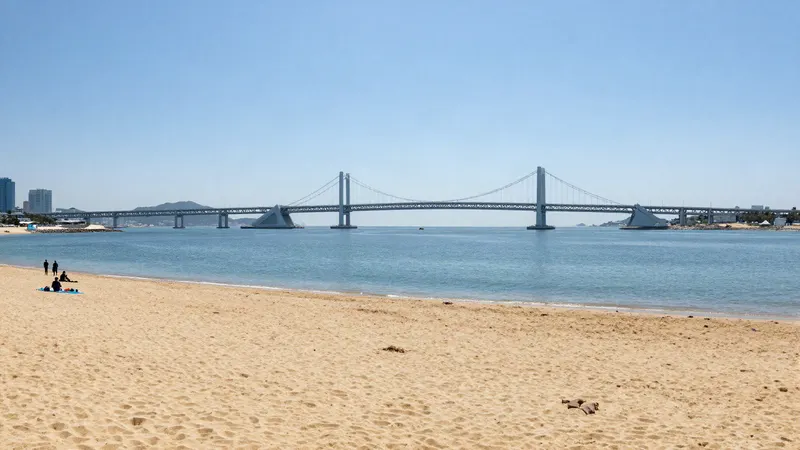
What makes it worth the time is not the walking, which is easy, but how much is packed along one short route. Busan's tourism office puts the coastal path at about 950 meters and describes it as a place to wind down rather than a hike. On that 950 meters you pass a white lighthouse, a mermaid statue, a viewpoint that lines up Gwangan Bridge and the Marine City towers in a single frame, the building where the 2005 APEC summit met, and a rock carved with the three characters that gave Haeundae its name.
For a first-time visitor this is one of the cheapest additions to an itinerary. If Haeundae Beach is already on your plan, Dongbaekseom costs you nothing but 45 minutes and a pair of ordinary shoes.
Getting there
Two Metro Line 2 stations work, and the one you choose decides what you see first. From Haeundae Station, leave by Exit 5, walk down to the sand and turn right along the beach — the beach is about 1.5 km long, so allow 15 to 20 minutes to reach the far end where the pines start. From Dongbaek Station, Exit 1 puts you on the other side of the headland, the side that passes The Bay 101 and looks across at Marine City; Busan's tourism office counts about 20 minutes on foot to the island and about 14 minutes to Nurimaru APEC House.
Buses 139, 307 and 1003 stop near the park entrance. A taxi from Haeundae Station takes about five minutes and normally lands on the minimum fare, which Busan Metropolitan City lists at 4,800 KRW. Drivers all know 동백섬, so the name alone is enough. There is a public parking lot at Dongbaek Park, though almost nobody arriving by metro will need it.
| From | How | Time |
|---|---|---|
| Haeundae Station (Line 2), Exit 5 | Walk to the beach, then west along the sand | 15–20 min |
| Dongbaek Station (Line 2), Exit 1 | Walk south past The Bay 101 | About 20 min to the island |
| Dongbaek Station (Line 2), Exit 1 | Same route, continuing to the summit house | About 14 min to Nurimaru |
| Anywhere in Haeundae | Bus 139, 307 or 1003 | Stops near the park entrance |
| Haeundae Station | Taxi | About 5 min, usually the 4,800 KRW minimum |
What the loop is actually like
The main path is a deck along the seaward side, railed, flat for most of its length, with a few gentle rises. It is the kind of surface that does not ask anything of your footwear. There is one short suspension bridge section, which Busan's own description calls short and safe — worth knowing if that sort of thing usually puts you off.
Three stops account for most of the photographs. The mermaid statue, cast in 1989, comes from a local legend about Princess Hwangok, who married the king of this area and sat looking out to sea toward the home she had left. The white lighthouse marks the tip. Between them is the viewpoint where Nurimaru and Gwangan Bridge appear together, which is the single most reproduced image of this island and, unusually, looks about the same in person.
Inner paths climb away from the deck into the pines, toward the statue of Choe Chi-won and the carved rock. These have steps and slopes, so if you want the flat version, stay on the coastal deck and skip the interior — you lose the history but not the views. Note also that the grounds of the Westin Josun hotel sit inside the headland and the public path simply goes around them; if the route seems to be curving away from a private entrance, you are going the right way.
Nurimaru APEC House
The glass-and-timber building near the tip was built for the Asia-Pacific Economic Cooperation summit that Busan hosted in 2005. The first leaders' meeting was held at BEXCO on November 18, and the second here the following morning. The name is Korean rather than an acronym: 누리 for the world, 마루 for a summit or ridgeline, so roughly 'the place where the world's leaders met'.
It is open 09:00 to 18:00 every day, admission is free, and it closes on the first Monday of each month. The address is Dongbaek-ro 116 and the phone number is 051-743-1974. Since it stands directly on the walking route, the only planning it requires is not arriving on a first Monday — the walk stays open even when the building does not.
Inside, the main hall is kept as a conference room and there is an exhibition on the summit and on the building itself, whose roof takes its shape from a traditional Korean pavilion. Half an hour covers it comfortably, and the terrace is a better viewpoint than most of the paid ones in this city.
The rock that gave Haeundae its name
On the rocks near the shore, three characters are carved: 海雲臺. The story attaches them to Choe Chi-won, the late-Silla scholar whose pen name was Hae-un — 'sea cloud'. He is said to have passed through on his way to Gayasan, been taken with the sea, the clouds and the moon here, built a platform, and cut his name into the stone. The district around it has been called Haeundae ever since.
Busan Metropolitan City designated the carving Monument No. 45 on March 9, 1999, and renamed it Haeundae Seokgak — the Haeundae stone carving — on September 3, 2014. Whether the hand was actually his is not documented, and the heritage record is careful about it. What is known is that the carving is old: a poem by the late-Goryeo writer Jeong Po already refers to the platform being gone and only the name Hae-un remaining.
A statue of Choe Chi-won stands nearby among the pines. Both are a five-minute detour off the coastal deck, and they are the reason this walk is more than a seaside stroll.
When to go, and the version after dark
Early morning and late afternoon are the two good windows. The deck is exposed, and in July and August the middle of the day on an unshaded boardwalk is punishing — the weather guide has the seasonal detail. Spring and autumn need no strategy at all.
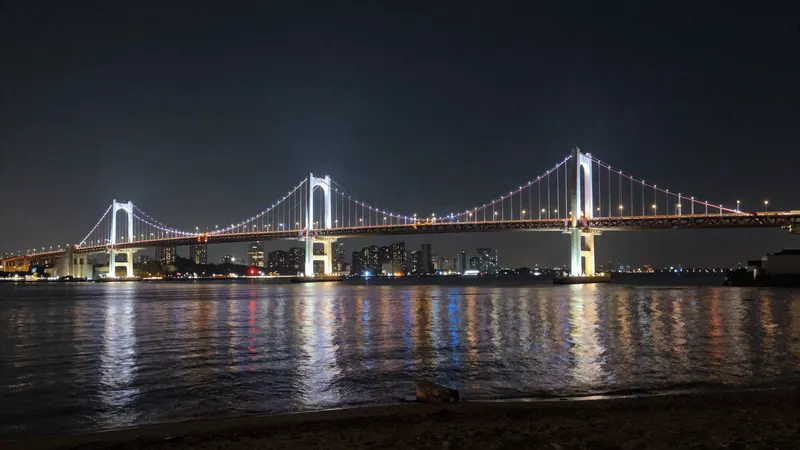
After dark it becomes a different attraction. Busan's official night-view route includes The Bay 101, at the Dongbaek Station entrance to the island, where you stand facing the lit towers of Marine City across the water. Walking the deck from the Haeundae end and coming out there at dusk turns a 45-minute stroll into the best free hour of the evening. The path is lit, though not brightly; a phone light helps on the inner trails.
The camellias the island is named for — 동백 is the Korean word — flower in winter and early spring, which is also when the deck is emptiest. It is the one time of year when this walk feels like a local's route rather than a tourist one.
Practical notes
- It does not connect to Blueline Park. That coastal train starts at Mipo, at the opposite, eastern end of Haeundae Beach — about a 30-minute walk away along the sand
- There is no convenience store on the headland itself. Buy water at the beach end or near The Bay 101 before you start
- On the first Monday of the month, Nurimaru APEC House is closed but the walk, the lighthouse and the carving are not
- Treat it as an extension of a Haeundae visit rather than a separate outing — the two together make one comfortable half day
- If Taejongdae sounded like more walking than you wanted, this is the flat alternative with a similar payoff
- Comfortable shoes are enough for the coastal deck; the inner paths to the carving have steps
Frequently asked questions
How do I get to Dongbaekseom?
Take Metro Line 2 to Haeundae Station, leave by Exit 5, and walk west along the beach for 15 to 20 minutes. Dongbaek Station Exit 1 is the other approach, about 20 minutes on foot and closer to Nurimaru APEC House. Buses 139, 307 and 1003 stop near the entrance, and a taxi from Haeundae Station is about five minutes at the 4,800 KRW minimum fare.
How long does the Dongbaekseom walk take?
The coastal path is about 950 meters and takes 30 to 45 minutes at a relaxed pace. Add half an hour if you go into Nurimaru APEC House, and five minutes for the detour to the Choe Chi-won statue and the stone carving.
Is Nurimaru APEC House free, and when is it open?
Admission is free and it opens 09:00 to 18:00 every day, except the first Monday of each month, when it closes. It stands directly on the walking route at Dongbaek-ro 116, so no separate trip is needed. Hours can change and it sometimes shuts for official events.
Is Dongbaekseom an easy walk?
Yes. The seaward deck is railed, flat for most of its length and paved, with one short suspension bridge section that Busan's tourism office describes as short and safe. Ordinary shoes are enough. The inner paths up to the stone carving have steps, so stay on the coastal deck if you want the level version.
What is the stone carving on Dongbaekseom?
Three characters, 海雲臺, cut into the rock near the shore. They are traditionally attributed to the Silla scholar Choe Chi-won, whose pen name was Hae-un, and the district of Haeundae takes its name from them. Busan designated the carving Monument No. 45 in 1999 and renamed it Haeundae Seokgak in 2014.
Is Dongbaekseom worth visiting at night?
It is one of the better free night walks in Busan. The Bay 101, at the Dongbaek Station entrance, faces the lit towers of Marine City and appears on Busan's official night-view route. The deck is lit but not brightly, so bring a phone light if you plan to use the inner trails.