At a glance
- Best overall
- Late September to November — clear, stable, and the festival season
- Also good
- Late April to mid-June, before the rains start
- Hardest
- Late June to early August — the monsoon, then weeks above 32°C
- Winter
- Average 3.8°C — the mildest in Korea after Jeju, and the beaches stay walkable
- Rain
- 50 to 60 percent of the year's rain falls in summer
- Beach season 2026
- June 26 to September 15, lifeguards 09:00–18:00. Dates move each year
The short answer
Come in autumn. Late September through November is the stretch where Busan is doing everything it does well at once: the humidity has broken, continental high pressure brings clear days, the sea is still warm enough to look at without shivering, and the city's two biggest events — the film festival in October and the fireworks festival in November — both land in it.
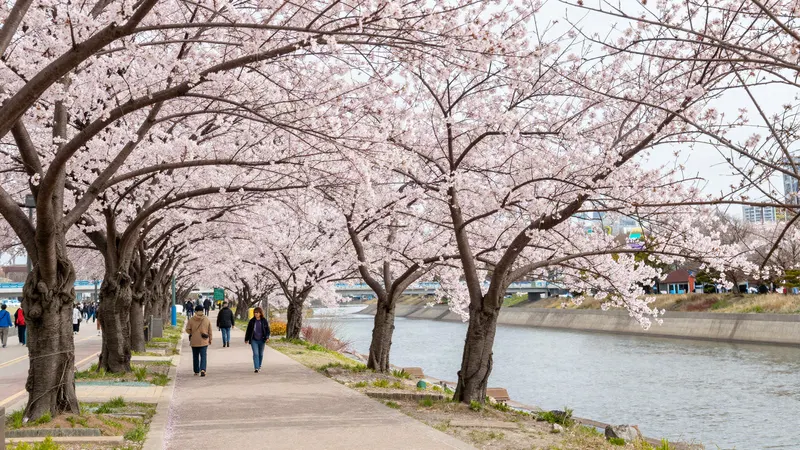
The second-best window is late April to mid-June, after the spring wind has eased and before the rains arrive. It is greener, quieter and cheaper than autumn, and the only thing it lacks is the light.
The one to think hard about is July into early August. It is not that it is unbearable; it is that it is the only period where the weather can take a day away from you entirely.
What Busan's climate actually is
Busan sits at the southeastern tip of the peninsula, facing the Korea Strait, and the city's own description puts it in a maritime temperate zone — which in practice means the gap between summer and winter is smaller here than almost anywhere else in the country. Four seasons are distinct, but the edges are softer.
The winter figure is the one that surprises people. Busan's average winter temperature is about 3.8°C, which the city states is the mildest in Korea after Jeju, and there are around 53 days a year when the daily minimum falls below freezing — the fewest outside Jeju. If your mental image of a Korean winter comes from Seoul, this is a different climate.
Summer is the reverse. July averages 23.9°C with a daily range of only 5.3°C, which sounds pleasant until you realize the small range is because the nights stay hot too. Between late July and mid-August, daily highs above 32°C can run for weeks, and so can tropical nights where the minimum never drops below 25°C.
| Season | City's own dates | Temperature | What it means for a trip |
|---|---|---|---|
| Spring | Early March – late June | Average 14.9°C | Mild on paper, but strong wind makes it feel colder |
| Summer | Late June – early September | July mean 23.9°C | Monsoon, then heat. 50–60% of the year's rain |
| Autumn | Early September – late November | September 21.8°C, October 17°C | Clear, stable, the best of the year |
| Winter | Late November – late February | Average 3.8°C | Mild for Korea, 53 days below freezing a year |
Summer: the monsoon, the heat and the typhoons
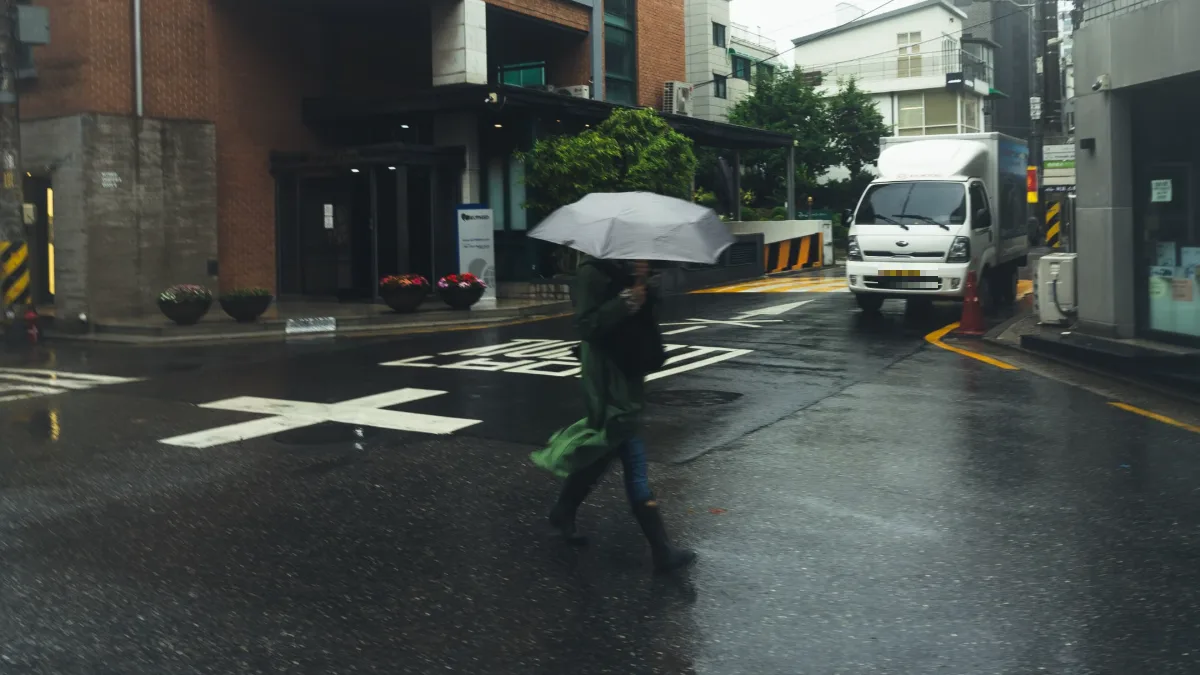
Three separate things happen in Busan's summer and they are worth keeping apart. The first is jangma, the East Asian monsoon front, which the city dates from late June to early August. This is not drizzle — it is the period that delivers most of the 50 to 60 percent of annual rainfall that falls in summer, in bursts that can shut a coastal path for an afternoon.
The second is the heat, which arrives as the monsoon leaves. Late July to mid-August is when the 32°C days and the tropical nights stack up. The practical effect is that outdoor sightseeing has to move to either end of the day: Gamcheon at 14:00 in August is an ordeal, and Dongbaekseom's unshaded deck is worse.
The third is typhoons, which are possible from July through September. A strong one closes coastal walkways, stops the Songdo cable car, can restrict traffic on Gwangan Bridge and can ground flights at Gimhae for a day. Emergency alerts are pushed to every phone in the area in Korean with the hazard type in English; the Emergency Ready app carries the same alerts in English, Chinese and Japanese.
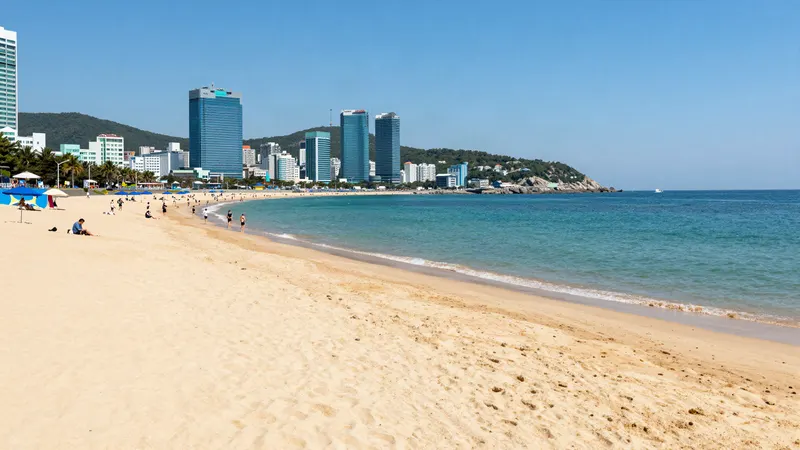
None of this makes a summer trip a bad idea — it is the one season when the beaches are actually for swimming. It just means building a rainy-day alternative into each day rather than hoping.
Autumn: why this is the answer
From early September the continental high builds and Busan gets its clear days. The city's figures put September at 21.8°C and October at 17°C, which is close to ideal for a trip built on walking: warm enough for the coast, cool enough for Gamcheon's stairs and the trails behind Beomeosa.
The mornings and evenings turn cool in September while the afternoons stay warm, so the useful packing note is layers rather than warmth. From November the cold northwesterly sets in and temperatures drop quickly — early November and late November are noticeably different trips.
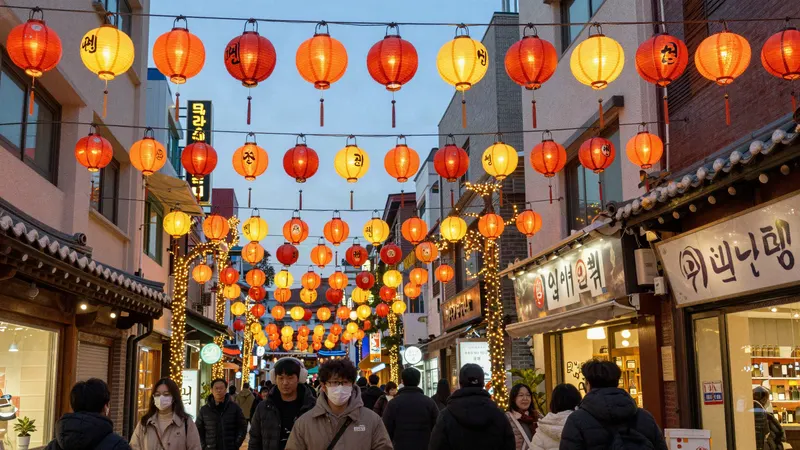
Autumn is also when the calendar is full. The Busan International Film Festival is in October and the fireworks festival is in November, which means the two best-weather months are also the two months when accommodation is hardest to book. The festival calendar has the dates, and booking early is the entire strategy.
Winter and spring: the underrated halves
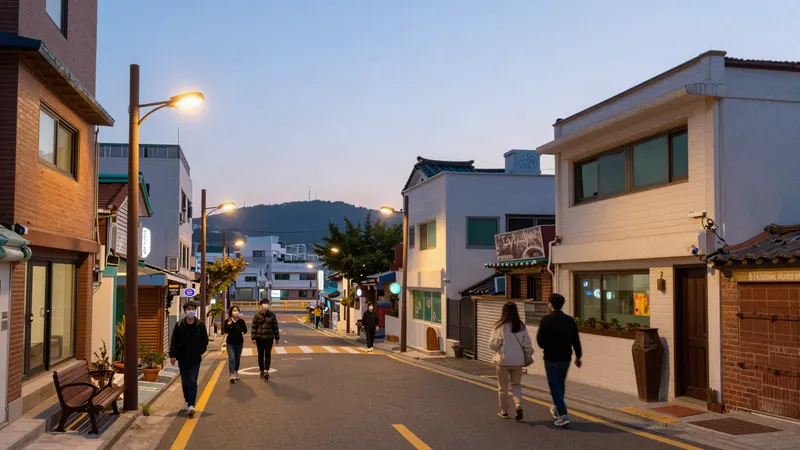
Winter in Busan is not the Korean winter people brace for. An average of 3.8°C and 53 freezing days a year means the coastal walks stay open and comfortable in a decent coat, Gwangalli at night is unaffected by the temperature, and the crowds are gone. The camellias that give Dongbaekseom its name flower in winter and early spring. What you lose is swimming and some of the daylight; what you gain is the city at its emptiest and cheapest.
Spring is the season with the gap between the number and the experience. The city's average of 14.9°C is higher than neighboring Ulsan or Tongyeong, but spring winds average 4.4 m/s, and the city's own description notes this makes the apparent temperature much lower — locals say it barely feels like spring at all. Add large daily swings, dry spells, yellow dust and late frost, and March is less pleasant than its average suggests.
The fix is timing. By late April the wind has dropped, the diurnal swing has narrowed and the rains have not started. Late April to mid-June is a genuinely excellent window that gets far less attention than autumn does.
What to pack, by season
- Spring: layers, and a windproof outer layer that matters more than a warm one. A mask is worth having on yellow dust days
- Early summer: a compact umbrella you carry every day from late June, and shoes that survive being soaked
- High summer: sun protection, a refillable bottle, and a plan for indoor hours between 12:00 and 16:00
- Autumn: layers again, for a 10°C swing between morning and afternoon. Nothing heavy until November
- Winter: a proper coat, but not the sub-zero gear Seoul requires. Wind off the water is the thing to dress for
- Year-round: shoes you can climb stairs in. Every hillside stop in this city is stairs
Choosing between the two good windows
- Pick autumn if you want the events, the clearest light, and the warmest sea you can get outside summer
- Pick late spring if you want lower prices, thinner crowds and easier accommodation — and do not mind swimming being out
- Avoid Lunar New Year and Chuseok if you are moving between cities: trains sell out and many small restaurants close
- Avoid late July to mid-August if a washed-out day would ruin the trip, and embrace it if the beaches are the whole point
- Winter is the value option and is genuinely underrated, provided you are here for the city rather than the water
- Whenever you come, check the forecast the night before and keep one indoor plan per day. That is the whole trick in a coastal city
Frequently asked questions
When is the best time to visit Busan?
Late September through November. The humidity breaks, continental high pressure brings clear days, September averages 21.8°C and October 17°C, and both of the city's biggest events fall in this window. Late April to mid-June is the second-best option, with lower prices and thinner crowds.
How bad is the rainy season in Busan?
Jangma, the monsoon front, runs from late June to early August and delivers most of the 50 to 60 percent of annual rainfall that falls in summer. It comes in heavy bursts rather than steady drizzle, which means the practical effect is losing afternoons rather than whole weeks. Carry an umbrella daily and keep an indoor alternative for each day.
Is Busan cold in winter?
Not by Korean standards. The winter average is about 3.8°C, which the city states is the mildest in the country after Jeju, and there are roughly 53 days a year when the minimum drops below freezing — the fewest outside Jeju. A proper coat is enough; the sub-zero gear Seoul calls for is not needed.
When can you swim at Busan's beaches?
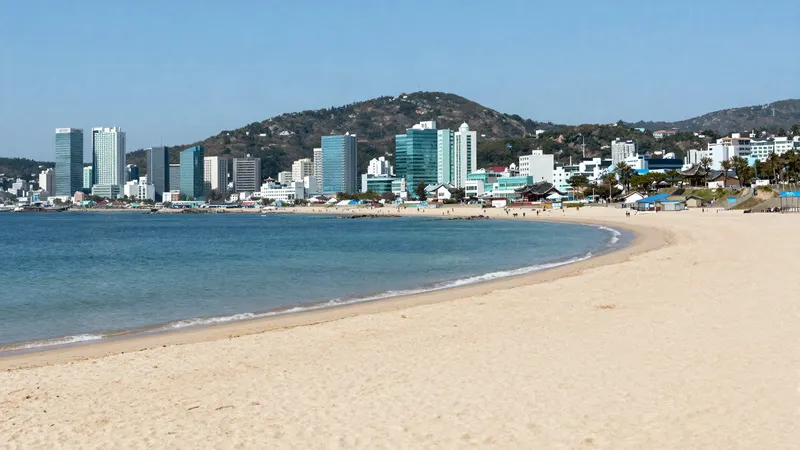
During the official beach season, which is announced each year. In 2026 Haeundae's ran June 26 to September 15 with lifeguards on duty 09:00 to 18:00. Outside those dates the beaches are open to walk on but nobody is supervising the water, and rip currents are the main hazard rather than the temperature.
Do typhoons affect travel to Busan?
They are possible from July through September. A strong typhoon closes coastal walkways, stops the Songdo cable car, can restrict Gwangan Bridge and can ground flights at Gimhae for a day. Alerts go to every phone in the area; install the Emergency Ready app for the same warnings in English.
Is spring a good time to visit Busan?
Late spring is. The seasonal average of 14.9°C is mild, but spring winds average 4.4 m/s and make it feel considerably colder, and March also brings large daily swings, dry spells and yellow dust. By late April the wind has eased and the rains have not started, which makes late April to mid-June one of the two best windows of the year.