At a glance
- When rain matters most
- The monsoon, roughly late June to early August — 50 to 60 percent of the year's rain falls in summer
- Closes in bad weather
- Oryukdo Skywalk, the Songdo cable car and coastal walkway, Cheonmasan Observatory, the Dadaepo fountain show
- East side indoors
- Spa Land and Shinsegae at Centum City, SEA LIFE Busan Aquarium in Haeundae
- West side indoors
- ARTE Museum on Yeongdo, Jagalchi Market's indoor building, Lotte's Gwangbok store
- Stay underground
- Centum City and Nampo stations both connect straight into department stores
Why rain changes a Busan trip more than most cities
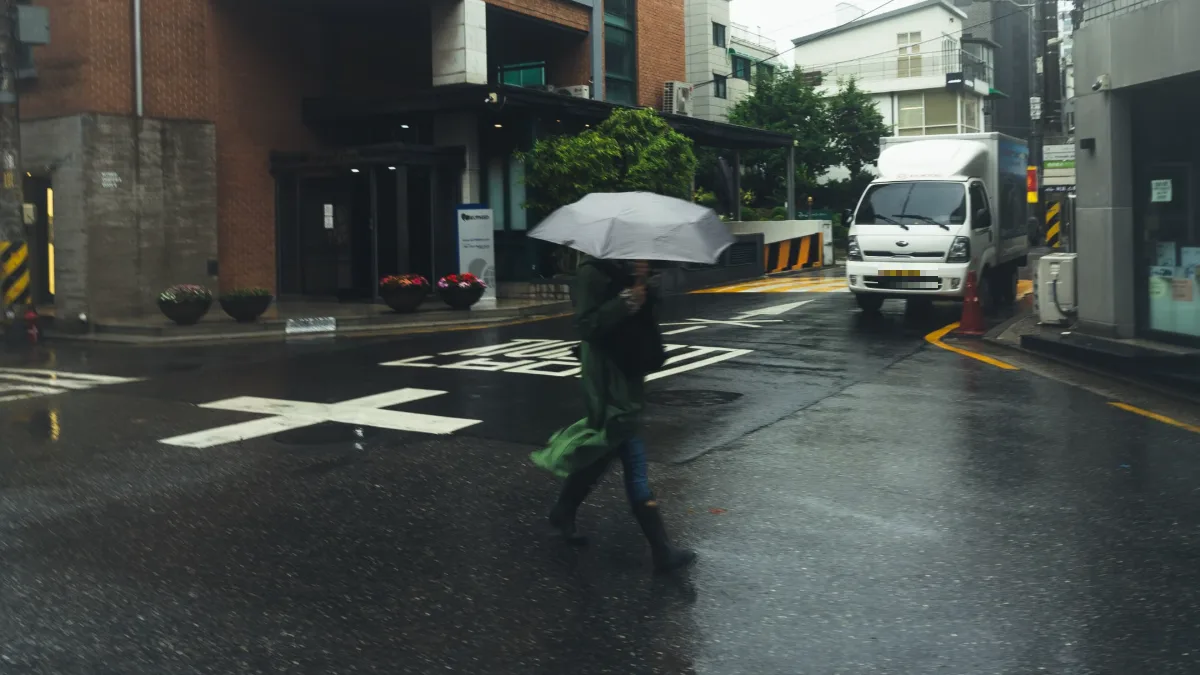
Most of what first-time visitors come to Busan for is outside and on the coast: glass skywalks over the sea, cable cars, cliff trails and beaches. Those are exactly the attractions that close or turn unpleasant in rain and strong wind, so a wet day here needs a real plan rather than just an umbrella.
The rain is also concentrated. Busan gets 50 to 60 percent of its annual rainfall in summer, most of it during the monsoon from roughly late June to early August, often in heavy bursts — see the season-by-season weather guide. Typhoons can add more in late summer. Outside those months, a rainy day is usually a single bad day you can work around.
What closes when the weather turns
Several of the city's signature stops are run with the weather in mind and shut without much notice. Before building a day around any of these, check on the morning itself.
- Oryukdo Skywalk restricts access in rain, snow and strong wind
- The Songdo cable car can pause or close early for weather, and the coastal walkway beneath it closes in typhoons, heavy rain and ice
- Cheonmasan Observatory can restrict its skywalk and rooftop in bad weather
- The Dadaepo fountain show is canceled in heavy rain or strong wind
- Busan Tower is open year-round but can close for weather
- Coastal trails such as Igidae stay open but the boardwalk sections get slick — real shoes, not sandals
- Beaches can close to swimmers after bad weather even inside the official season
Indoor options on the east side: Haeundae and Centum City
Centum City is the easiest rainy-day base in Busan, because the subway does the work. From Centum City Station on Line 2, an underground link leads straight into the Shinsegae department store, where Spa Land — a large jjimjilbang bathhouse — sits inside the building. Admission covers four hours, which is most of a wet afternoon, and the department store itself fills the rest; the shopping guide covers Centum City in more detail.
In Haeundae, SEA LIFE Busan Aquarium is the other dependable indoor stop, at the western end of Haeundae Beach and about an 8-minute walk from Haeundae Station. It takes cards only.
Busan X the Sky, the observation deck on floors 98 to 100 of the LCT tower, is indoors too — but the view is the whole point, and on a day of low cloud and heavy rain there may not be much of one. Save it for when the weather clears.
Indoor options on the west side: Nampo-dong and Yeongdo
The old downtown works well in the rain because so much of it is covered. Jagalchi Market has a multi-story indoor building alongside the open-air waterfront stalls, and Lotte's Gwangbok department store connects directly into its basement from Exit 8 of Nampo Station on Line 1.
Across the bridge on Yeongdo, ARTE Museum Busan is an entirely indoor immersive media-art exhibition — the largest ARTE Museum in the world — and one of the best answers in the city to a day that won't stop raining. It opens 10:00 to 20:00 daily, with last entry at 19:00.
Two rainy-day routes
East: take Line 2 to Centum City Station and go straight underground into Shinsegae, spend the middle of the day at Spa Land, then eat and shop in the same building before heading back on the same line. You can go most of the day without stepping outside.
West: take Line 1 to Nampo Station and go through the Exit 8 link into Lotte's Gwangbok store, then take a short taxi across the bridge to ARTE Museum on Yeongdo. If the rain eases later, Jagalchi's indoor market building and the covered streets around Nampo-dong are a short ride back. The two-day itinerary suggests the same swap: covered markets and arcades on the wet day, the coast on the dry one.
Practical notes
- Check the Korea Meteorological Administration forecast the night before and keep one indoor plan per day during the monsoon
- Convenience stores (CU, GS25, 7-Eleven) sell umbrellas, so there's no need to pack a large one
- The subway is the most reliable way around in heavy rain; buses and taxis slow down with the traffic
- For typhoon warnings and what to do if a storm closes your plans, see the safety and emergency guide
- If a coastal stop is the reason for your trip, put it on the first dry day rather than the last day — a closure on your final day can't be rescheduled
Frequently asked questions
What can you do in Busan on a rainy day?
Head indoors in one of two areas. On the east side, Centum City Station links underground to Shinsegae and Spa Land, and SEA LIFE Busan Aquarium is in Haeundae. On the west side, ARTE Museum on Yeongdo, Jagalchi Market's indoor building and Lotte's Gwangbok store (linked to Nampo Station Exit 8) make a full day.
Does Oryukdo Skywalk close in the rain?
Yes. Access is restricted in rain, snow and strong wind, and during maintenance. Check on the day before traveling out to it.
Does the Songdo cable car run in the rain?
It can pause or close early for weather, mainly wind. The free coastal walkway beneath it also closes in typhoons, heavy rain and ice.
When is the rainy season in Busan?
The monsoon runs roughly from late June to early August, and Busan gets 50 to 60 percent of its annual rain in summer, often in heavy bursts. Typhoons can bring more in late summer.
Is Busan X the Sky worth it on a rainy day?
It's indoors, but the view is the reason to go, and low cloud can hide most of it. It's better saved for a clear day.