At a glance
- What it is
- A restored wetland park on Eulsukdo island, inside a protected migratory bird habitat
- When for birds
- Winter birds from late October to early March; whooper swans listed for November to February
- Park hours
- Open area 08:00–19:00, every day. The park and its parking lot close overnight
- Eco center
- 09:00–18:00, last entry 17:00. Closed Mondays and January 1
- Cost
- Free. Parking is charged separately
- Getting there
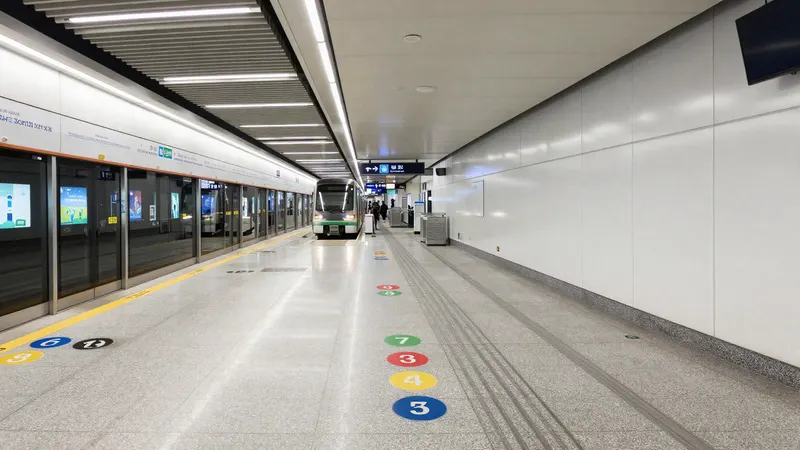
- Metro Line 1 to Hadan Station, Exit 3, then a bus to Eulsukdo (Culture Center) and about 10 minutes on foot
- Taxi
- From Hadan Station, roughly 6,000–7,000 KRW and 10–15 minutes
An island that went from landfill to bird sanctuary
Eulsukdo sits where the Nakdong River meets the sea, on the migration route between East Asia and Australia. Its name refers to its many birds and clear water. According to the Nakdong Estuary Eco Center, which manages the park, it was the largest migratory bird stopover in the East until the 1970s, and the area was designated Natural Monument No. 179 in 1966.
What came next is the surprising part. The island was farmed for scallions, used as a night-soil treatment site from 1972, used to dump dredged soil after the estuary barrage was finished in 1987, and from 1993 used as a landfill for Busan's garbage. The city rebuilt the habitat between 2000 and 2005, and the same land is now divided into zones that put the birds first.
That history explains how the park works. Only part of it is open to walk through. The buffer and core conservation zones, which hold the artificial wetlands built for the birds, are closed to the public, so you are looking across at the birds rather than walking among them.
What you can see in winter
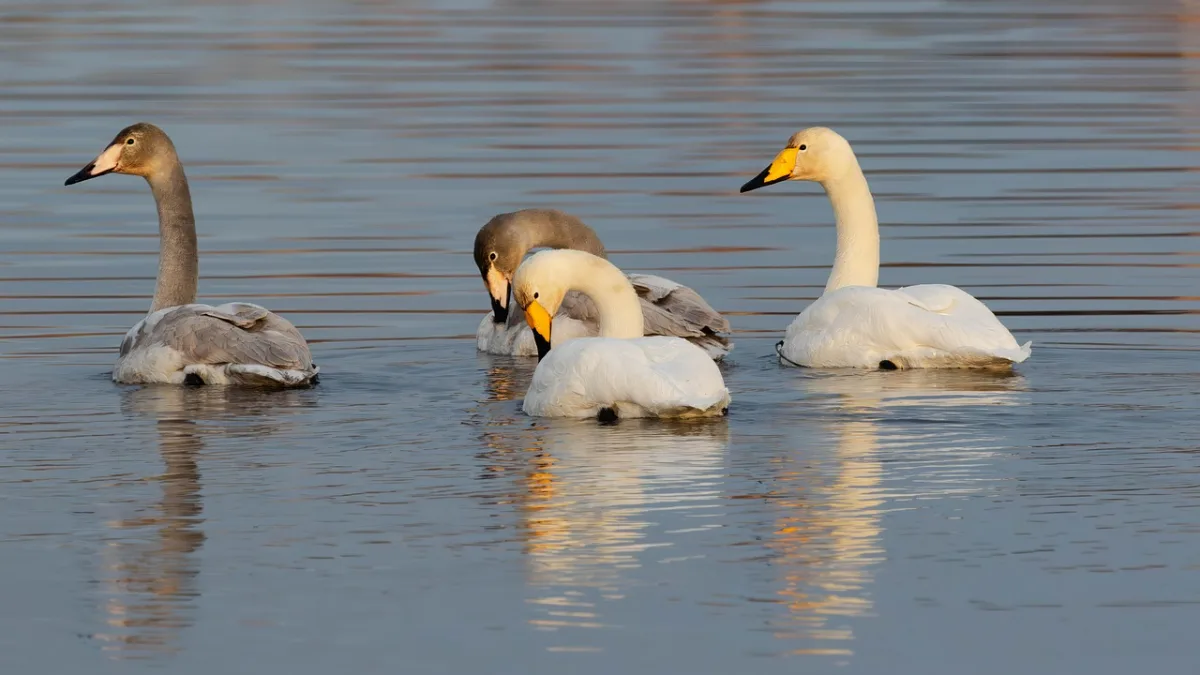
The eco center says winter birds can generally be seen from late October to early March. It calls the estuary Korea's largest wintering ground for whooper swans, with about 70% of them seen here. Remember that the estuary is much bigger than the park: the center lists several sandbars and mudflats where each species gathers, with Eulsukdo among them. Wild birds move around, so a sighting on any one day is not guaranteed.
- Whooper swan (큰고니): the largest on this list at about 140 cm, November to February
- Tundra swan (고니): about 120 cm, October to February
- Eurasian spoonbill (노랑부리저어새): about 86 cm, November to February
- Bean goose (큰기러기) and swan goose (개리): October to March
- Ducks and gulls: mallard, northern pintail, common shelduck and black-headed gull
Where to look
The south-end bird hide is the spot the eco center singles out for winter. It says whooper swans, mallards, northern pintails and Eurasian wigeons can be watched up close on the mudflat in front of it, and a second-floor observation deck looks out over the estuary. The center's pages don't give a walking time to the hide, so ask at the visitor information office (051-203-9960) when you arrive.
The Nakdong Estuary Exploration Center has a rooftop observation deck with two fixed binoculars, along with a small eco library on the first floor. It keeps the same hours as the eco center, and the free cart stops there. From the Memorial Park parking lot it is about 700 m on foot, roughly 15 minutes, along a path themed on The Ugly Duckling.
The Eco Center itself is the place to begin. It has free exhibits on the estuary and its wildlife that take about 30 minutes, and it is a warm place to get your bearings. Food and pets aren't allowed inside.
Getting around: the free cart
A free electric cart loops through the park in about 30 minutes: Eco Center, Memorial Park, Exploration Center, Eulsukdo Bridge, the second landfill site, Memorial Park and back to the Eco Center. It is first come, first served with no reservations, and each cart seats about 20 adults.
From Tuesday to Sunday, carts leave every 30 minutes at 10:00, 10:30, 11:00 and 11:30, then from 13:00 to 16:30. They don't run on Mondays or usually in rain, and can be reduced for center events. On public holidays you can get off at the middle stops but not board there, and on weekdays you can board there only if seats are free.
Getting there
Take Metro Line 1 to Hadan Station, leave by Exit 3 and change to bus 3, 55, 58, 58-1, 58-2, 168, 221, 520, 1005 or 2000. Get off at Eulsukdo (Culture Center) and walk about 10 minutes to the Eco Center. Hadan is 8 stops west of Jagalchi on Line 1, so it fits well with the old downtown or with Dadaepo Beach, further along the same line.
A taxi from Hadan Station is roughly 6,000–7,000 KRW and 10–15 minutes. That is our estimate from the distance, not a fixed fare. If you search for it on a map app, use the Korean name 낙동강하구에코센터.
The rest of the year
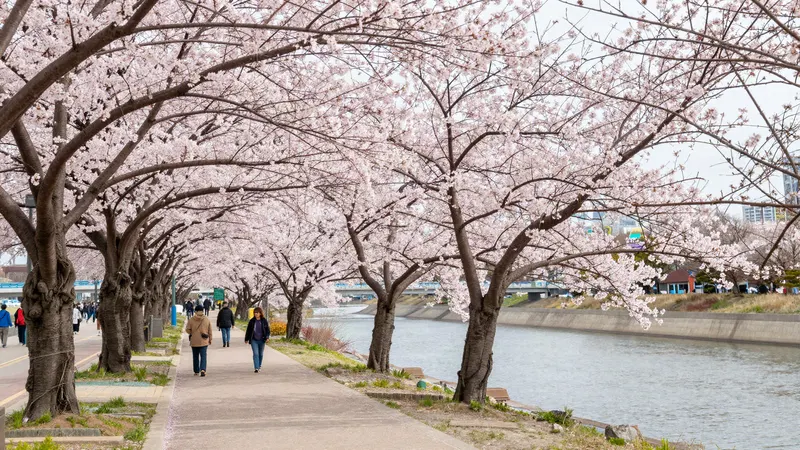
- Spring: cherry blossoms and fresh grass on the Picnic Plaza, with other flowers through May
- Summer: summer birds from early May to early October. The center calls the estuary Korea's largest breeding ground for little terns
- Autumn: reed and silver grass paths in the wetland, and pink muhly on the Picnic Plaza
- All year: a bike route over the whole island, about 2–3 hours from the southern Exploration Center to the north end
- Nearby: the Museum of Contemporary Art Busan and Eulsukdo Cultural Center are on the same island, useful on a cold or wet day. Check their exhibition schedules first
Practical notes
- Some older pages, including Visit Busan's, give the night closure as 20:00. The park's own page, updated in June 2026, says 19:00. Plan on the earlier time
- When a Monday is a public holiday, the Eco Center closes the following day instead
- It's an open river mouth, so dress for wind. The city's average winter temperature is mild, as the weather guide explains, but there's little shelter out here
- Bring your own binoculars if you have them. The only ones the center mentions are the two fixed on the rooftop
- Family bird programs cost 5,000 KRW per person and open for booking two weeks ahead at 10:00. They are aimed at families with school-age children, the site doesn't mention other languages, and they can be canceled for bad weather, low numbers or avian influenza
- Cooking, camping, fishing and collecting plants or animals are prohibited, and dogs must be leashed
Frequently asked questions
When can I see swans at Eulsukdo?
The Nakdong Estuary Eco Center lists whooper swans for November to February and tundra swans for October to February, and says winter birds in general can be seen from late October to early March. They are wild birds spread across the whole estuary, so a sighting on a given day isn't guaranteed.
Is Eulsukdo Migratory Bird Park free?
Yes. The park, the Eco Center's exhibits and the electric cart are all free. Parking is charged separately.
What are the opening hours?
The open area of the park is 08:00–19:00 according to the park's page updated in June 2026, and it closes overnight. The Eco Center is open 09:00–18:00 with last entry at 17:00, and closes on Mondays and January 1.
How do I get to Eulsukdo by public transit?
Take Metro Line 1 to Hadan Station, Exit 3, then bus 3, 55, 58, 58-1, 58-2, 168, 221, 520, 1005 or 2000 to Eulsukdo (Culture Center), and walk about 10 minutes. A taxi from Hadan Station is roughly 6,000–7,000 KRW.
Where is the best place to watch the birds?
The eco center points to the bird hide at the south end of the island, where it says whooper swans and several ducks can be watched on the mudflat in front. The Exploration Center also has a rooftop deck with two fixed binoculars.
Can I walk anywhere in the park?
No. Only the education and recreation zone is open. The buffer and core conservation zones are closed to protect the birds, apart from guided programs in the buffer zone.