At a glance
- What it is
- The world's only United Nations cemetery, resting place of Korean War dead from 11 nations
- Hours
- 09:00–18:00 May–September, 09:00–17:00 October–April, open 365 days
- Entry
- Free
- Getting there
- Metro Line 2 to Daeyeon Station, Exit 3, then an 18-minute walk; or bus 134, 68, 138, 138-1 or 1006 to the UN Park·Busan Culture Center stop
- Dress and conduct
- Quiet, modest dress; no food or pets; stay off the lawn and grave plots
The only one in the world
The United Nations Memorial Cemetery in Korea, in Busan's Daeyeon-dong neighborhood, is the only UN cemetery anywhere in the world. It was established in 1951 by the UN Forces Command to bury soldiers from the multinational forces who died fighting in the Korean War, and South Korea later formally donated the grounds to the United Nations in gratitude for their sacrifice.
At the war's end, roughly 11,000 remains from 21 countries had been interred here. As identification work continued in the decades after, many were repatriated to their home countries at their families' request. Today about 2,300 remain, from 11 nations — including the United Kingdom, Turkey, Canada, Australia, France, the Netherlands, New Zealand, Norway, Belgium, South Africa and the United States.
What's actually on the grounds
At the center of the cemetery stands the UN Forces Monument, engraved with doves as a symbol of peace and an inscription by a former Korean president. The Wall of Remembrance, built in 2006, carries the names of UN forces who died or went missing during the war — a separate memorial from the graves themselves, meant so no name goes unrecorded even where no remains could be identified.
A walking path called the Path of the Unknown Soldier leads from the cemetery toward the adjoining Peace Park, and the cemetery's eastern side holds a UN Sculpture Park, with works on the themes of unity, companionship and peace. None of this requires a guide or a ticket to see — the grounds are laid out for visitors to walk through at their own pace.
Visiting etiquette
This is an active war cemetery, not a park in the usual sense, and the operator asks visitors to treat it that way: stay quiet, dress modestly, and don't bring food or pets onto the grounds. The lawn areas and individual grave plots are off-limits to walk on — stick to the paved paths.
None of this is unusual for a military cemetery anywhere, but it's worth knowing before you arrive, since the grounds otherwise look like an open, walkable park and it's easy to forget what they actually are.
The UN Peace Memorial Hall
A short distance from the cemetery, the UN Peace Memorial Hall (유엔평화기념관) covers the history of the Korean War and the international forces that fought in it in more depth, including a documentary shown in its memorial service hall. It keeps separate hours from the cemetery — 10:00 to 18:00, last admission 17:30, closed Mondays, January 1, and the Seollal and Chuseok holidays — and is reached by bus 134, 68 or 51 to the Seokpo Elementary School stop, about a 7-minute walk from there.
The hall periodically closes sections for renovation work, so if seeing the exhibits in full matters to your visit, it's worth confirming current hours and any partial closures before making the trip out.
Turn Toward Busan
Every year on November 11 at 11:00 AM local time, a ceremony called Turn Toward Busan asks people around the world — starting with Korean War veterans and their families in the countries that sent troops — to pause and face toward Busan for a minute of silence, timed to a moment observed at the cemetery itself. It began as a small commemorative gesture and has since been formally recognized by participating governments as an annual day of remembrance.
If your visit happens to fall near that date, the cemetery holds a public ceremony that morning; outside of it, the grounds are open for a quieter, self-guided visit any day of the year.
Getting there
Take Metro Line 2 to Daeyeon Station and leave by Exit 3 for an 18-minute walk — flat, but long enough that it's worth budgeting the time rather than treating it as a quick stop. Buses 134, 68, 138, 138-1 and 1006 all run to a stop named for the cemetery and the nearby Busan Culture Center, which cuts the walk down considerably if the timing works out.
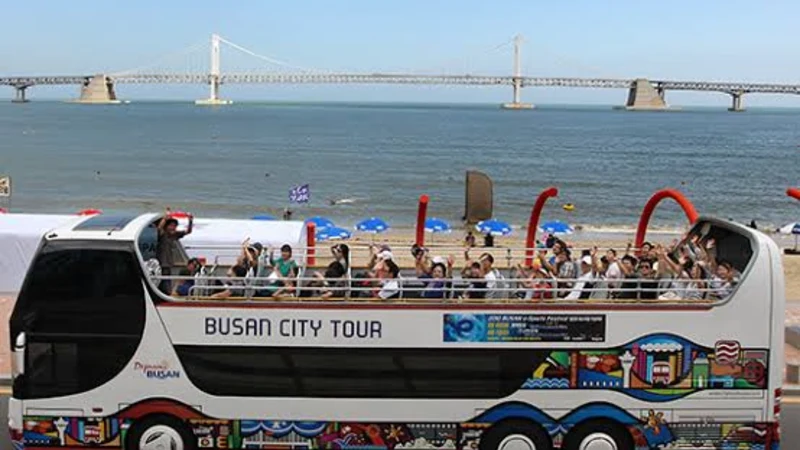
The neighborhood around the cemetery is otherwise residential, so there isn't much reason to linger nearby afterward beyond the Peace Memorial Hall above — most visitors treat this as a dedicated stop rather than part of a longer walking loop, pairing it with a taxi ride onward to Gwangalli or BEXCO rather than walking on from here. It's also one of the stops on the city tour bus route, if you'd rather not plan the connection yourself.
Frequently asked questions
Is the UN Memorial Cemetery free to visit?
Yes. Admission is free, and the cemetery is open 365 days a year — 09:00 to 18:00 from May to September and 09:00 to 17:00 from October to April.
How do I get to the UN Memorial Cemetery in Busan?
Take Metro Line 2 to Daeyeon Station, leave by Exit 3, and walk about 18 minutes. Alternatively, buses 134, 68, 138, 138-1 and 1006 stop at a stop named for the cemetery and the nearby Busan Culture Center.
Is there a dress code or etiquette to follow?
Visitors are asked to stay quiet, dress modestly, and avoid bringing food or pets onto the grounds. The lawn areas and individual grave plots are off-limits — stay on the paved paths. It's an active war cemetery, not an ordinary park.
How many soldiers are buried at the UN Memorial Cemetery?
About 2,300 remains from 11 countries are interred there today. Roughly 11,000 remains from 21 countries were originally buried at the cemetery after the Korean War, and many were later repatriated to their home countries as identification work continued.
What is Turn Toward Busan?
An annual ceremony held every November 11 at 11:00 AM, in which people in the countries that sent troops to the Korean War pause to face toward Busan for a minute of silence, timed to a moment observed at the cemetery. It has since been formally recognized as an annual day of remembrance by participating governments.
Is the UN Peace Memorial Hall the same as the cemetery?
No, they are two separate buildings with different hours. The memorial hall covers the history of the Korean War in more depth and is a short bus ride from the cemetery, open 10:00 to 18:00, closed Mondays, January 1, and the Seollal and Chuseok holidays.