At a glance
- What it is
- Busan's historic hot spring district around Oncheonjang Station, with bathhouses and a public foot bath
- Hurshimchung
- Every day 05:30–22:00, per Visit Busan
- Admission
- Weekdays 15,000 KRW, weekends 18,000 KRW (middle school and up). Elementary pupils 11,000 / 12,000 KRW
- Foot bath
- Free and outdoors. Current hours unconfirmed, so call 051-550-6602
- Getting there
- Metro Line 1, Oncheonjang Station. Exit 1 for Hurshimchung, about 9 minutes on foot
- Taxi
- From Seomyeon about 7 km, roughly 9,000–12,000 KRW and 20–30 minutes
One of Korea's oldest recorded hot springs
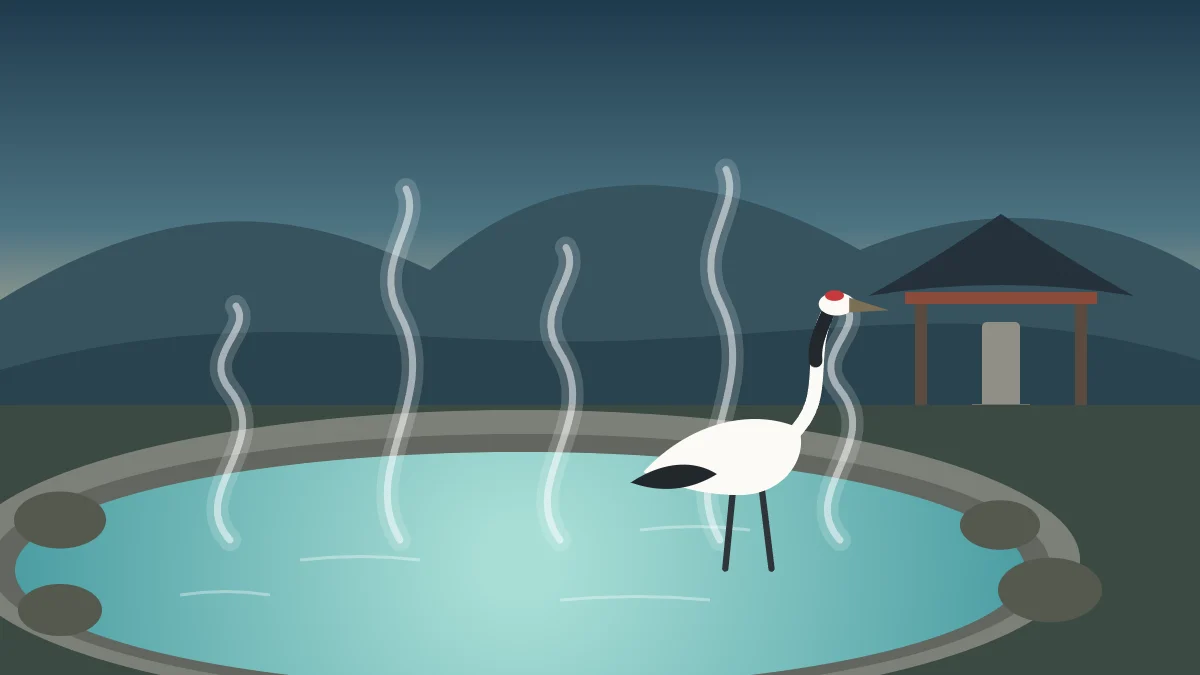
Dongnae Oncheon is so central to this neighborhood that the area and its subway station are both named after the hot springs. Busan's city newspaper calls it the oldest hot spring in Korea. The first written mention is in the Samguk Yusa, which records a Silla minister bathing here in the 680s. Local legend is more fun: a lame white crane, or in another version a white deer, led people to hot water bubbling out of the ground.
In the Joseon era the baths worked more like public healthcare than leisure, according to the city newspaper, and a 1617 account describes a scholar staying 30 days for treatment. Under Japanese rule the area turned commercial, and a streetcar ran from downtown Busan to carry bathers. By the 1960s and 1970s it was a top honeymoon destination. The same article credits Busan with the first Korean scrubbing towel, the "Italy towel", in 1967.
Dongnae-gu describes the water as a mildly alkaline saline spring, rich in chlorine and magnesium, with an average temperature of 61°C. The district also lists health benefits from neuralgia to skin conditions. Treat those as tradition rather than medical advice.
Hurshimchung, the big bathhouse
Hurshimchung (허심청) is the name most people know. It takes up the fourth and fifth floors of a building next to Hotel Nongshim, on the site of a hot spring resort built in 1907. Visit Busan describes it as the largest hot spring facility in the East, with more than ten kinds of bath under a glass ceiling that lets in natural light.
Visit Busan lists it as open every day from 05:30 to 22:00. Admission for middle school students and adults is 15,000 KRW on weekdays and 18,000 KRW on weekends; for elementary school pupils it is 11,000 and 12,000 KRW. Other listings give different closing times, so check with the bathhouse on 051-550-2200 if you plan a late visit.
If you have never used a Korean bathhouse, the bathing floors are single-gender and you go in without clothes or a swimsuit, showering first. Our Spa Land guide explains how it works, and that is the other big choice in the city: a modern spa in a department store at Centum City, closer to Haeundae, against an older neighborhood with more history around it.
The free outdoor foot bath
You don't have to book a bath to try the water. Dongnae Oncheon Open-Air Foot Bath (동래온천 노천족욕탕), run by the district, is free and sits close to Hotel Nongshim and the entrance to Geumgang Park, so hikers coming down from Geumjeongsan often stop here. Busan's city newspaper has described the free foot baths here as having a washing pool, an acupressure pool, a soaking pool and a cold pool, with room for about 40 people at the larger one.
The one thing to bring is a small towel for your feet. It is at its most appealing on a cold day, when the contrast is the whole point.
What to see around it
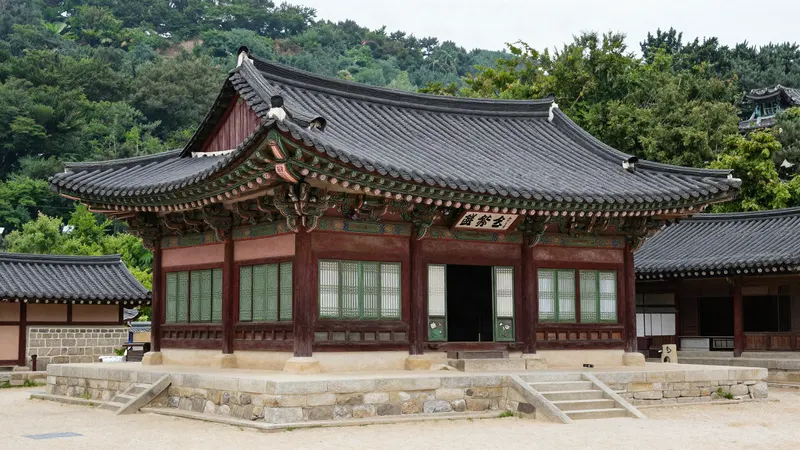
- Onjeong Gaegeonbi (온정개건비): a stone monument from 1766 recording the rebuilding of the baths by the magistrate of Dongnae. It stands in the courtyard of a small pavilion to the right of the foot bath
- A Joseon-era granite bathtub: right in front of the monument. The city newspaper says it's traditionally held to be the men's bath
- Oncheonjang Streetcar Street: sculptures and a model streetcar on the roadside, marking the line that used to bring bathers from downtown
- Oncheon Market and Spa Yunseul-gil: on the way from Exit 3, where a footbridge leads to the market and then the bathhouse streets
- Neighborhood bathhouses: many local baths also advertise natural hot spring water, if you want something smaller than Hurshimchung
Getting there
Take Metro Line 1 to Oncheonjang Station, 7 stops north of Seomyeon. Visit Busan's route to Hurshimchung is Exit 1 and about 9 minutes on foot. The city newspaper's route to the foot bath side is Exit 3, across the footbridge and through Oncheon Market. If you search on a map app, use the Korean name 허심청 or 동래온천 노천족욕탕.
A taxi from Seomyeon covers about 7 km, roughly 9,000–12,000 KRW and 20–30 minutes. From Haeundae it is about 13 km, roughly 15,000–20,000 KRW and 30–40 minutes. These are our estimates from the distance, not fixed fares. Hurshimchung has parking in its building.
Making a half day of it
A soak works best after something tiring, and the neighborhood is set up for that. Geumgang Park is next door, free, and open 09:00–18:00 according to the district, with a cable car up to the Geumjeongsan ridge. Inside the park, the Busan Marine Natural History Museum is open 09:00–18:00 and closes on Mondays and January 1.
Beomeosa Temple is 6 stops further north on Line 1, so a morning at the temple and an afternoon bath fit together well. For dinner, Visit Busan lists Oncheonjang among the city's long-running grilled hagfish alleys, which our grilled eel guide covers.
Practical notes
- Busan's other hot spring area is Haeundae. Visit Busan describes spas there with sea views, and the city newspaper mentions another free foot bath by the tourist information center on Haeundae Beach
- The baths aren't seasonal, but a hot soak suits a cold day; the weather guide has Busan's winter numbers
- Prices and hours here come from Visit Busan and can change, including around holidays
Frequently asked questions
How much does Hurshimchung cost?
Visit Busan lists 15,000 KRW on weekdays and 18,000 KRW on weekends for middle school students and adults, and 11,000 and 12,000 KRW for elementary school pupils. Prices can change, so confirm on 051-550-2200.
Is the Dongnae foot bath free?
Yes. The open-air foot bath near Hotel Nongshim is run by the district and free to use. We couldn't confirm its current hours, so call 051-550-6602 before making a special trip, and bring a small towel.
How do I get to Dongnae Oncheon?
Take Metro Line 1 to Oncheonjang Station, 7 stops north of Seomyeon. Hurshimchung is about 9 minutes from Exit 1. A taxi from Seomyeon is about 7 km, roughly 9,000–12,000 KRW.
Do I have to be naked at Hurshimchung?
Yes, on the bathing floors. As at other traditional Korean bathhouses, these are separated by gender and you go in without clothes or a swimsuit, showering first. The Spa Land guide explains the etiquette in more detail.
How old is Dongnae Oncheon?
The first written record is in the Samguk Yusa, which mentions a Silla minister bathing here in the 680s. Busan's city newspaper calls it the oldest hot spring in Korea.
What can I combine it with?
Geumgang Park and its cable car are next door, and Beomeosa Temple is 6 stops north on Line 1. Oncheonjang is also one of the city's long-running grilled hagfish areas.