At a glance
- Weather
- Average winter temperature about 3.8°C, the mildest in Korea after Jeju, with around 53 days a year below freezing
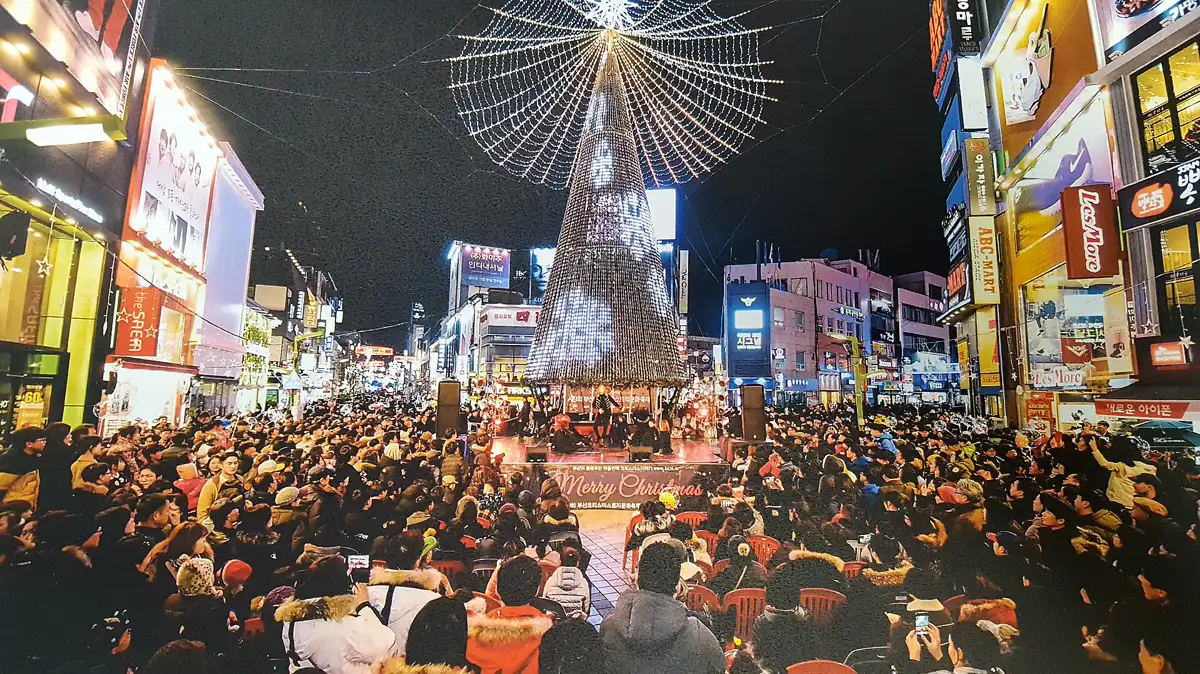
- Haeundae Light Festival
- November 28, 2026 – January 10, 2027, lights 18:00–23:00, Haeundae Station (Line 2)
- Gwangbok-ro tree festival
- 2026–27 dates not yet announced; last season ran December 5, 2025 – February 22, 2026, 17:30–22:00
- Free every week
- Gwangalli drone show on Saturdays, 19:00 and 21:00 from October to February
- Warm indoors
- Spa Land at Centum City, or the Dongnae hot spring district and its free foot bath
- Only in winter
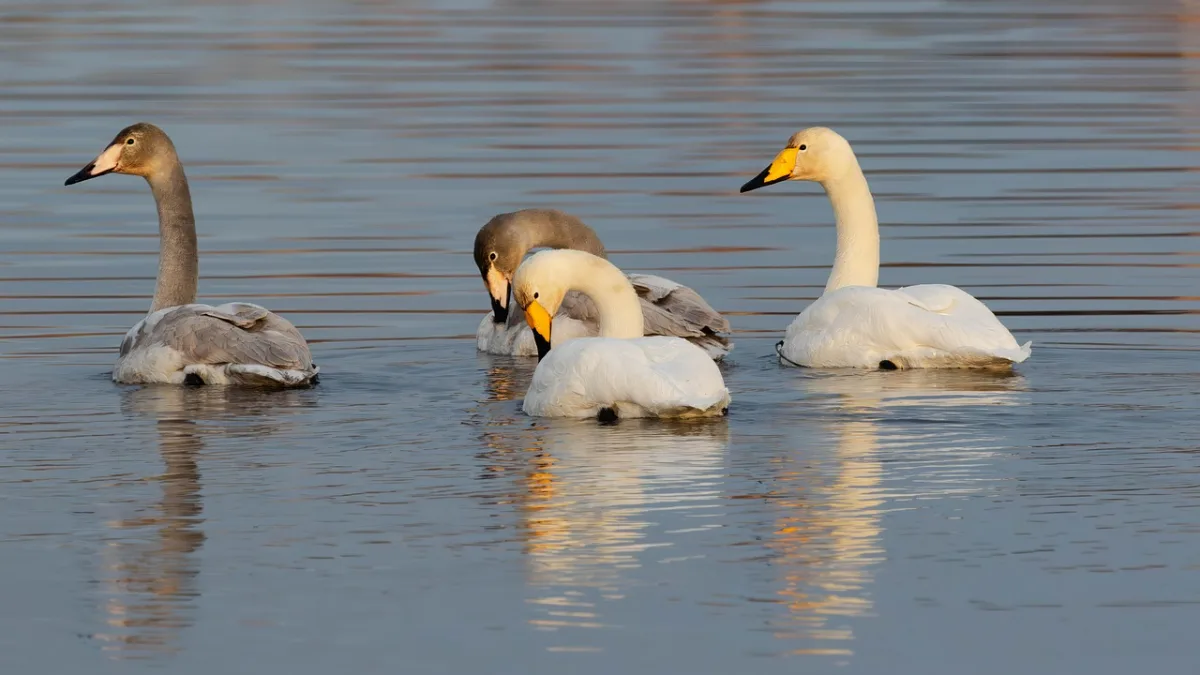
- Whooper swans at Eulsukdo, roughly late October to early March
What a Busan winter is actually like
Busan's average winter temperature is about 3.8°C, which the city says is the mildest in Korea after Jeju, and the daily minimum drops below freezing on only around 53 days a year. Snow that settles is rare. What you do get is wind off the sea, which makes the beaches and cliff paths feel colder than the number suggests — see the season-by-season weather guide for the full picture.
In practice that means a proper coat, gloves for the evenings on the waterfront, and nothing like the gear a Seoul winter calls for. Beaches stay open to walk on, most sights keep their usual hours, and the short days push the best of the season into the evening: this is a city whose winter is mostly lights, hot water and hot food.
Haeundae Light Festival
The 13th Haeundae Light Festival runs from November 28, 2026 to January 10, 2027, along Gunam-ro — the pedestrian street that runs from Haeundae Station down to the sand — and around Haeundae Beach. The lights are on from 18:00 to 23:00, and it is an open street, so there's nothing to pay to walk through. The festival is run by the Haeundae-gu Office, which posts the program and any changes.
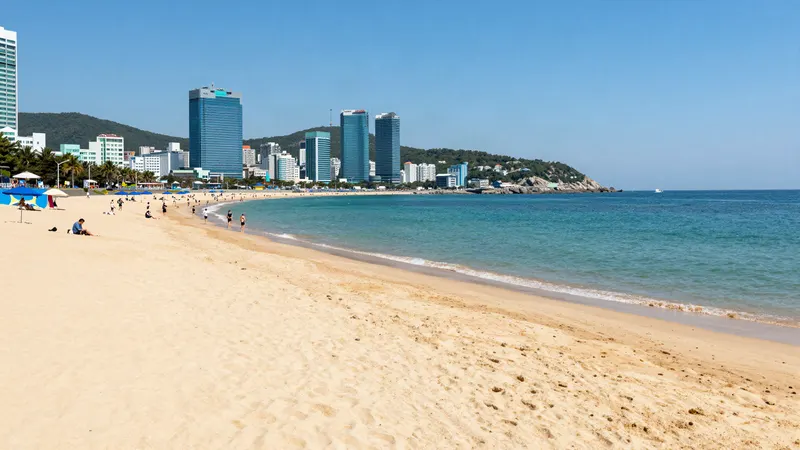
Take Metro Line 2 to Haeundae Station and leave by Exit 3 or Exit 5; Gunam-ro starts right there and the beach is about 5 to 15 minutes ahead, depending on which end you head for. The walk from the station to the water is the festival, so it fits easily before or after dinner in Haeundae. For the beach itself, see the Haeundae Beach guide.
The Gwangbok-ro tree festival in Nampo-dong
Busan's longest-running winter light display is in the old downtown, where giant lit Christmas trees go up along Gwangbok-ro, Nampo-dong's main shopping street. The 2025–26 edition, the Gwangbok-ro Winter Light Tree Festival, ran from December 5, 2025 to February 22, 2026, with the lights on from 17:30 to 22:00 around Gwangbok-ro and Gwangbokjungang-ro.
As of November 28, 2026, the dates for the 2026–27 season have not been announced, so check the Jung-gu Office or the city's event calendar before planning around it. It is a short walk from Nampo Station on Metro Line 1, and it sits next to BIFF Square and Jagalchi Market, so it makes an easy evening at the end of a day in the old city.
Gwangalli: the Saturday drone show and the bridge
The free drone show over Gwangalli Beach runs every Saturday, and from October to February it moves to a winter schedule of two shows, at 19:00 and 21:00, each about 12 minutes long. Shows can be canceled for wind or rain, so check the official site on the day.
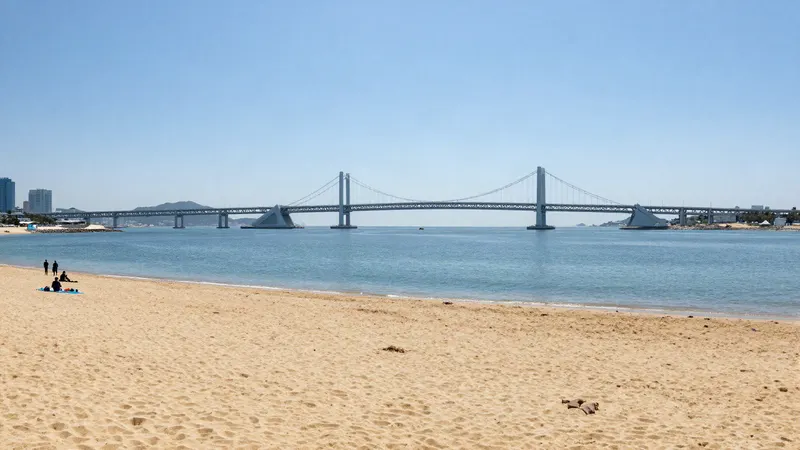
On every night of the week, the Gwangan Bridge behind it runs a light show at 20:00, 21:00 and 22:00. A Saturday evening can take in both: the 19:00 drone show, dinner on the seafront, then the bridge at 21:00. Take Metro Line 2 to Gwangan Station, Exit 5, and walk about 13 minutes to the sand. The beach is open to the wind, so this is the evening to wear every layer you brought.
Hot water: Spa Land and Dongnae Oncheon
Winter is the natural season for Busan's bathhouses. Spa Land, inside the Shinsegae store at Centum City, is the one most visitors know: an underground passage links it to Centum City Station on Line 2, it's open 09:00 to 22:00 with last entry at 21:00, and adult admission is 26,000 KRW for four hours. It is also the best plan for a cold, wet day.
The older option is Dongnae Oncheon, Busan's historic hot spring district around Oncheonjang Station on Line 1. Hurshimchung, the big bathhouse there, is about 9 minutes on foot from Exit 1; Visit Busan lists it as open every day from 05:30 to 22:00, at 15,000 KRW on weekdays and 18,000 KRW at weekends. If you don't want a full bath, the free outdoor foot bath in the same district uses the same hot water.
Swans at Eulsukdo and camellias at Dongbaekseom
Some of Busan's winter is only there in winter. At Eulsukdo, on the Nakdong River estuary, the eco center says winter birds can generally be seen from late October to early March, and it counts the estuary as Korea's largest wintering ground for whooper swans. Entry is free. Take Metro Line 1 to Hadan Station, Exit 3, then a bus or a taxi of roughly 6,000–7,000 KRW; the eco center itself is open 09:00 to 18:00, with last entry at 17:00.
On the other side of the city, the camellias that give Dongbaekseom its name flower in winter and early spring. The island's coastal deck starts at the western end of Haeundae Beach, about 15 to 20 minutes on foot from Haeundae Station Exit 5, so it pairs with the light festival in a single afternoon and evening.
New Year's sunrise
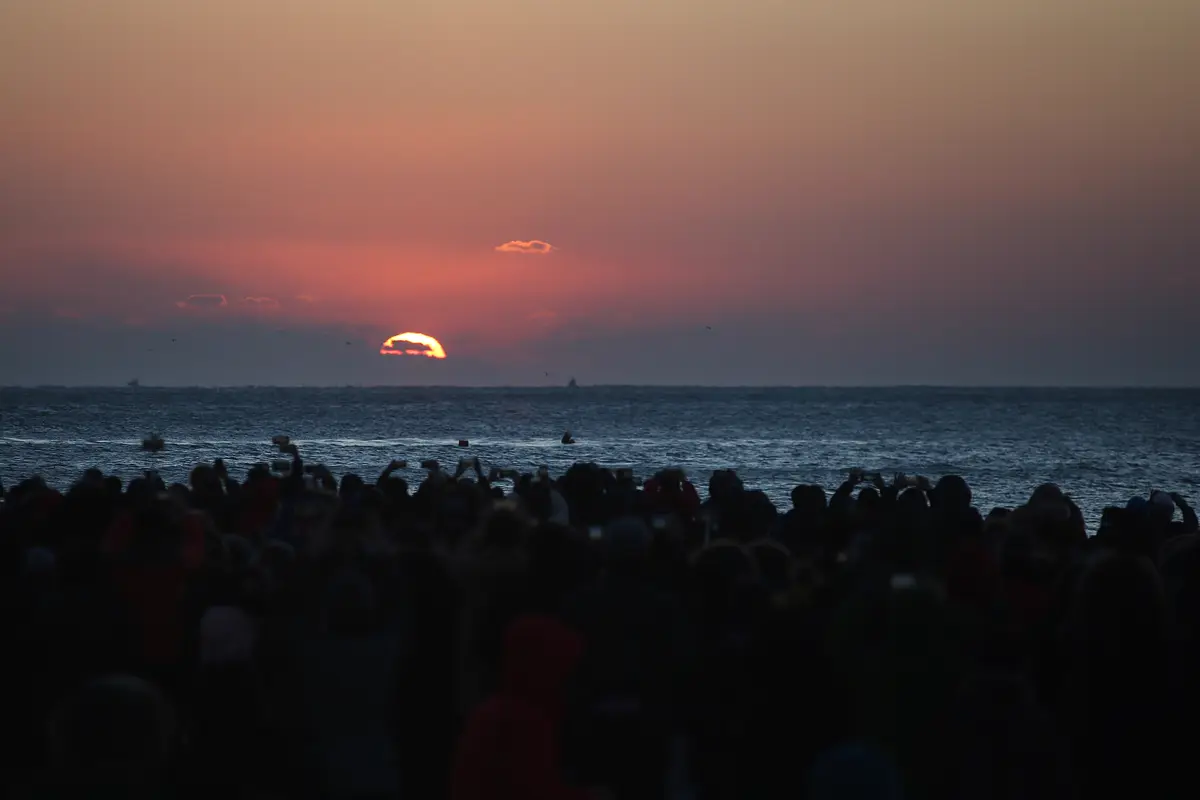
On January 1, Busan's east-facing beaches fill up before dawn with people waiting for the first sunrise of the year, and the city has held New Year events on the sand for this. If you're in Busan for the turn of the year, expect the beach-bound trains and roads to be busy from early morning, and check the city's or the district's announcements for that year's program.
Sunrise in early January is a little after 07:30; the Korea Astronomy and Space Science Institute publishes the exact time for each day. Haeundae and Gwangalli both face the sea toward the sunrise, and they're the easiest to reach by metro before the sun is up.
What to eat when it's cold
Busan's own food happens to suit the weather. Dwaeji gukbap, pork broth over rice, is the city's signature, and many shops open by 07:00 for people on the way to work, which makes it the obvious hot breakfast on a cold morning.
In Nampo-dong, around BIFF Square, the snack to queue for is ssiat hotteok: a fried pancake filled with brown sugar syrup, split open and packed with seeds and nuts. Fish cake skewers are sold from stalls in the same markets, and the hot broth they sit in is free to drink. The street food guide has where and when to find both.
What's different in winter
Very little closes for the season, but a few things change. The beaches are open to walk on all winter, but swimming is not allowed outside the official summer season. The coastal attractions that close in bad weather close for ice and strong wind too: the Oryukdo Skywalk restricts access in snow and strong wind, and the walkway under the Songdo cable car closes in ice. The short days also matter more than the cold — plan coastal walks for the middle of the day and keep the evenings for the lights.
- Pack a warm coat, gloves and a hat for evenings by the sea; you won't need heavy snow gear
- Plan coastal walks for late morning to mid-afternoon, while the light lasts
- Check the weather on the morning itself before heading to cliffs, skywalks or cable cars
- Keep a bathhouse or an indoor plan for a cold, wet day — see the rainy day guide
Frequently asked questions
Is Busan worth visiting in winter?
Yes, if you plan around the evenings. Busan has the mildest winter in mainland Korea, with an average around 3.8°C, and winter is when the Haeundae Light Festival, the Gwangbok-ro tree lights, the hot springs and the wintering swans at Eulsukdo are at their best.
When is the 2026 Haeundae Light Festival?
The 13th Haeundae Light Festival runs from November 28, 2026 to January 10, 2027, along Gunam-ro and Haeundae Beach, with the lights on from 18:00 to 23:00. Use Haeundae Station Exit 3 or 5 on Metro Line 2.
When is the Busan Christmas tree festival in Nampo-dong?
The 2026–27 dates had not been announced as of November 28, 2026. The previous season, the Gwangbok-ro Winter Light Tree Festival, ran from December 5, 2025 to February 22, 2026, with lights from 17:30 to 22:00. Check the Jung-gu Office before you go.
Does the Gwangalli drone show run in winter?
Yes. It runs every Saturday, and from October to February there are two shows, at 19:00 and 21:00, each about 12 minutes. It can be canceled for weather, so check the official site on the day.
Does it snow in Busan?
Rarely enough that you shouldn't plan for it. The daily minimum falls below freezing on only around 53 days a year, and snow that settles is uncommon. Wind off the sea is the bigger factor.
Can you swim at Busan's beaches in winter?
No. The beaches are open to walk on all year, but swimming is only allowed during the official summer season.